
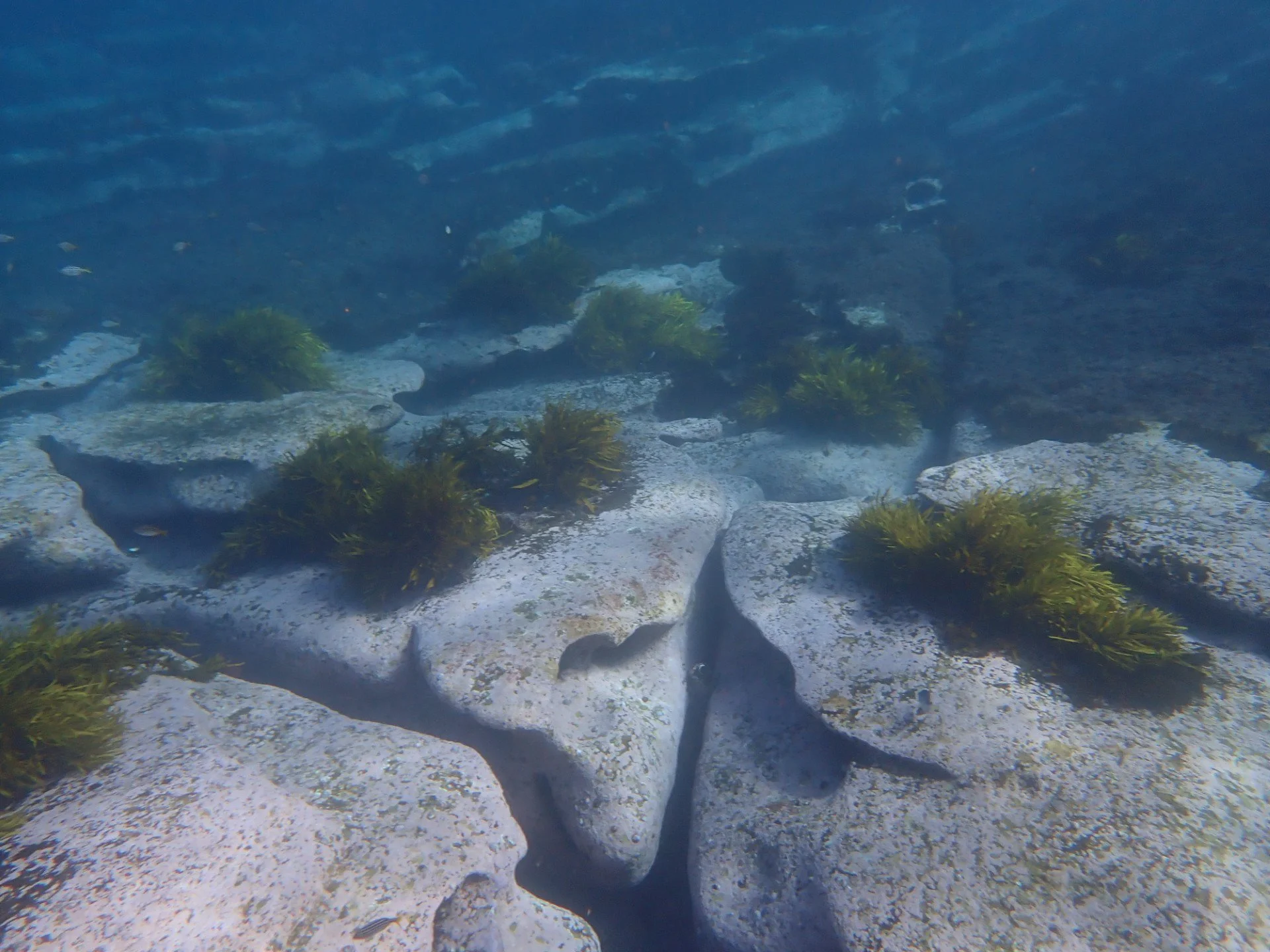
Can small seaweed patches help rebuild marine forests?
Marine restoration faces a scale problem. Seaweed forests can decline across large areas, while active restoration usually begins with much smaller patches.
A new study in npj Ocean Sustainability examined whether a method known as “applied nucleation” can help rebuild marine forests over time.
How does applied nucleation work?
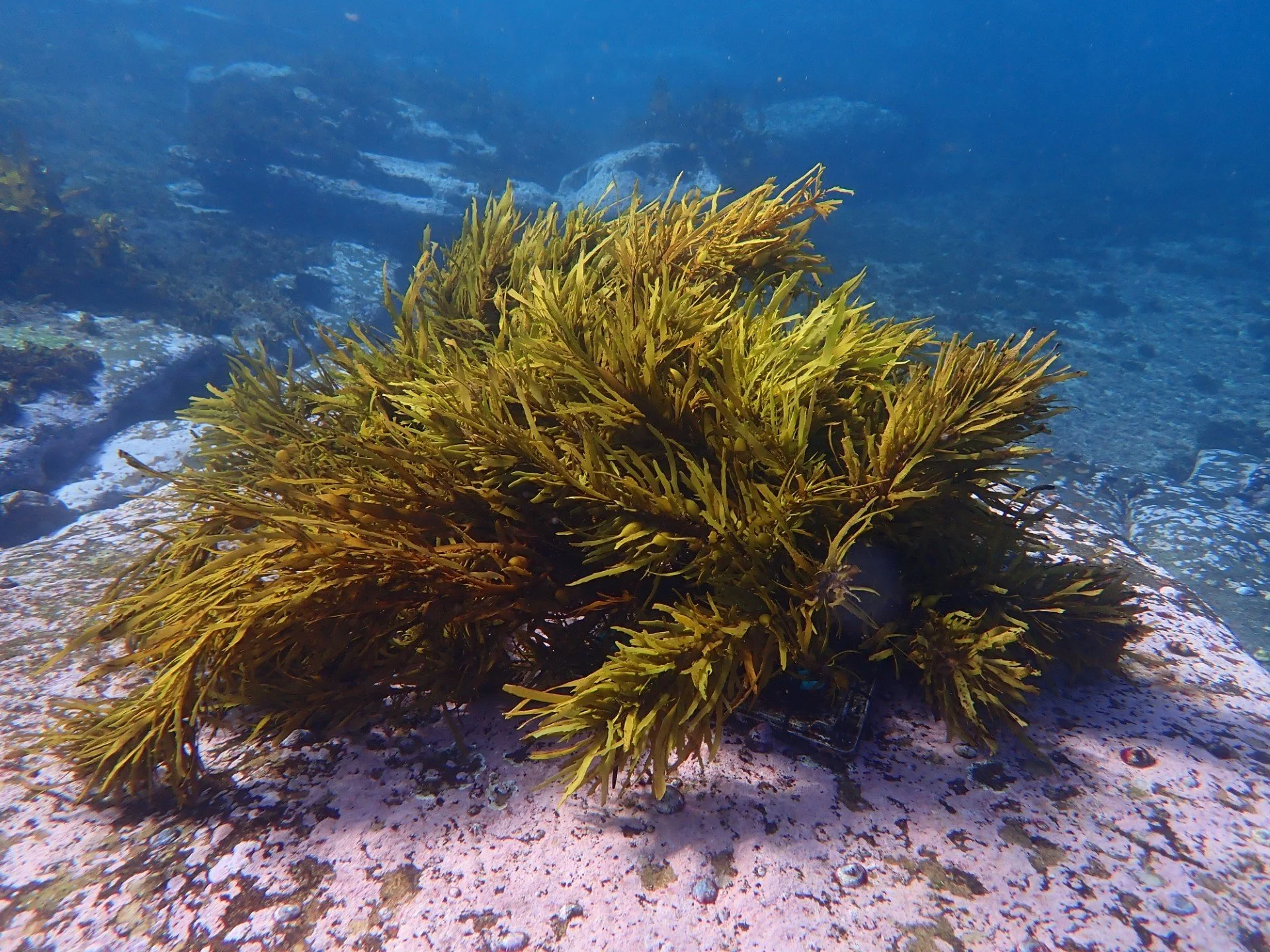
Applied nucleation is a restoration approach where small patches are established in suitable places, with the aim that they expand through natural recruitment and growth. On land, this approach has been used in forest restoration. This study tested how the same idea can apply underwater.
The research focused on crayweed, Phyllospora comosa, a canopy-forming seaweed found on temperate rocky reefs in south-eastern Australia. Using long-term restoration data from Operation Crayweed along Sydney’s coastline, the authors examined whether small transplanted patches of adult crayweed could establish, recruit new individuals and expand beyond the original restoration sites.
“When we strategically place small patches, with the right timing and condition, they can expand under natural processes of reproduction and settlement and reach larger scales,”
- Catalina Musrri, lead author.
From planted patches to expanding forests
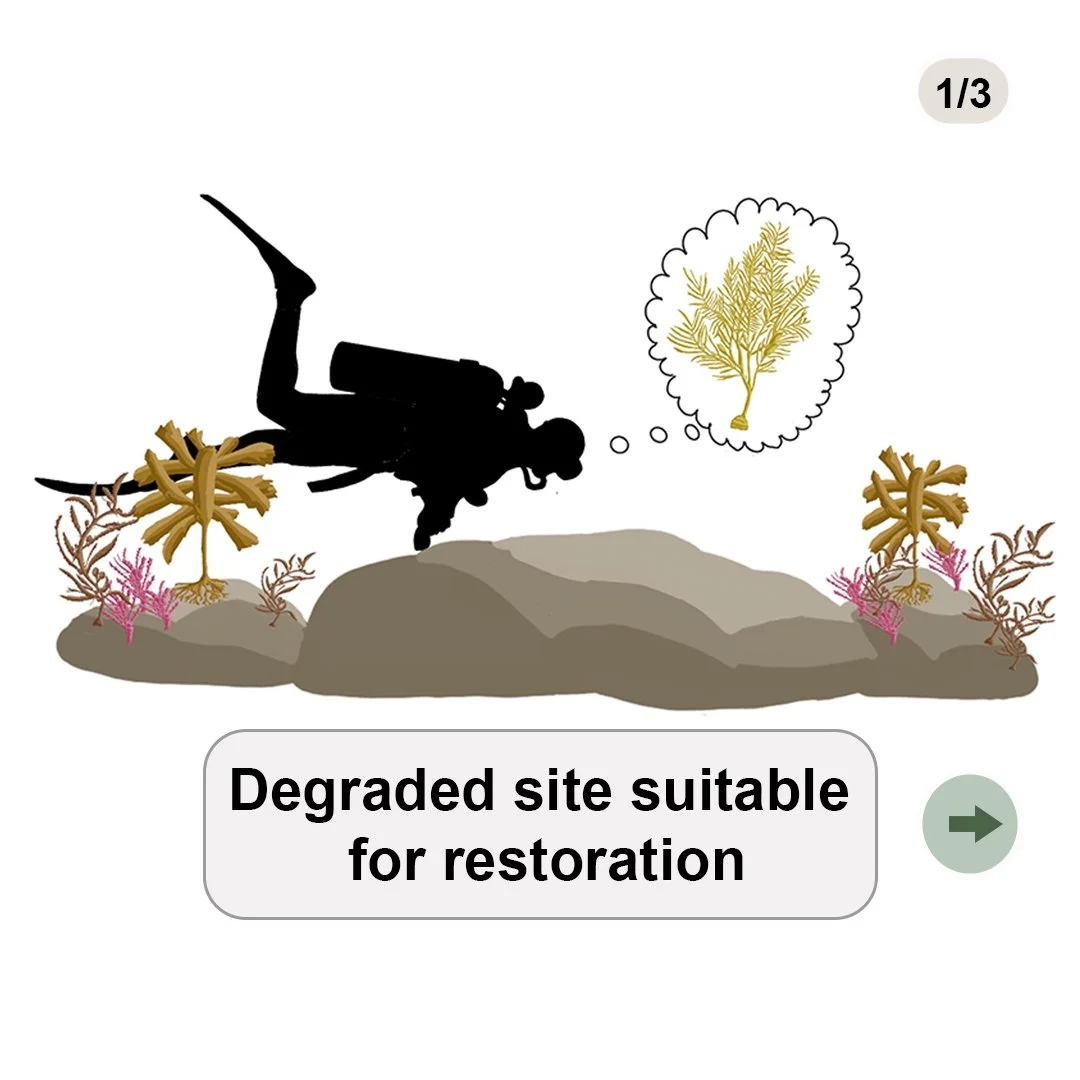
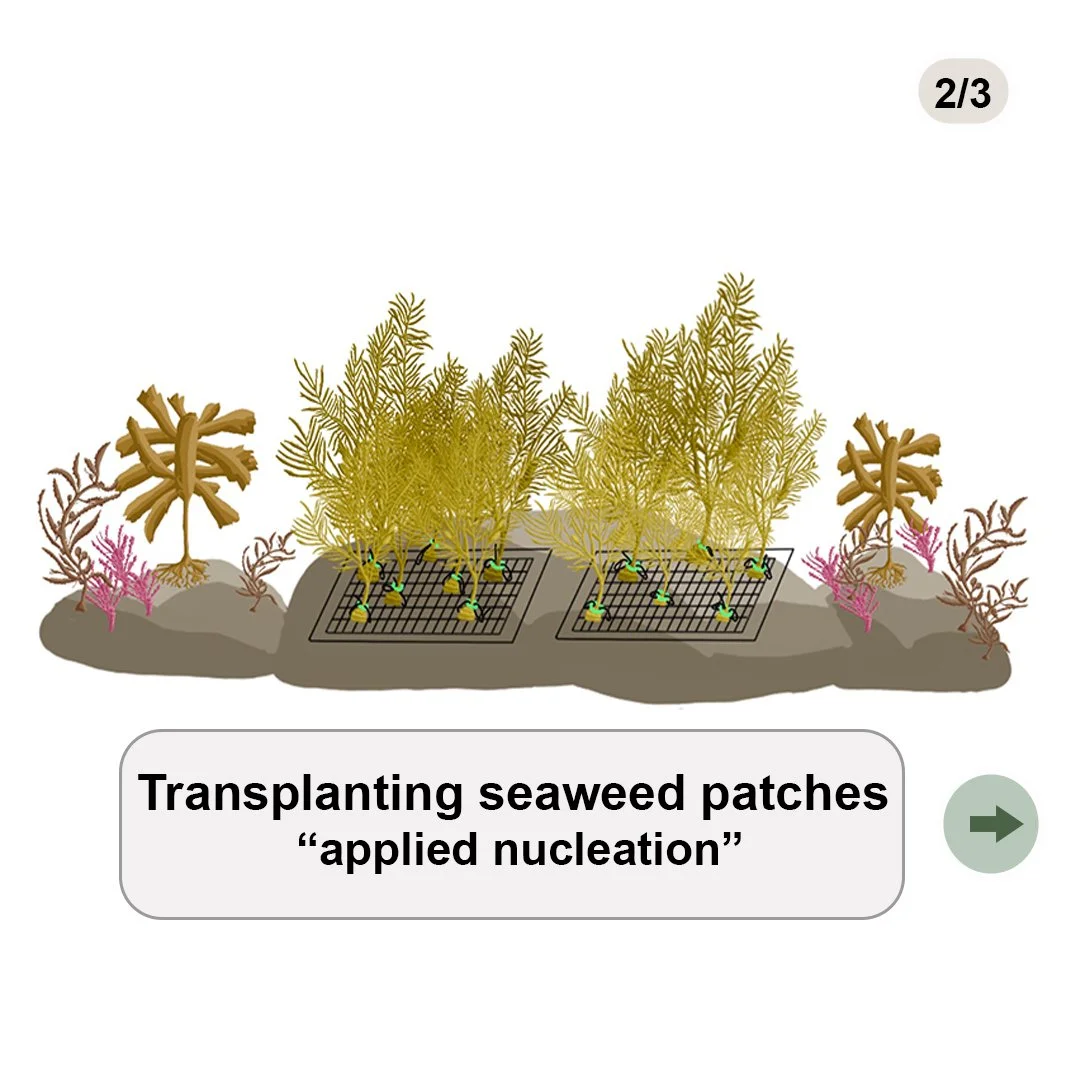
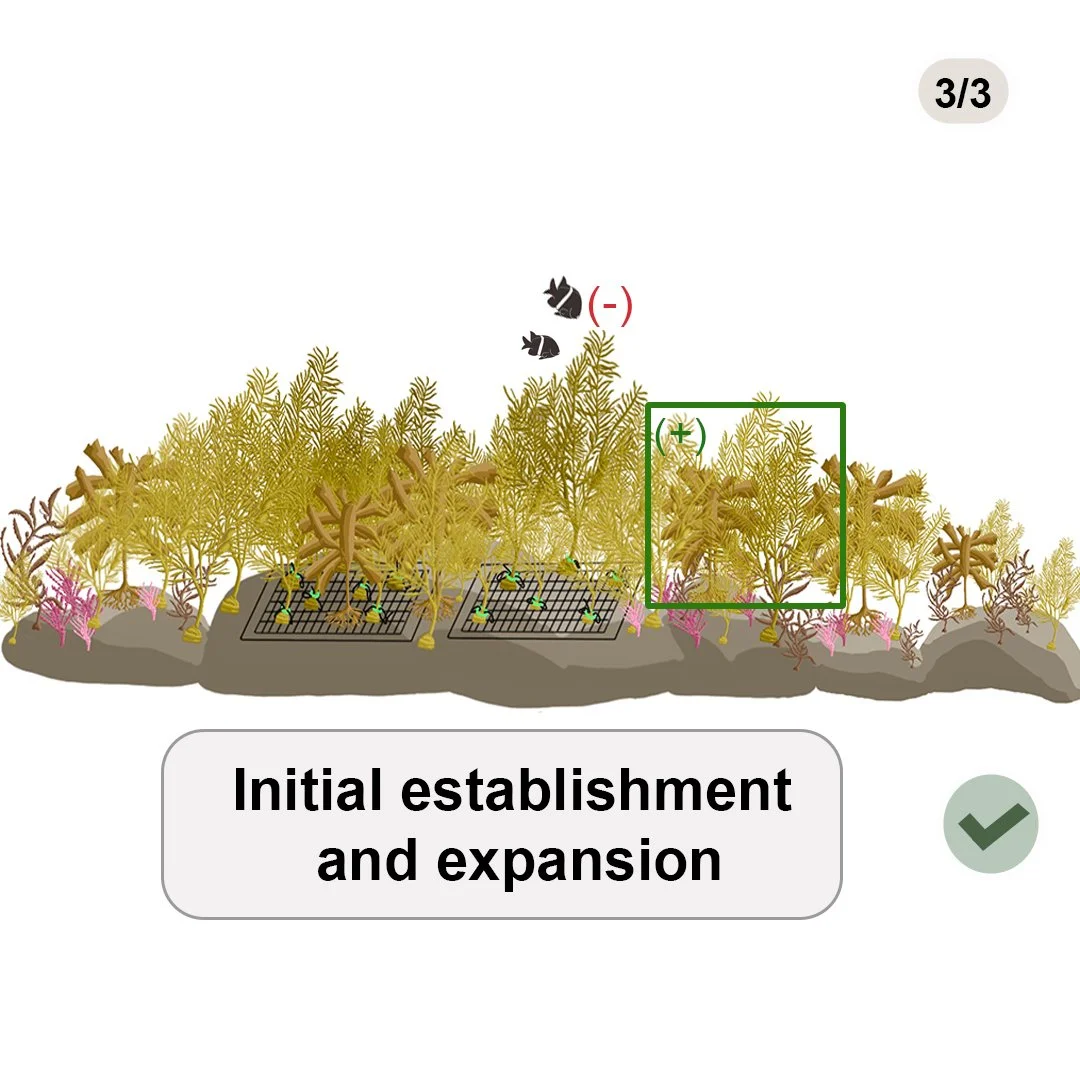
At the first restoration site, a 20 square metre transplanted patch produced crayweed recruits up to 43 metres from the original patch after three years. Across longer timeframes, restored crayweed extended hundreds of metres along the coastline at some sites.
But success was not consistent. Some sites developed self-sustaining populations, while others did not establish.
For Cata, that variability was one of the clearest lessons from the long-term dataset.
“What surprised me was how variable it can be from place to place,” she says. “These findings really emphasised to me the importance of monitoring for restoration.”

The study examined transplanting events at 14 sites across Sydney’s coastline, drawing on more than a decade of restoration data.
Small, well-placed patches of seaweed can help re-establish marine forests at relevant scales. But restoration outcomes depend strongly on local conditions, including transplanted adult survival, grazing pressure, nearby canopy-forming seaweeds, transplanting season and follow-up planting.
Crayweed established and expanded at 43 per cent of transplanted sites. Across successful sites, restored crayweed populations were distributed within about 19,000 square metres of rocky reef habitat.
Why did some sites succeed while others didn't?
-
Sites with more surviving adult crayweed six months after transplanting tended to have more new recruits three months later. This suggests adult patches can support early recovery by acting as a source of propagules and creating short-term canopy cover for young crayweed.
-
Young crayweed were smaller at sites where transplanted adult crayweed showed higher levels of grazing. This suggests grazing pressure may make it harder for new crayweed to establish and grow.
-
Over time, restored crayweed was more often found growing near other canopy-forming seaweeds, including Ecklonia and Sargassum. This suggests nearby seaweed canopy may help create conditions that support crayweed recovery.
-
Most sites where crayweed established had been transplanted between April and November, especially in winter. The authors also found that winter transplanting was linked with greater restored area and wider spread along the coastline.
Recovery takes more than planting
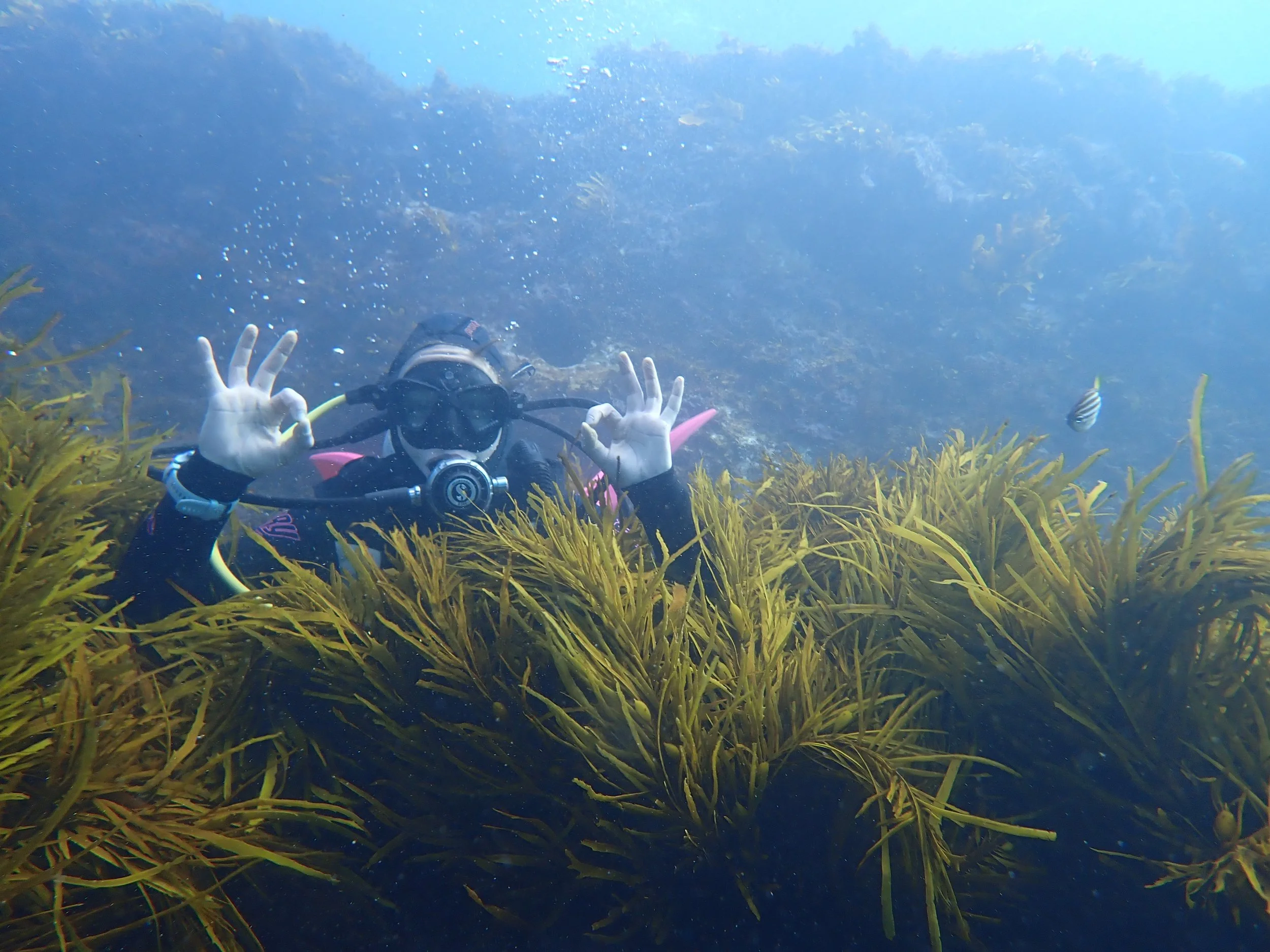
The study provides evidence that applied nucleation can help re-establish marine forests at meaningful scales. It also shows that restoration is still a long-term challenge, shaped by site conditions, follow-up work and the pressures affecting reefs.
That makes the takeaway bigger than simply planting more seaweed. As Cata says, “It is not just about doing more and more, it is about making it work,” which means restoration needs basic research, monitoring and climate-smart interventions.
Supporting long-term recovery

Image: John TurnbullWhile this study focused on crayweed restoration in Sydney, the findings add to a growing body of work showing that seaweed forest restoration can support reef recovery across the Great Southern Reef. But long-term recovery will also depend on reducing the pressures that caused these forests to decline in the first place.
Small patches can help forests return. The challenge is giving them the right conditions, targeted monitoring and long-term support to survive.
Sign up for our Great Southern Reef Foundation newsletter