
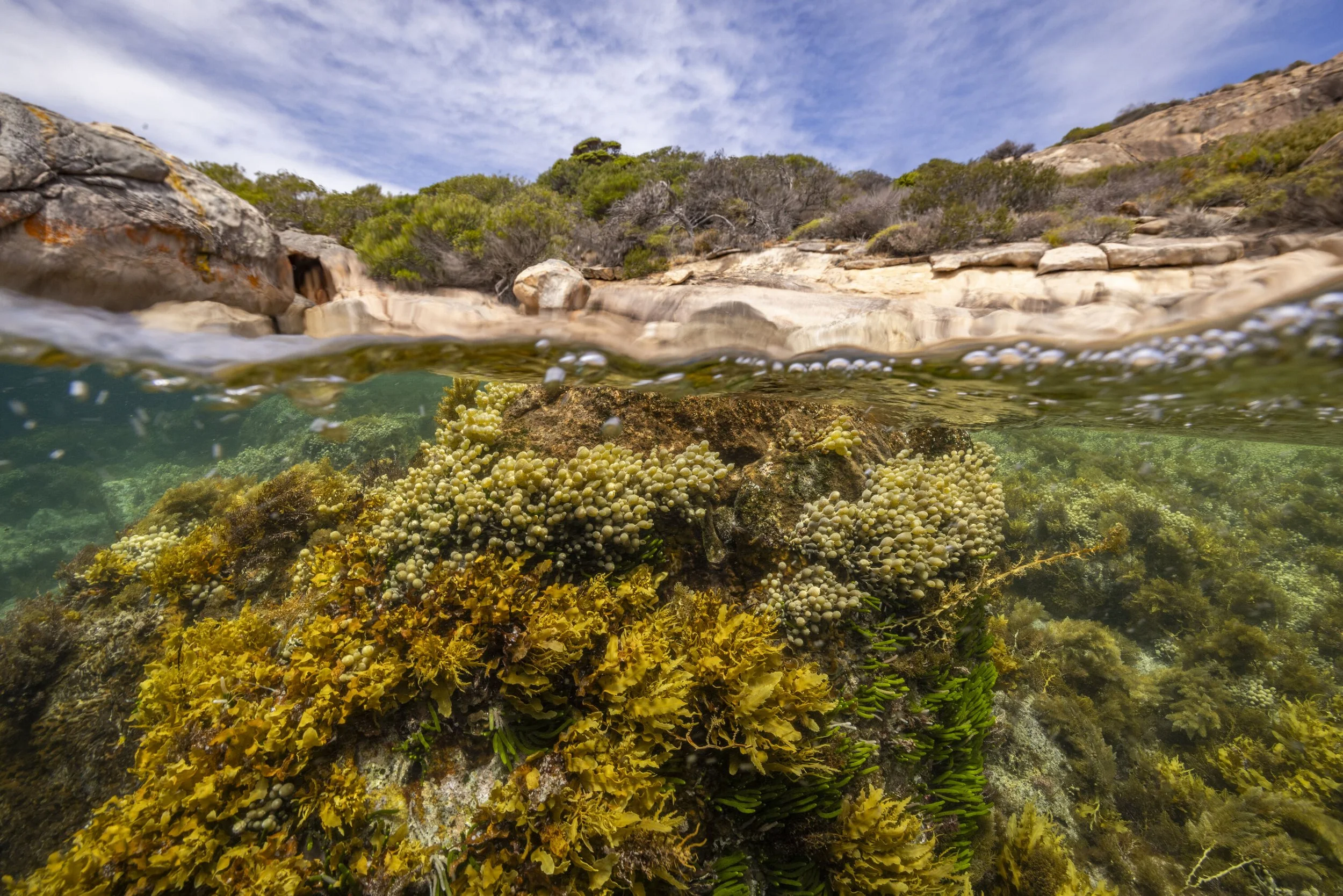
Explore the reef
Great southern reef questions, Answered
Find clear answers about Australia’s temperate reefs, marine life, climate pressures, research and the work of the Great Southern Reef Foundation.
the great southern reef
-
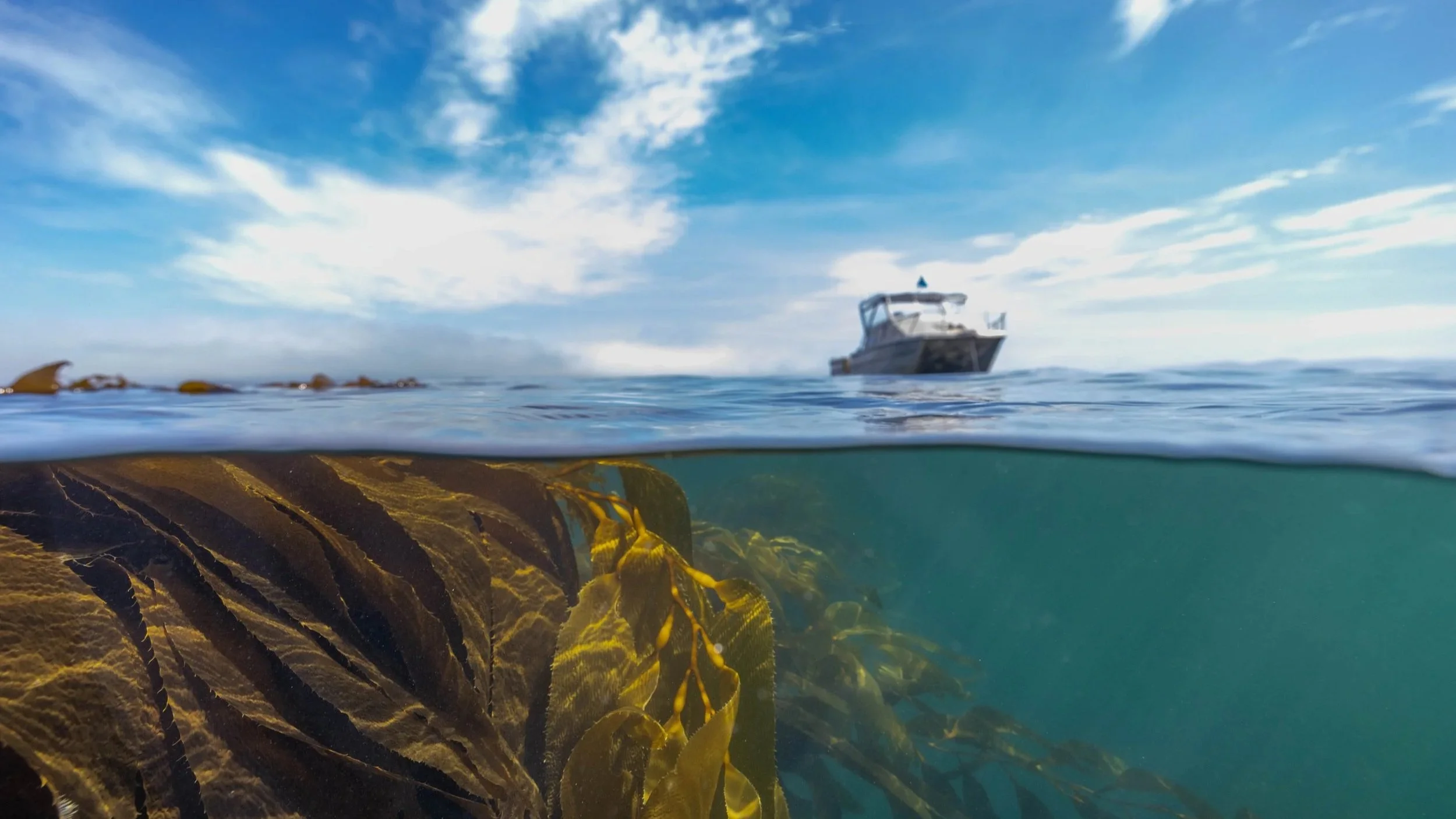
The Great Southern Reef (GSR) is Australia's extensive and interconnected system of temperate reefs, predominantly characterised by kelp forests. Spanning over 8,000 km of coastline across southern Australia, the GSR encompasses a diverse range of habitats from shallow rocky reefs to deep sponge gardens. -
The Great Southern Reef has profound ecological, cultural, and economic significance. Ecologically, it is a global biodiversity hotspot hosting a wide array of species, including a high percentage being unique to the region. The GSR supports important fisheries,tourism and recreation activity, contributing at least AU$10 billion annually to the Australian economy. It also plays a vital role in coastal protection, nutrient cycling, and carbon sequestration, supporting the livelihoods and well-being of millions of Australians.
Learn more about values of the GSR.
-
The Great Barrier Reef is a tropical ecosystem built largely by reef-forming corals. The Great Southern Reef occurs in cooler, temperate waters and is formed mainly by rocky reefs covered in kelp forests and other seaweeds.
Corals still occur throughout the Great Southern Reef, particularly soft corals and smaller reef-forming species, but they do not create the main physical structure. Kelp forests provide much of the food, shelter and habitat that support life across the Great Southern Reef.
Like the Great Barrier Reef, the Great Southern Reef is a large system made up of many individual reefs rather than one continuous structure.
-
No single organisation manages the entire Great Southern Reef. It crosses many Sea Countries and spans state and Commonwealth waters, marine parks, fisheries and local management areas.
Most shallow coastal reefs are managed separately by Western Australia, South Australia, Tasmania, Victoria and New South Wales. Deeper offshore areas may fall under Commonwealth management. Traditional Owners maintain continuing cultural connections, knowledge, rights and responsibilities across Sea Country.
Marine park agencies, fisheries managers, ranger groups, researchers, local councils, conservation organisations and coastal communities also contribute to caring for the reef. The Great Southern Reef Foundation does not directly manage the reef. Our role is to connect these groups, communicate knowledge and build coordinated national support for Australia’s temperate reefs.
-
The condition of the Great Southern Reef varies greatly between locations. Many reefs remain productive and support diverse marine communities. Other areas have experienced major declines caused by marine heatwaves, kelp loss, destructive grazing, pollution and harmful algal blooms.
Because Australia does not yet have a coordinated national monitoring system for temperate reefs, there is no single health assessment for the entire Great Southern Reef. Monitoring is divided between states, research institutions, government programs and community projects.
Better coordination would help identify changes earlier, compare conditions between regions and support faster management responses.
Marine Life
-
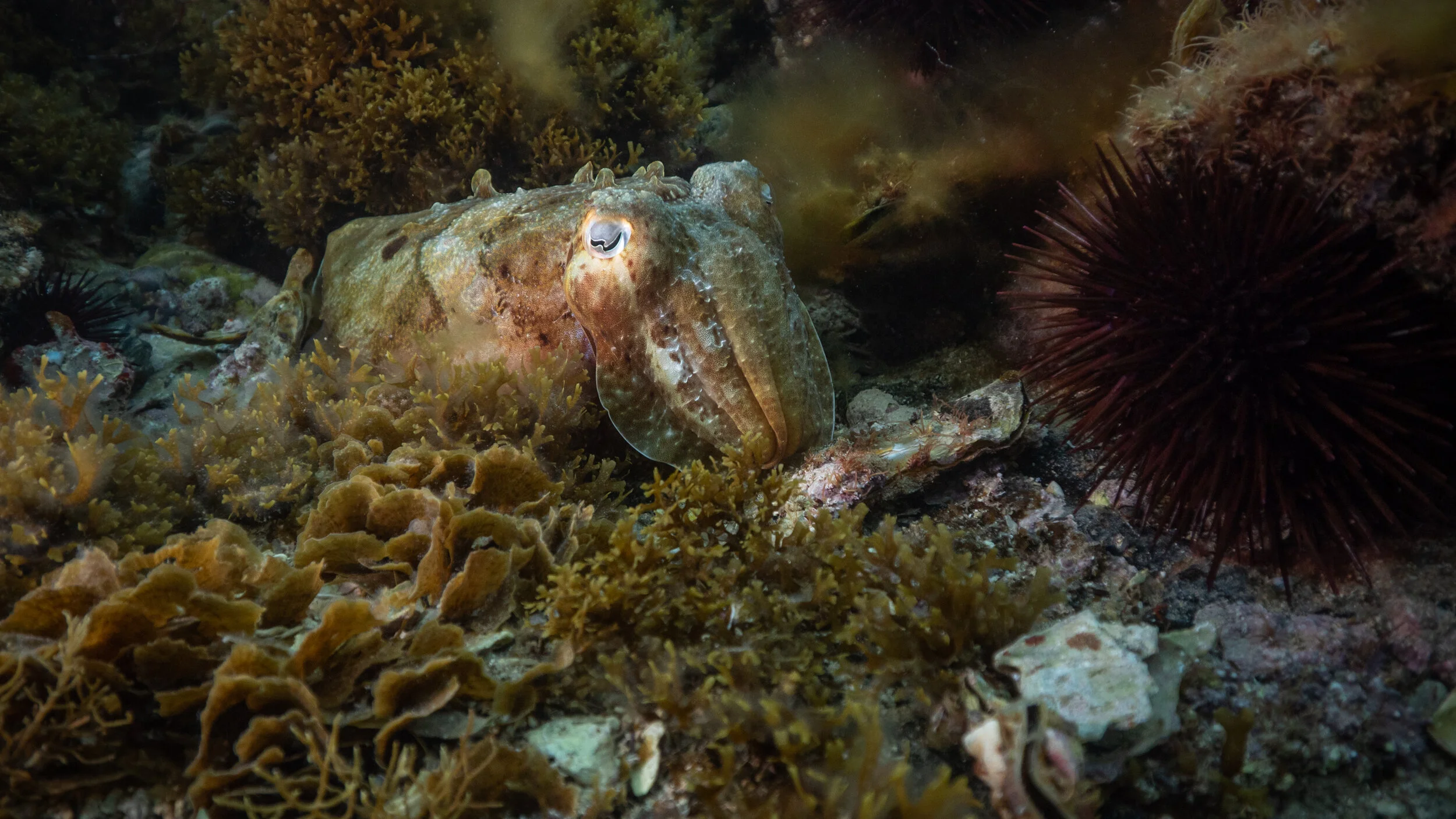
The Great Southern Reef is a global biodiversity hotspot for marine life, with particularly high diversity of seaweeds, sponges, crustaceans, chordates, bryozoans, echinoderms, and molluscs. It boasts 1500 seaweed species, 731 species of fish, 757 species of molluscs, and over 1000 species of sponges with many undescribed species. In its deeper waters especially, the GSR is predicted to host tens of thousands more species that are yet to be discovered and described.
-
Kelp forests are underwater habitats formed by large brown seaweeds growing on rocky reefs. Kelp attaches to rock using a holdfast and grows upwards towards sunlight, creating layers of habitat similar to the canopy and understory of a forest on land.
These forests provide food, shelter and nursery habitat for fish, abalone, rock lobster, seadragons, cuttlefish and many other species. They also support coastal fisheries, nutrient cycling, recreation and cultural connections to Sea Country.
Golden kelp is the most widespread canopy-forming kelp across the Great Southern Reef. Giant kelp forms taller forests in some of the reef’s cooler, nutrient-rich waters.
-
The Great Southern Reef has more endemic seaweeds than anywhere in the world. Out of the 800+ species of red algae, 75% are unique to the region (endemic). Endemism is also very high among fish and mobile invertebrates on the Great Southern Reef, with 77% occurring nowhere else.

threats
-
Climate change is already significantly impacting the Great Southern Reef (GSR) through various mechanisms. One of the primary effects is ocean warming, which has been particularly pronounced along the western and southeastern parts of the GSR, with warming accelerating 2–4 times faster here than the global average.
Along with ocean warming , a strengthening of poleward ocean currents and marine heatwaves have led to ecological changes in many parts of the GSR. Warming waters have facilitated the southward expansion of tropical and subtropical species into the GSR, a phenomenon known as 'tropicalisation.' This has led to increased competition for native species and altered community structures.
-
Specific examples of climate change induced shifts in the Great Southern Reef include:
The southward expansion of some species have caused pronounced impacts, notably the southward expansion of the long-spined sea urchin (Centrostephanus rodgersii) from the NSW and VIC coast into Tasmania, and an increase in tropical grazing fish that graze on kelp. This has led to overgrazing of kelp forests, causing significant habitat loss and altering the ecological balance of the reef system.
Once dense forests of Giant kelp (Macrocystis pyrifera) have declined by 95% on Tasmania’s East Coast and have been listed as an endangered marine community.
In Western Australia a significant marine heatwave in 2011 caused the loss of kelp from more than 960,000 hectares of the north-western GSR, along with many reef associated species including valuable abalone and lobster stocks.
-
Climate change is a major system-wide pressure, but it interacts with many local and regional threats.
These include pollution and excess nutrients from sewage and stormwater, sediment runoff, coastal development, physical damage to reef habitat, fishing pressure, invasive and range-extending species, destructive grazing, disease and harmful algal blooms.
The combination of several pressures can make it harder for kelp forests and other reef habitats to recover after a major disturbance. Reducing manageable local pressures can give reefs a better chance of coping with warming waters and marine heatwaves.

research
-
The Great Southern Reef Research Partnership (GSRRP) is a collaboration between universities, management agencies, and NGOs from across Australia, is taking a whole-of-system approach to safeguard the critical functions, fisheries, and biodiversity of the Great Southern Reef.
Funded by the Ian Potter Foundation, the partnership aims to investigate the unique biodiversity and ecological processes that underpin the GSR and increase understanding of how social dynamics and human behaviour promote sustainable outcomes for the reef.
-
The partnership has several ambitious research priorities to increase understanding and to ensure the long-term protection of the Great Southern Reef system. These priorities include:
1) National monitoring of reef biodiversity inside and outside of protected areas.
2) Integrated assessments of critical reef processes that influence the health and stability of the reef.
3) Investigate how social dynamics and human behaviour promote stewardship and sustainable outcomes for the reef.
Priorities within the partnership are focussed on establishing long-term and integrated national programs that promote the management, sustainable use and protection of the reef into the future.
-
Comprising eminent and emerging temperate reef scientists from across Australia, the Great Southern Reef Foundation’s Science Committee aims to become a principal reference point for government, industry, and managers, offering a holistic national perspective on temperate reefs.
Learn more about the scientists in the GSRF science committee.

Foundation
-
The Great Southern Reef Foundation is run by an independent team of science, media and education professionals working to promote the recognition, stewardship and long-term health of Australia’s kelp forests. We act as knowledge brokers between science and society, to deeply embed the importance of the Great Southern Reef into Aussie culture.
-
Our mission is to inspire and empower society to protect and sustain Australia’s Great Southern Reef by promoting recognition, stewardship, and sustainable actions through impactful education, community engagement, and collaborative science.
The vision of the Great Southern Reef Foundation is to connect, educate and inspire society to become active stewards of Australia’s kelp forests. The GSRF represents the Great Southern Reef in key areas of Education, Community, and Science. We’re here to deepen your understanding and recognition of the Great Southern Reef.
-
The Great Southern Reef was incorporated in 2023 as a not-for-profit charity - the foundation is registered with the ACNC and annual financial information is available via the charity’s profile on the ACNC website.
Learn more about the Great Southern Reef Foundation team here and you can learn more about our initiatives here.
-
Our partners and supporters work alongside us to deliver education, film, research communication, and community impact across the Great Southern Reef.
Check out our Partners page to learn more about our supporters.
-
The Great Southern Reef Foundation is a DGR-1 endorsed Australian charity working to inspire active stewardship of Australia’s kelp forests.
-
Donations support the Great Southern Reef Foundation’s education programs, films and visual storytelling, research communication, community initiatives and national advocacy.
This includes developing classroom resources, documenting changes beneath the surface, sharing scientific findings, supporting public campaigns and building the case for coordinated monitoring, restoration and protection.
GSRF is a DGR-1 endorsed Australian charity. Donations are tax-deductible, and information about our work and outcomes is published through our impact reporting.

Get involved
-
Contributing to the protection and preservation of the Great Southern Reef is possible through a variety of actions that involves environmental stewardship, informed consumption, and active participation in conservation efforts.
Individuals and communities can make a tangible difference by engaging in citizen science projects, which empower people to monitor reef health and gather crucial data for scientific research. Supporting eco-tourism businesses that prioritise sustainability helps protect the reef while promoting local economies. Choosing sustainable seafood is another impactful action; by asking about the origin and sustainability of seafood, consumers can drive demand for responsibly sourced products.
Participating in local clean-up events can help maintain the beauty and health of the reef while also contributing to larger data collection efforts that can inform policy and lasting environmental change. Advocating for marine sanctuaries ensures critical habitats are protected, enhancing the reef's resilience to threats like overfishing and climate change.
The GSR Foundation also encourages support for local artists who draw inspiration from the reef, as their work raises awareness and fosters a deeper connection with the marine environment. Additionally, education and spreading the word about the GSR are crucial; by sharing knowledge and experiences, individuals can raise awareness and inspire collective action to protect this vital marine ecosystem.
-
The Great Southern Reef Educator Hub hosts a collection of resources tailored to foster Ocean Literacy and nurture a deeper connection with Australia's unique kelp forest ecosystems. Resources are available across all year levels and themes include topics such as food webs, climate change, First Nation's perspectives, biodiversity, endangered species and more.
The vision of the Great Southern Reef Foundation is to connect, educate and inspire society to become active stewards of Australia’s kelp forests. The GSRF represents the Great Southern Reef in key areas of Education, Community, and Science. We’re here to deepen your understanding and recognition of the Great Southern Reef.
-
The Foundation is always looking for fresh perspectives and new collaborations that can further our mission of protecting and promoting the Great Southern Reef. If you have a specific skill set or innovative ideas on how to contribute, we encourage you to reach out to us directly by emailing info@greatsouthernreef.com.
-
The Great Southern Reef Foundation puts out a monthly newsletter featuring all the latest from our team, research partners and creatives. Subscribe at the bottom of this page.
We also encourage you to visit our YouTube channel, Instagram, Facebook, LinkedIn, X, TikTok, BlueSky.
Join Our Community
Sign up to our monthly newsletter to receive the latest updates from around the GSR.
Monthly Great Southern Reef updates. Unsubscribe at any time.