
Cephalopods
Southern Blue-ringed Octopus
Hapalochlaena maculosa
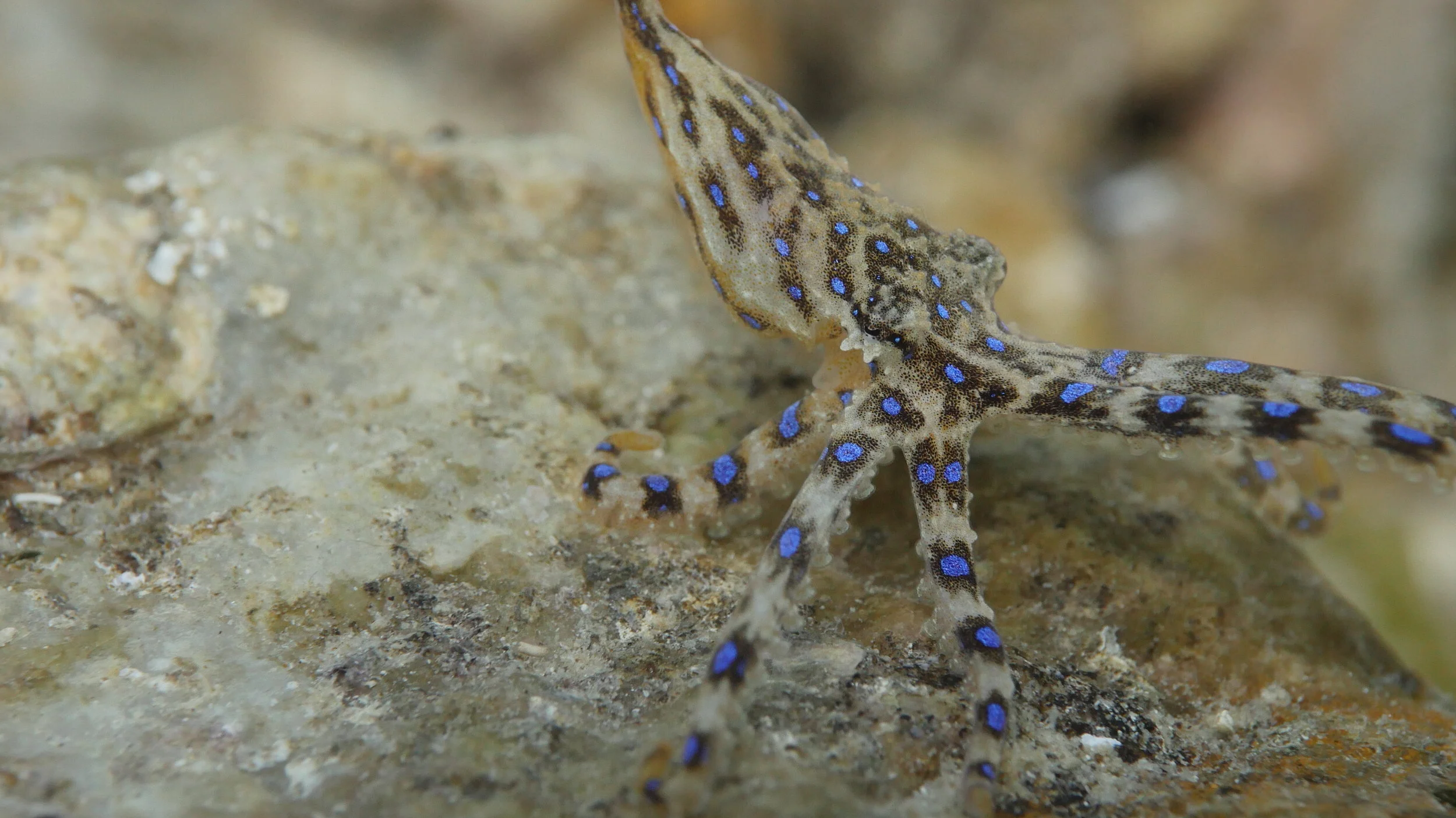
Small, secretive and brilliantly patterned. Meet a remarkable reef hunter whose blue rings carry an unmistakable warning.
Scientific Name
Hapalochlaena maculosa
Group
Cephalopod mollusc
mantle length
Up to 6 cm
range
Southern Australia
Feeding
Mainly crustaceans
Identification
More than its blue rings

At rest, this small octopus can appear brown or grey. When disturbed, vivid blue rings become conspicuous across its body and arms.
Look for a compact oval mantle, eight relatively short arms and skin that can form small bumps or spikes. Observe these features from a distance.
Look, don’t touch. Never handle a blue-ringed octopus—even when its rings are not visible.
Four features to look out for – without touching:
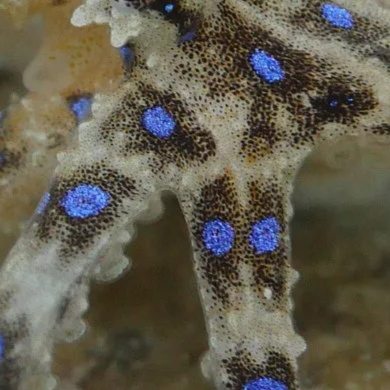
Blue ring markings
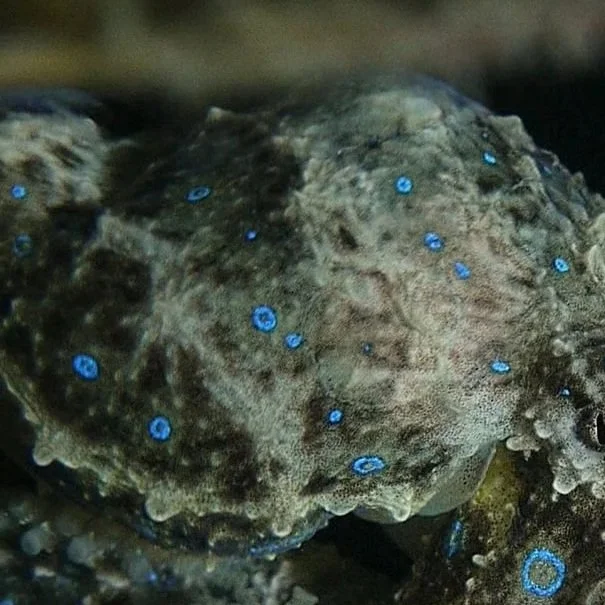
compact mantle
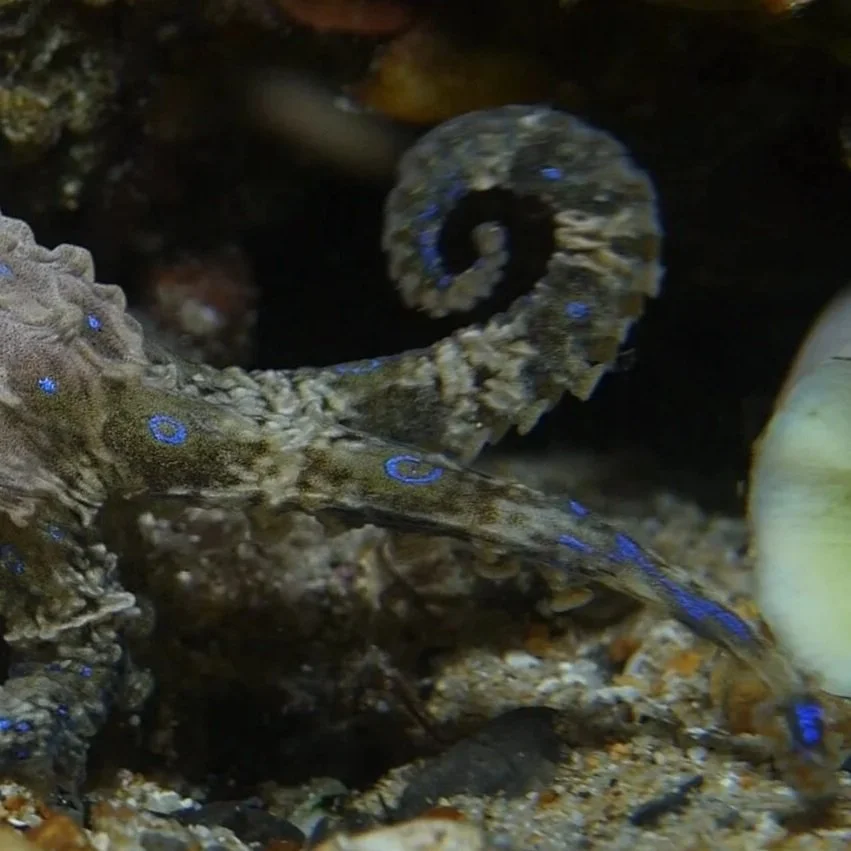
eight short arms
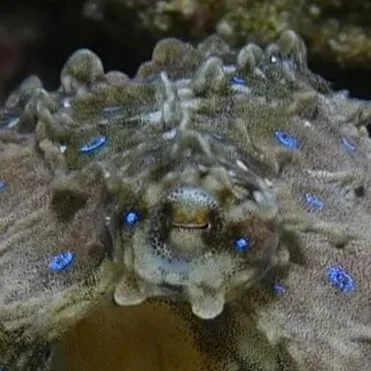
textured skin
Identification and size · Museums Victoria
“Blue-ringed octopus” describes several related species. The blue-lined octopus, Hapalochlaena fasciata, has blue lines on its mantle and rings on its arms. This page focuses on H. maculosa.
Distribution & Habitat
A small life among the shallows

The southern blue-ringed octopus inhabits rocky reefs, rubble and seagrass meadows. It occurs from the intertidal zone to depths of at least 50 metres.
Small shelters can be easy to overlook. Blue-ringed octopuses may occupy shells or discarded containers, so never reach into concealed spaces or pick up objects to inspect their occupants.
Feeding Ecology
A small but capable hunter
Small crabs and shrimps are important prey, with small fish also taken. The octopus uses venom containing tetrodotoxin to immobilise its catch.
This neurotoxin interferes with nerve signals that control muscles. For the octopus, it is a hunting adaptation as well as a powerful defence.
crabs
Crabs are among the prey taken from the seafloor.
Molluscs
Snails, clams and scallops offer another source of food.
Venom
A bite delivers toxins that help subdue prey.
Camouflage & Warning Displays

A brilliant signal
to keep your distance
Muted colours help the octopus blend into its surroundings. When it is disturbed, darker patches make the iridescent blue rings stand out.
The display warns potential predators to stay away. It is not an invitation to approach, and an octopus without obvious blue rings should never be assumed safe to handle.
Let the animal move freely. Do not touch, corner or provoke it to make the colours appear for a photograph.
Reproduction & Development
Carrying the next generation

Females lay eggs in strings and carry them within the web of their arms. The young hatch with their colour patterns already developed and settle directly onto the seafloor.
The mother devotes the brooding period to her eggs, stops feeding and dies after they hatch.
conservation
Respect the animal.
Leave its home intact.

Museums Victoria records the southern blue-ringed octopus as Least Concern on the IUCN Red List.
Its venom is a reason to give it space, not to harm it. Enjoy watching from a distance and leave shells, rocks and occupied shelters undisturbed.
If you find an octopus in litter, do not try to handle or move it yourself. Seek advice from local coastal or wildlife authorities.
Safe Encounters
A blue-ringed octopus bite can be painless but life-threatening. Its venom can cause muscle paralysis and stop a person breathing.
Keep children from handling small octopuses, shells or containers found in rock pools. Do not wait for blue rings to appear before keeping your distance.
Any suspected bite needs immediate emergency help. Do not wait for symptoms.
Admire it.
Never handle it.
suspected bite? call 000
Get the person out of the water safely. Call 000 for an ambulance in Australia.
Keep them still, reassured and under constant observation.
Apply the pressure immobilisation technique if possible and follow the emergency operator’s instructions.
If they are unresponsive and not breathing normally, start CPR. Follow the operator’s guidance and continue until help takes over.
This is a brief first-aid summary, not a substitute for training or emergency assistance.
watch & discover
Meet the blue-ringed octopus
Take a closer look through the Great Southern Reef film, retained from the original page.
Watch its movements and changing skin patterns without disturbing an animal in the wild.
Continue Exploring
-
![]()
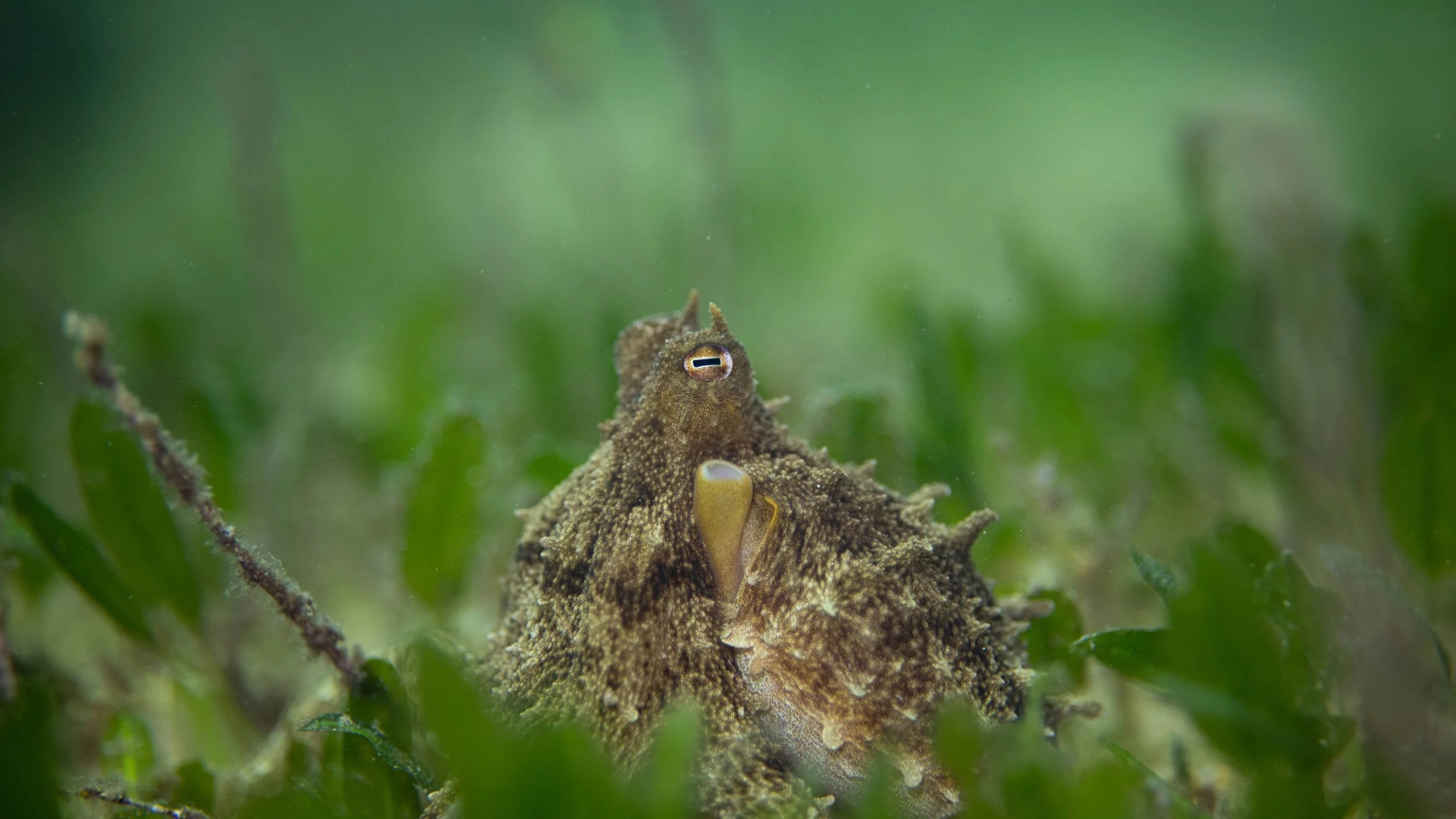
Cephalopods
Meet the octopuses, squid and cuttlefish of the Great Southern Reef.
-
![]()
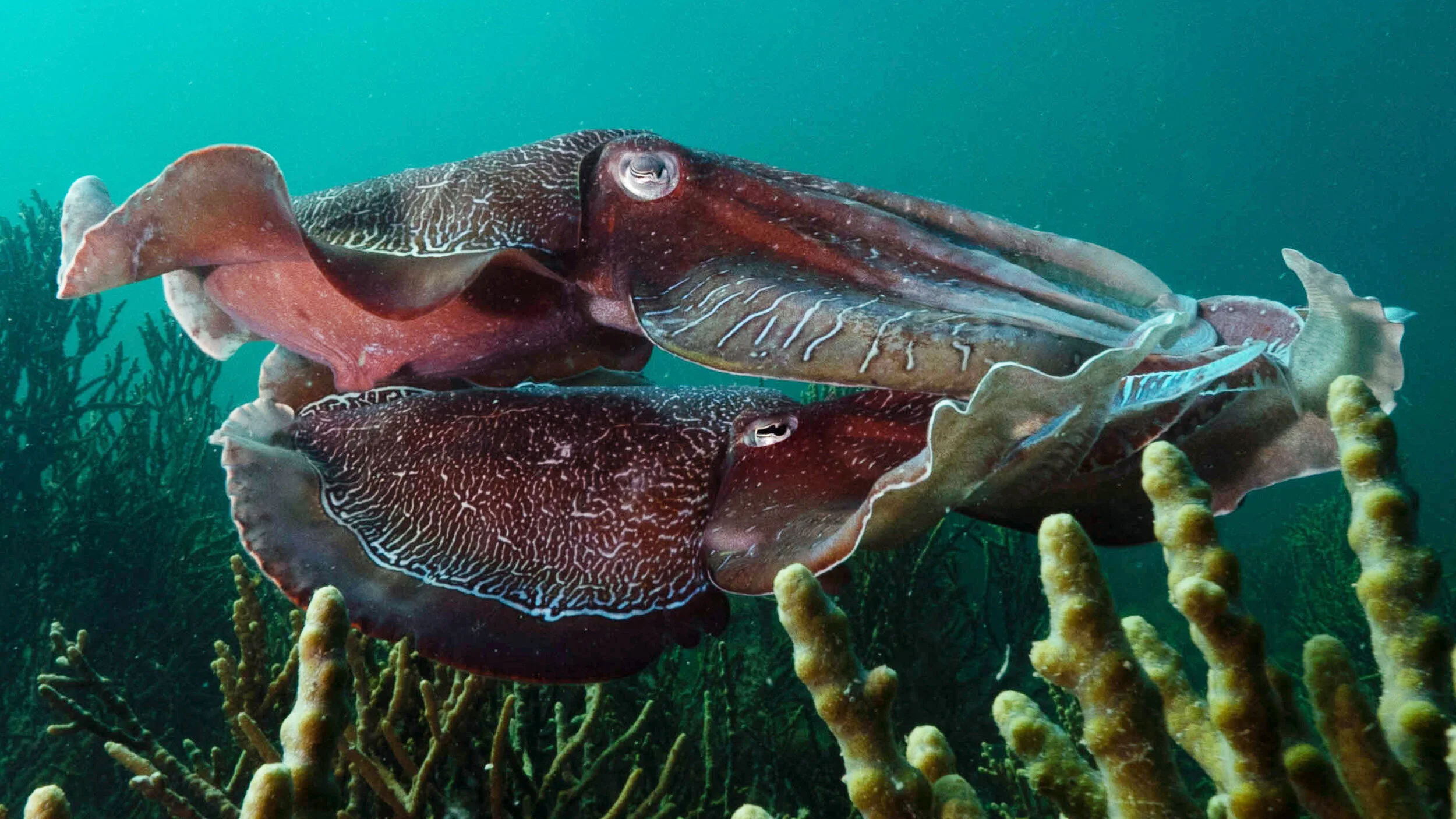
Giant Australian Cuttlefish
Discover another remarkable master of camouflage.
-
![]()
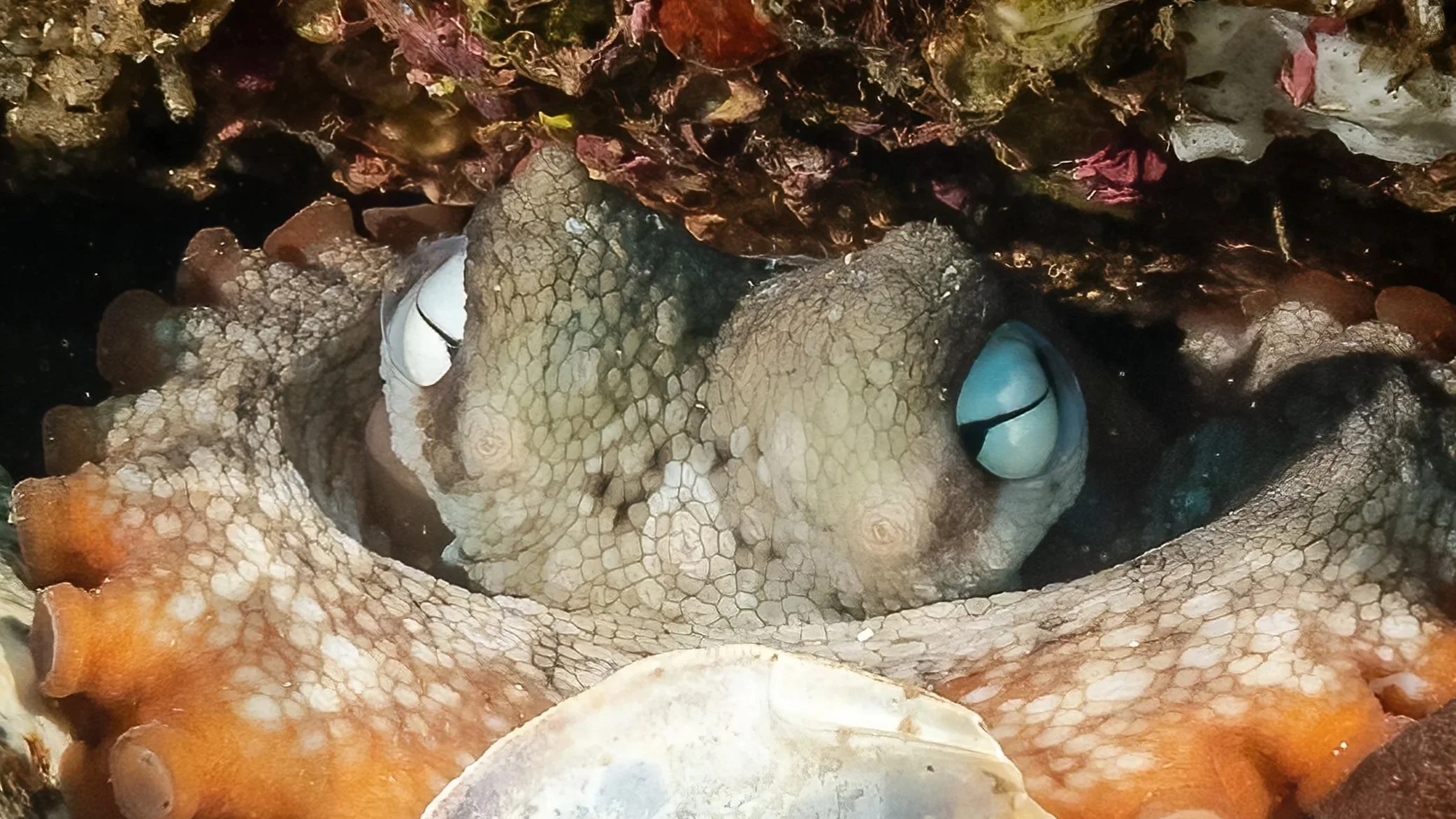
gloomy octopus
Discover another octopus with a surprising range of behaviours.
Join Our Community
Sign up to our monthly newsletter to receive the latest updates from around the GSR.
Monthly Great Southern Reef updates. Unsubscribe at any time.