
Cephalopods
Giant Australian cuttlefish
Ascarosepion apama (Previously known as Sepia apama)
The world’s largest cuttlefish transforms its colour, pattern and texture in an instant — a remarkable hunter and a celebrated part of the Great Southern Reef.
Scientific Name
Ascarosepion apama
Group
Cephalopod Mollusc
Max Mantle Length
Up to 50cm
Max Weight
Up to 10.5kg
Typical Lifespan
1-2 years
Behaviour & Adaptation
Masters of Disguise
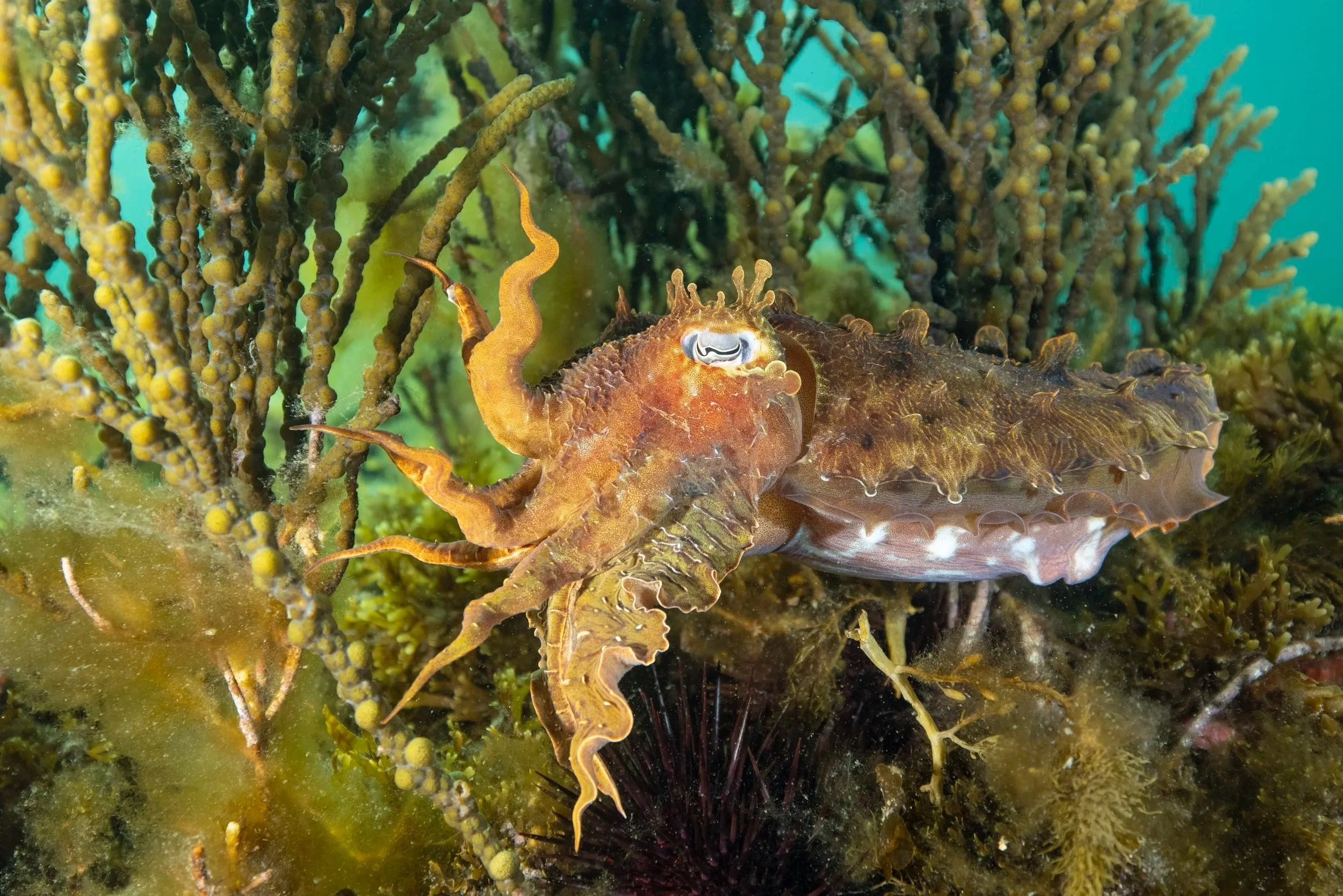
A cuttlefish’s appearance is constantly changing. Pigment cells called chromatophores allow it to alter its colour and pattern, while raised areas of skin change its texture.
These transformations help it blend with rock, sand and seaweed. During breeding, the same abilities become a vivid form of communication, with dramatic displays directed at potential mates and rivals.
Species biology: Australian Museum.
Identification
Recognising A reef Giant
Colour alone is an unreliable guide to a cuttlefish that can change its appearance so quickly. Look instead at its broad body, the fin running around its mantle and the arrangement of its arms.
Giant Australian cuttlefish have distinctive skin folds behind each eye. Inside the body, a lightweight cuttlebone helps control buoyancy.
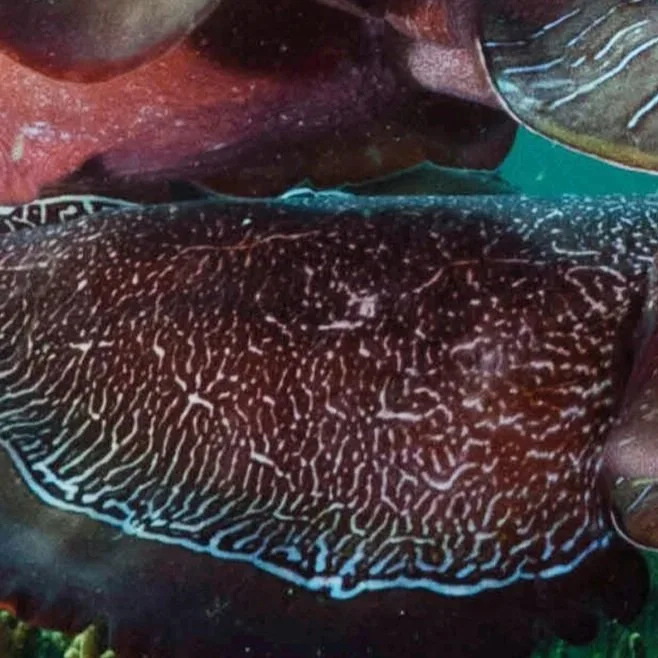
Broad Mantle
A large, oval body houses the internal organs and cuttlebone.
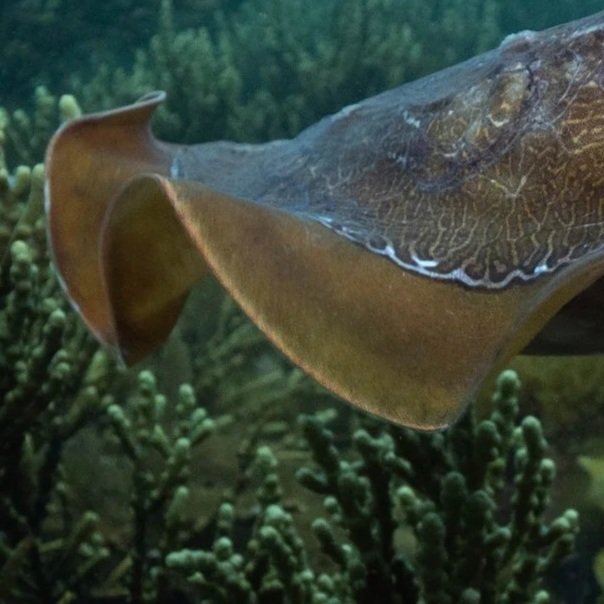
Fringing Fin
A narrow fin extends along the sides of the mantle.
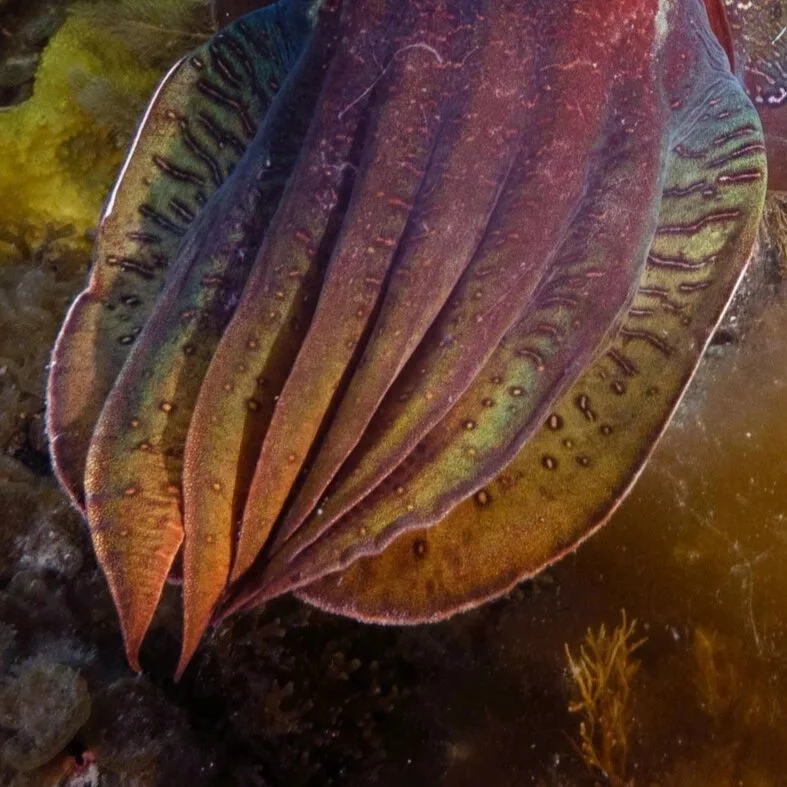
Arms & Tentacles
Eight arms and two longer feeding tentacles surround the mouth.
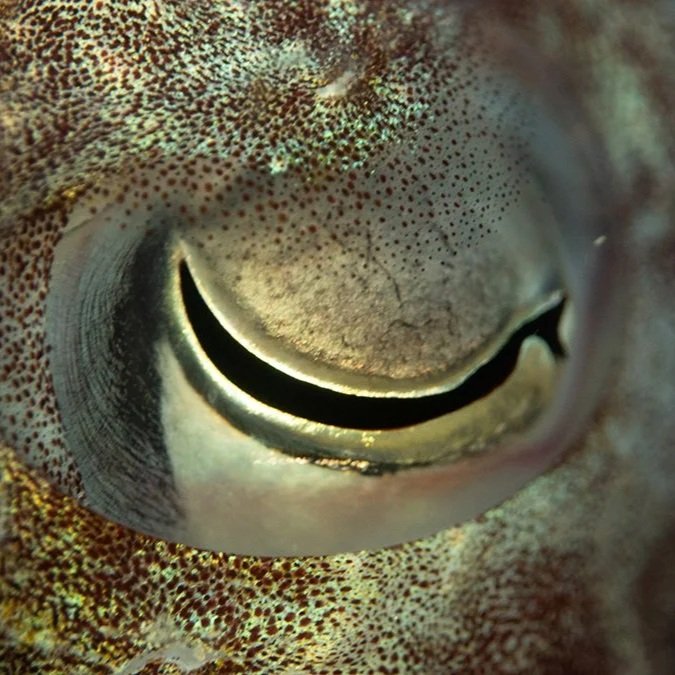
Skin Folds
Three folds behind each eye help distinguish this species.
Identification: Fishing Tasmania; Australian Museum.
Distribution & Habitat
AT home on the GSR
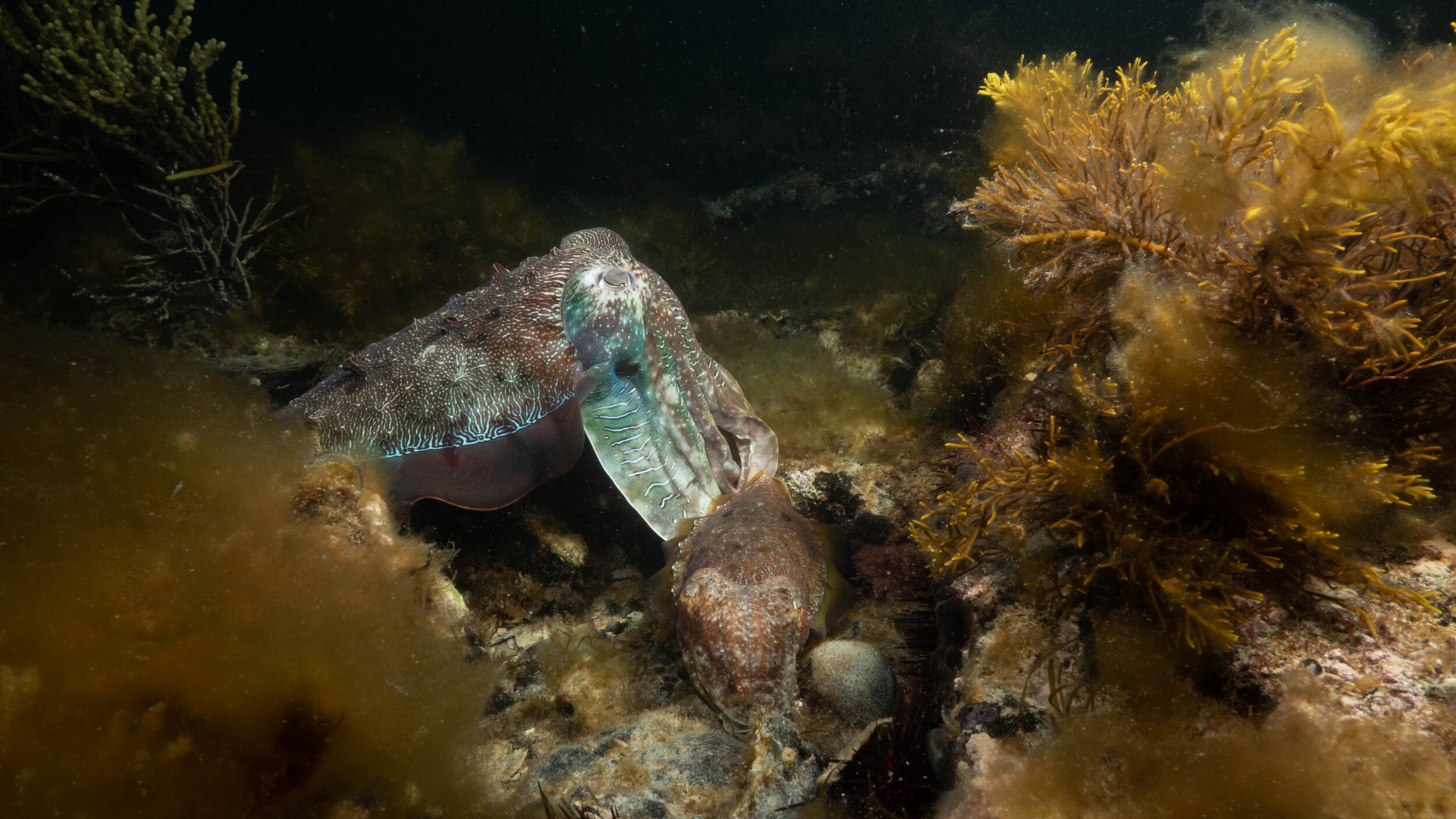
Giant Australian cuttlefish occur along southern Australia, from New South Wales around the southern coastline to Western Australia, including parts of Tasmania.
They inhabit rocky reefs, seagrass beds and sandy seafloors. Rocks, ledges and crevices provide shelter and secure surfaces for eggs.
Range and habitat: Australian Museum; Fishing Tasmania.
Feeding Ecology
A hunter hiding in plain site
Giant Australian cuttlefish are carnivores, feeding on crustaceans, fish and other molluscs. Two extendable feeding tentacles seize prey, which is held by the arms and processed by a powerful beak.
Crustaceans
Crabs and other crustaceans form part of their diet.
Fish & Molluscs
They also hunt fish and smaller cephalopods.
Part of the food web
Cuttlefish themselves are prey for dolphins, seals and sharks.
Diet: DCCEEW; predators and biology: Australian Museum.

A Remarkable Winter Gathering
Reproduction & Annual Aggregation
The shallow reefs near Point Lowly and Whyalla in South Australia are renowned for the species’ largest known breeding aggregation. Historically, enormous numbers have gathered here between May and August.
Males compete for females through displays and close guarding. Smaller males may mimic female appearance and posture to approach a potential mate without provoking a larger rival.
Females attach eggs beneath rocks and inside sheltered crevices. These small spaces are a vital part of what makes this stretch of coastline such an important breeding habitat.
Breeding habitat and behaviour: DCCEEW. Recent population changes are covered below.
ADULTS GATHER
Autumn-Winter
Cuttlefish arrive at the breeding reef, and courtship and competition intensify.
Winter
EGG LAYING BEGINS
Females place individual eggs in protected spaces. Adults die after breeding.
Following Months
A NEW GENERATION
Eggs develop over several months. Hatchlings emerge and begin life independently.
A typical seasonal sequence; timing and abundance vary between years.
Restoration case study
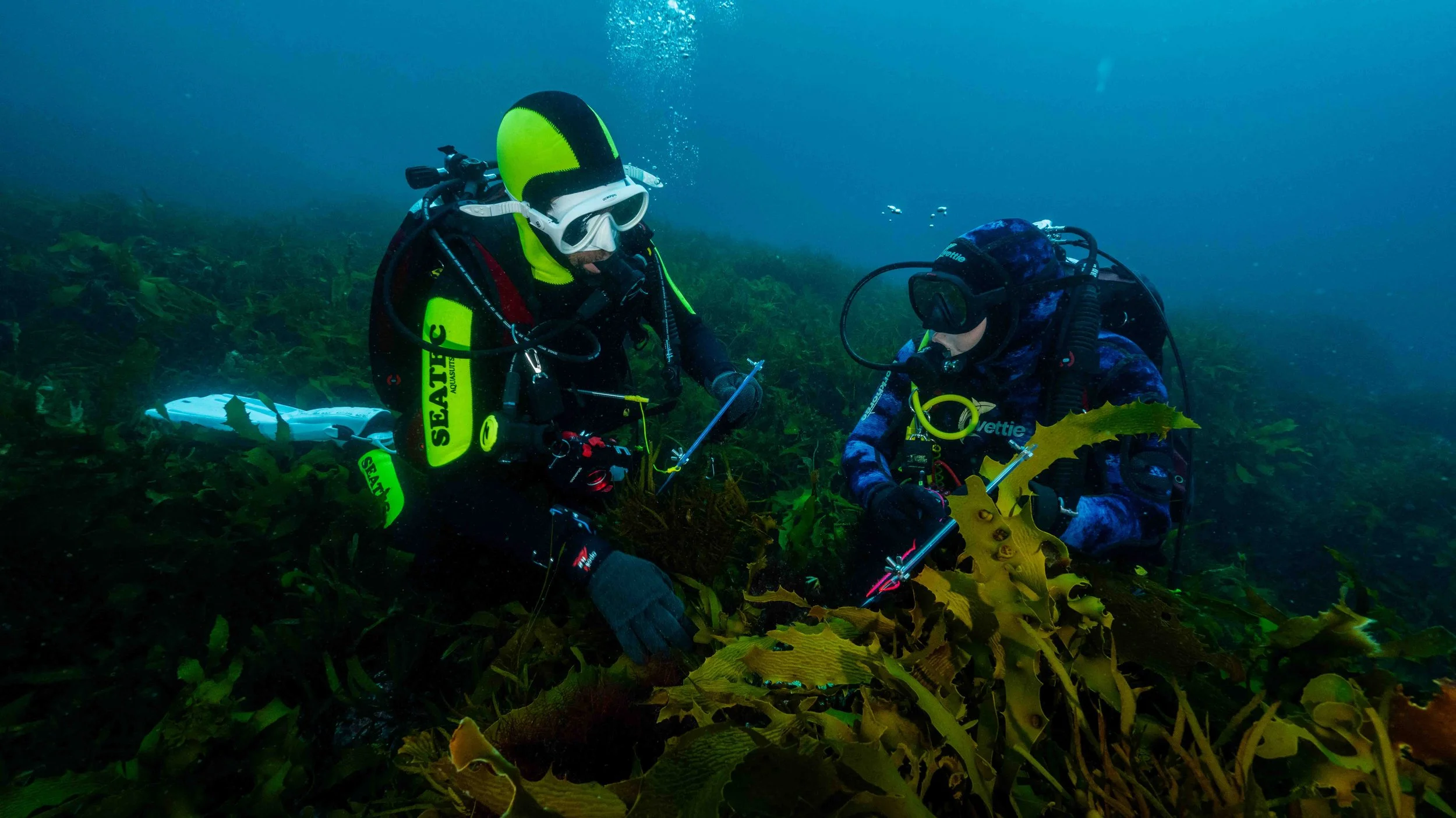
In Port Phillip Bay, researchers and restoration teams are helping golden kelp return to degraded reefs. The work combines managing overabundant sea urchins with growing and planting young kelp.
One approach, known as green gravel, starts with cultivating kelp on small stones before placing them back on the reef. Seeded twine and transplanted kelp provide other ways to help forests re-establish.
The 2022–2025 collaboration brought together The Nature Conservancy Australia, Deakin University, the University of Melbourne and Parks Victoria. Monitoring recorded more kelp recruits and adult kelp in restored areas than in untreated barrens.
Growing the next Generation
Continue Exploring
-
![]()
Seaweeds
Meet the marine algae that help shape the Great Southern Reef.
-
![]()
Kelp Forests
Kelp forests form the living foundation of the Great Southern Reef, creating food, shelter and nursery habitat for an extraordinary diversity of marine life.
-
![]()
Citizen Science
Get involved and help researchers better understand and protect the reef.

Join Our Community
Sign up to our monthly newsletter to receive the latest updates from around the GSR.
Monthly Great Southern Reef updates. Unsubscribe at any time.