
Cephalopods
Gloomy Octopus
Octopus tetricus
A changeable reef hunter with pale eyes, dexterous arms and a surprising social life. There is much more to the gloomy octopus than its name suggests.
Image: Mike Jones
Scientific Name
Octopus tetricus
Group
Cephalopod mollusc
Maximum arm span
Up to 2 metres
Maximum weight
Up to 2.6 kg
Feeding
Crustaceans & molluscs
Behaviour & Adaptation
Hiding in plain sight

A gloomy octopus can change both the colour and texture of its skin. A smooth, mottled body can become rough and spiky, helping it blend into the reef around it.
Raised skin projections, called papillae, help break up its outline. What first looks like a patch of rock or seaweed may turn out to be an octopus watching from its den.
Image: Mike Jones
Identification
Recognising the gloomy octopus

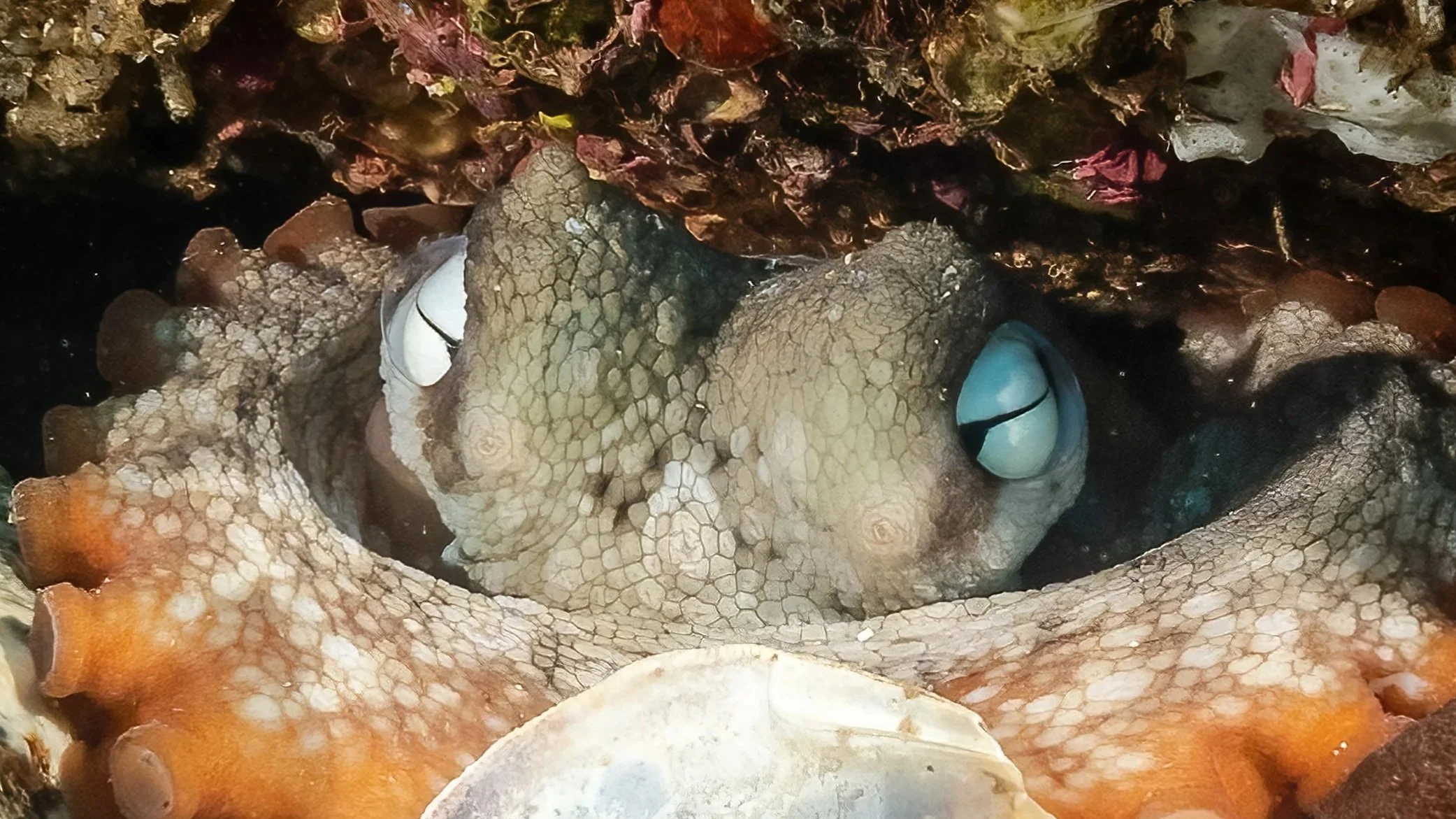
Look for pale white eyes and orange-rust colouring on the inner faces of the arms. Its body is often grey or mottled brown, but colour can change rapidly.
Use these features together with location. The common name “gloomy” describes its appearance—not its mood.
Look for the following features:
Pale White Eyes
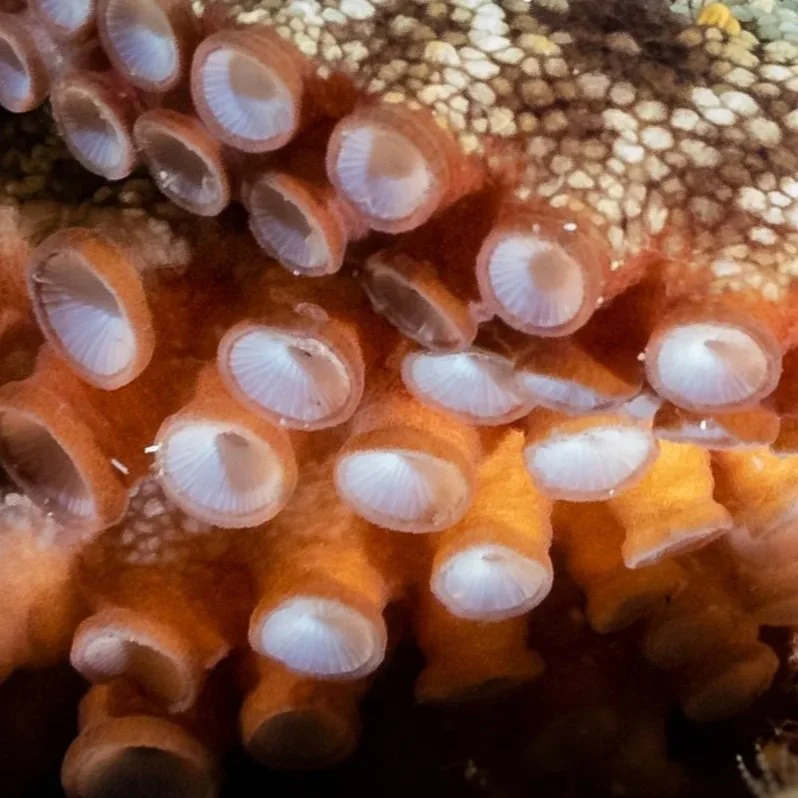
Rust coloured arm faces

Raised skin papillae

eight flexible arms
Distribution & Habitat
Eastern Reefs. A southern shift.

Gloomy octopuses occur in eastern Australia and north-eastern New Zealand. They occupy coastal reefs, seagrass beds and soft-bottom habitats, using sheltered spaces as dens.
In Australia, their range has expanded into eastern Victoria and north-eastern Tasmania. Research links this shift to warming seas and changes in the East Australian Current.
Western Australia’s closely related Octopus djinda is a separate species, rather than part of this octopus’s eastern population.
Range expansion · Ramos and colleagues, 2018
Habitat and species distinction · Octopus Biology and Ecology, 2024
Feeding Ecology
A hunter after dark
Gloomy octopuses mainly forage at night, taking crabs, snails and bivalves. Their arms handle prey, while a hard beak helps process a meal.
Empty shells around a den can reveal what its occupant has been eating. At some closely studied sites, individuals also forage during daylight.
Crustaceans
Crabs are among the prey taken from the seafloor.
Molluscs
Snails, clams and scallops offer another source of food.
Shell Middens
Discarded shells can accumulate around well-used dens.
Remarkable Behaviour
when an octopus throws
Gloomy octopuses have been filmed gathering shells, silt and algae in their arms, then propelling the material through the water with a jet from their siphon.
Some throws clear away debris or food remains. Others happen during encounters with neighbouring octopuses, and the material sometimes strikes another individual.
Researchers found evidence that some throws may be directed at other octopuses. Many others are part of ordinary den maintenance.
Read the research · Godfrey-Smith and colleagues, 2022
Image: Mike Jones
01 Gather
Shells, silt or algae are held beneath the web of the arms
COLLECT THE MATERIAL
02 Position
MOVE THE SIPHON
The siphon is brought underneath the arm web
03 Propel
A forceful jet sends the gathered material through the water.
RELEASE A WATER JET
Social Interactions
Not always a solitary life
At particular sites in Jervis Bay, gloomy octopuses occupy individual dens close together. Their neighbours are often within reach, creating opportunities for displays, mating and disputes.
Shells discarded after feeding can gradually change the seafloor and create more places to shelter. These aggregations reveal how habitat can shape octopus behaviour.
They are not cooperative “cities”. Close neighbours may tolerate one another, compete for space or drive each other away.
Den ecology and aggregations · Scheel and colleagues, 2018
Image: Mike Jones
Reproduction & Development
A life devoted to the next generation

Females lay many small eggs in strings and remain with them as they develop. During this brooding period, the mother usually stops feeding and dies after the eggs hatch.
This is a short-lived species. Published estimates vary between populations, from around 11 months in a Tasmanian study to about two years in New Zealand.
Research off north-eastern Tasmania has also documented successful reproduction beyond the species’ historical Australian range.
Image: Mike Jones
Conservation
Following a changing range

The gloomy octopus is listed as Least Concern on the IUCN Red List, as recorded by the World Register of Marine Species. That classification does not mean every local population is well understood.
Its southward expansion offers an important window into how marine life responds to a warming ocean. Tracking where it appears—and whether new populations persist—helps scientists understand changes across the reef.
A photograph, date and location can help citizen-science projects track changes in marine species’ ranges.
• Record unusual sightings
• observe without disturbing
Leave octopuses, their dens and surrounding shells undisturbed
Continue Exploring
-
![]()
Citizen Science
Get involved and help researchers better understand and protect the reef.
-
![]()
Cephalopods
Meet the octopuses, squid and cuttlefish of the Great Southern Reef.
-
![]()
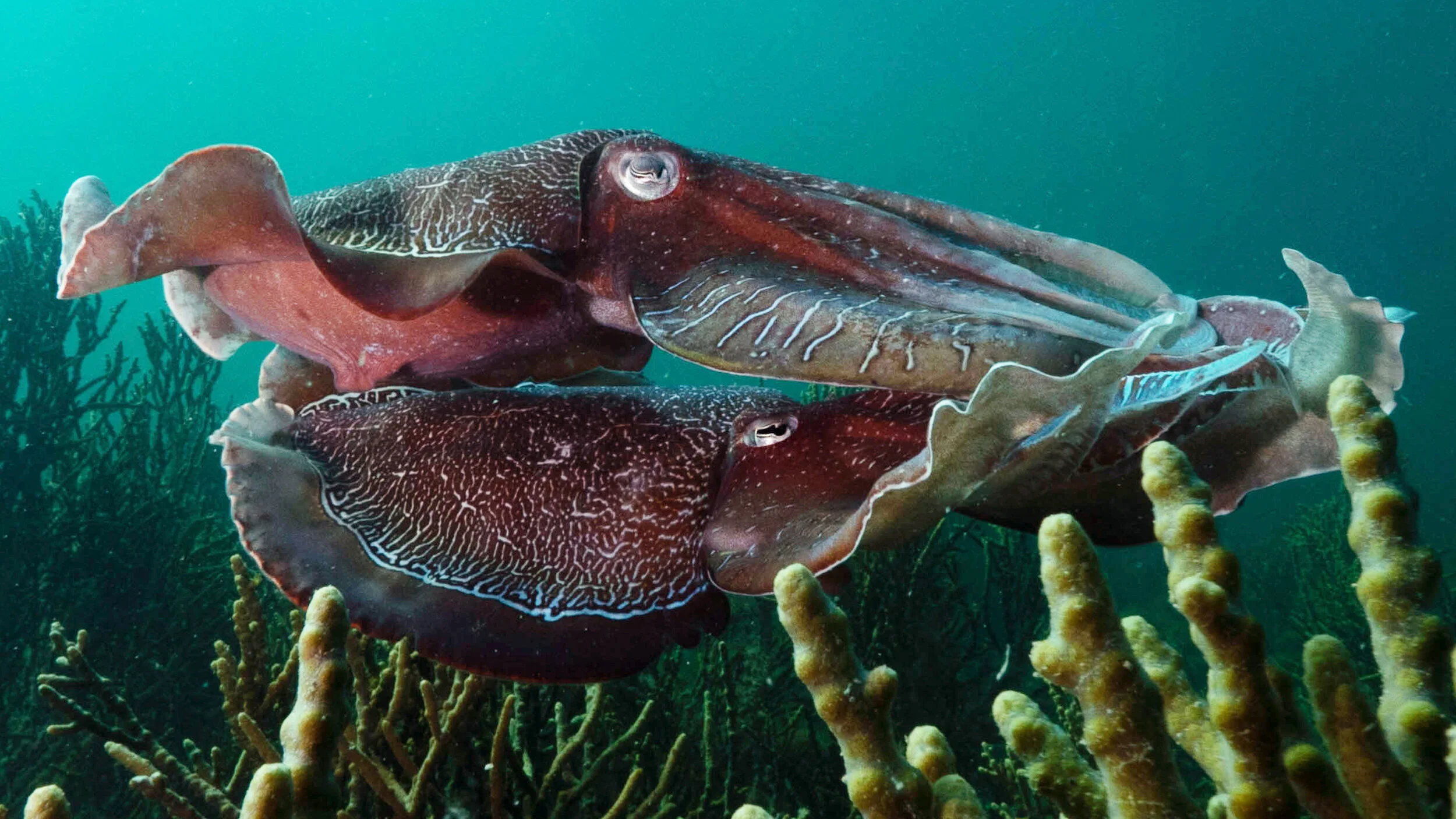
Giant Australian Cuttlefish
Discover another remarkable master of camouflage.
Join Our Community
Sign up to our monthly newsletter to receive the latest updates from around the GSR.
Monthly Great Southern Reef updates. Unsubscribe at any time.