october 2026
Monthly Reef Update
This month’s Great Southern Reef update brings together Sea Country stories, spring fieldwork and a longer view of how our reefs are changing.
We take a closer look at WA’s Mamang Maambakoort Marine Park, follow researchers measuring kelp growth and revisit Tasmania’s Derwent’s reefs. You’ll also find an update on marine life colonising Sydney Harbour’s Reef Pods and The Long View, a short film about the people and partnerships behind long-term reef monitoring. We also pay tribute to Aunty Patsy Cameron and honour her contribution to Sea Country and community.
Thank you for supporting the science, storytelling and education that help people connect with and care for the Great Southern Reef.
Mamang Maambakoort Marine Park: caring for Goreng Sea Country
Wagyl Kaip Southern Noongar priorities are guiding early research and monitoring in Mamang Maambakoort Marine Park, on Goreng Country, WA. Culturally important species, estuary health and opportunities for Noongar involvement are helping set the direction.
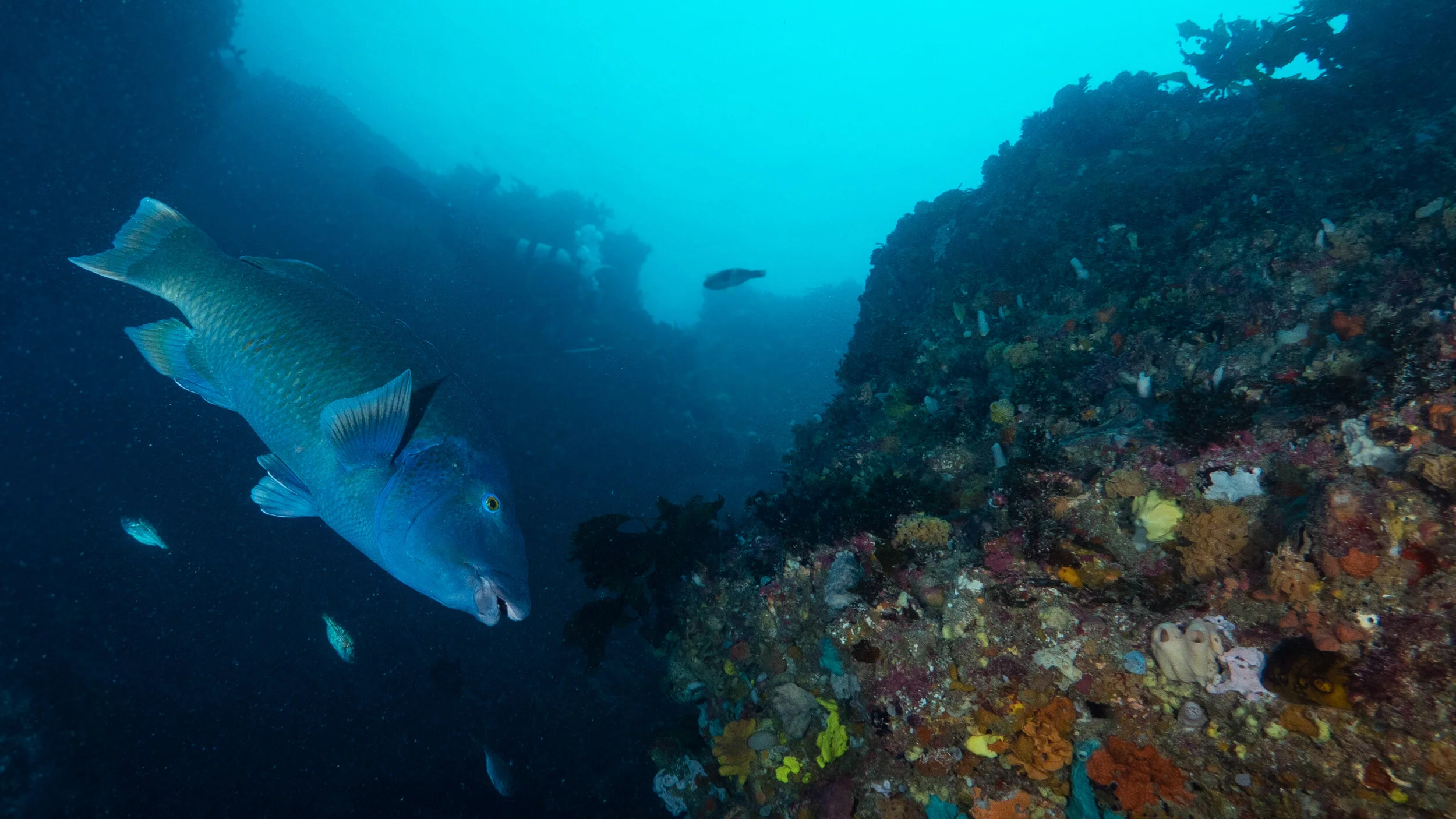
A recent field trip brought Noongar joint management representatives and DBCA staff together to survey seaweed communities and fish. When surveys recorded unexpectedly high numbers of blue groper, the team added further underwater camera deployments to better document this culturally important species.
Tracking spring kelp growth across the Great Southern Reef
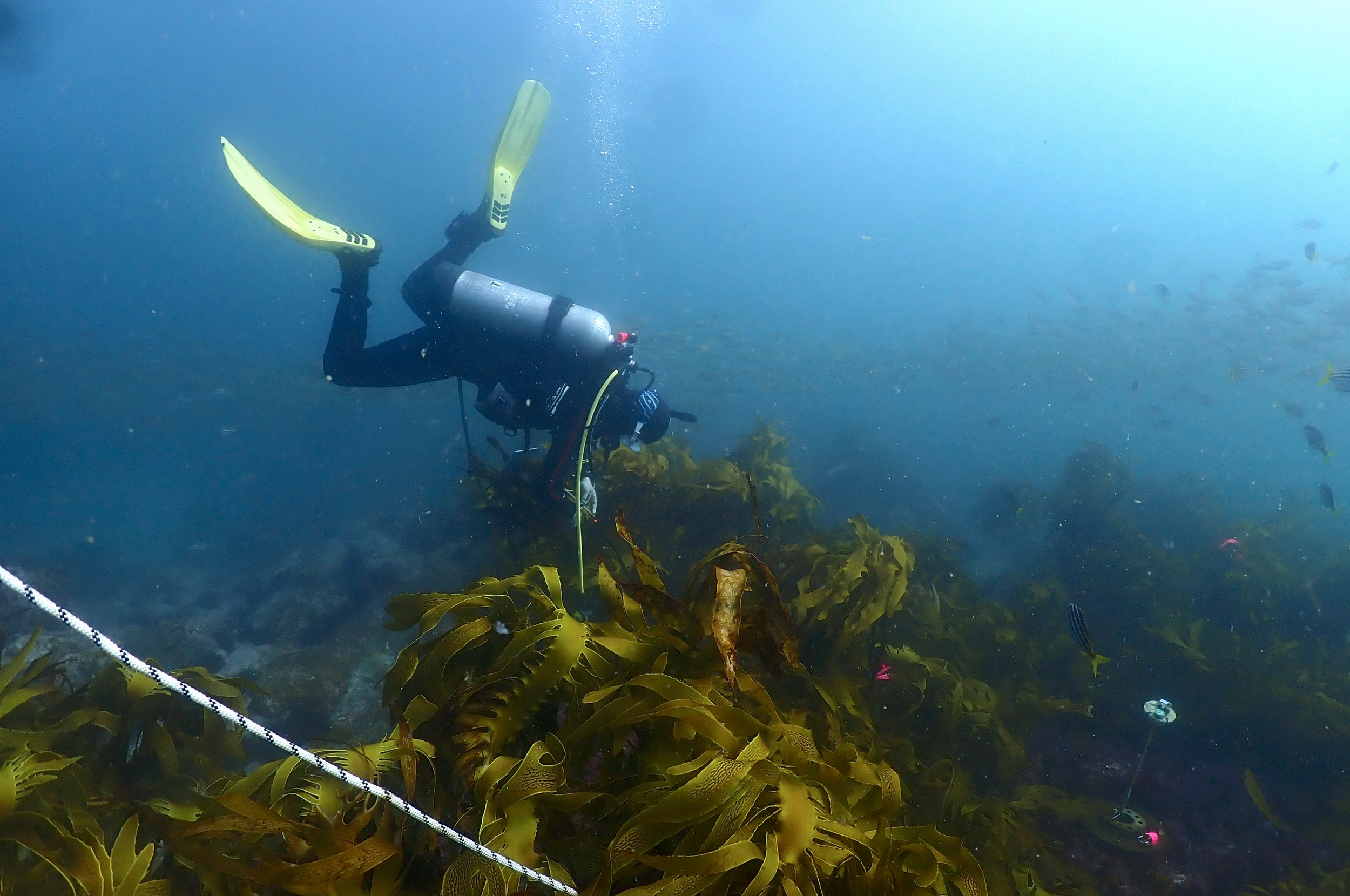
Spring fieldwork is well underway as researchers examine possible changes in kelp growth rates across the Great Southern Reef. GSR Research Partnership members are measuring growth in autumn, spring and summer to capture seasonal patterns.
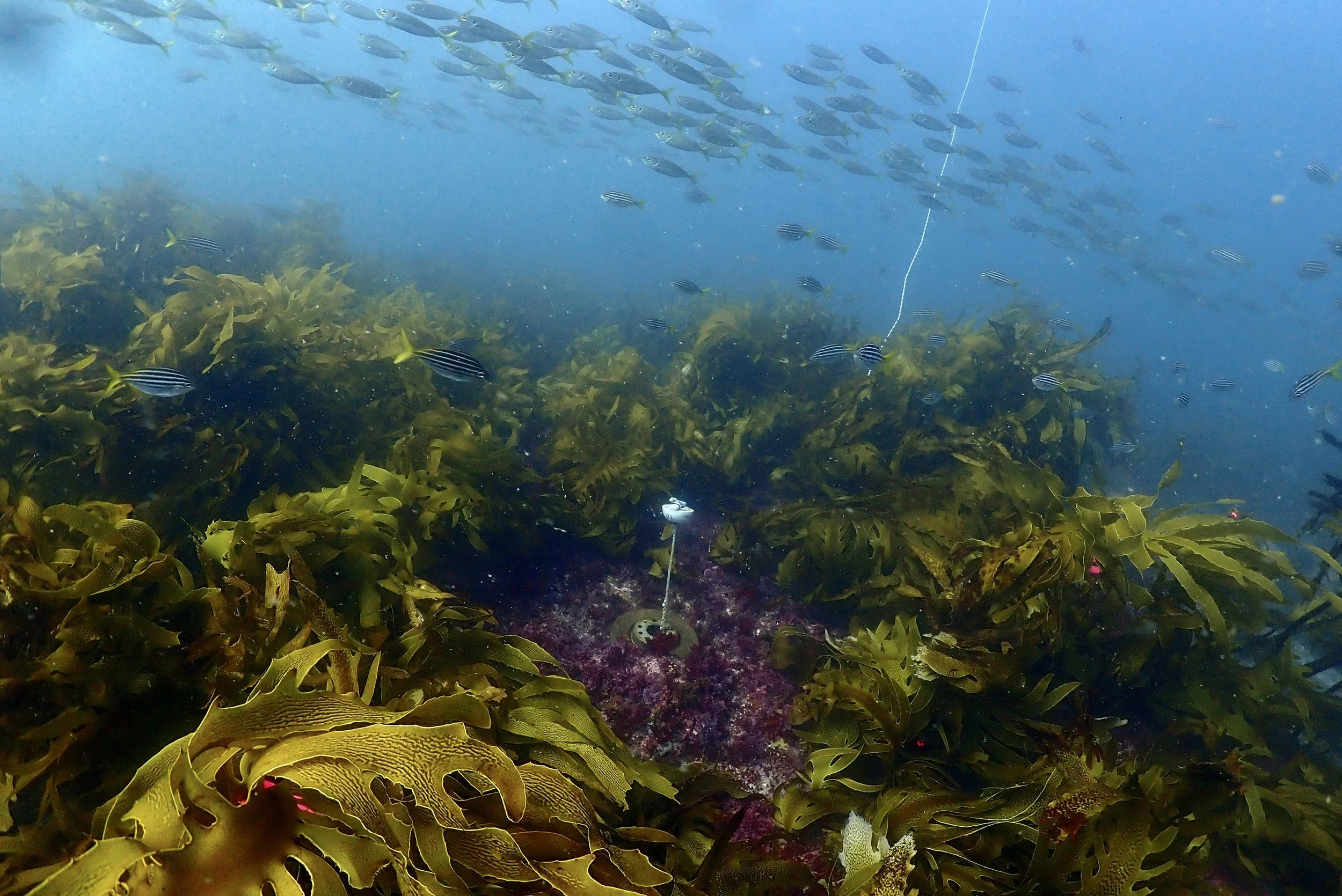
Spring is a peak growth period for kelp. At some locations, average growth reaches 6 grams of new biomass per individual kelp each day, measured as wet weight. Capturing this peak helps researchers understand seasonal patterns in kelp production.
Early spring brought windy conditions, but field teams enjoyed good underwater visibility while establishing study sites in Tasmania, New South Wales and Western Australia. After allowing a few weeks for growth, teams are now returning to measure how much the kelp has grown.
Images & Report by Hunter ForbesRemembering Aunty Patsy Cameron
We pay tribute to Aunty Patsy Cameron AO, a Tasmanian Aboriginal Elder and author who passed away in September. Her books, including Grease and Ochre, Sea Country and In the Kelp Forest, shared Tasmanian Aboriginal culture and connections to Country with people of all ages.
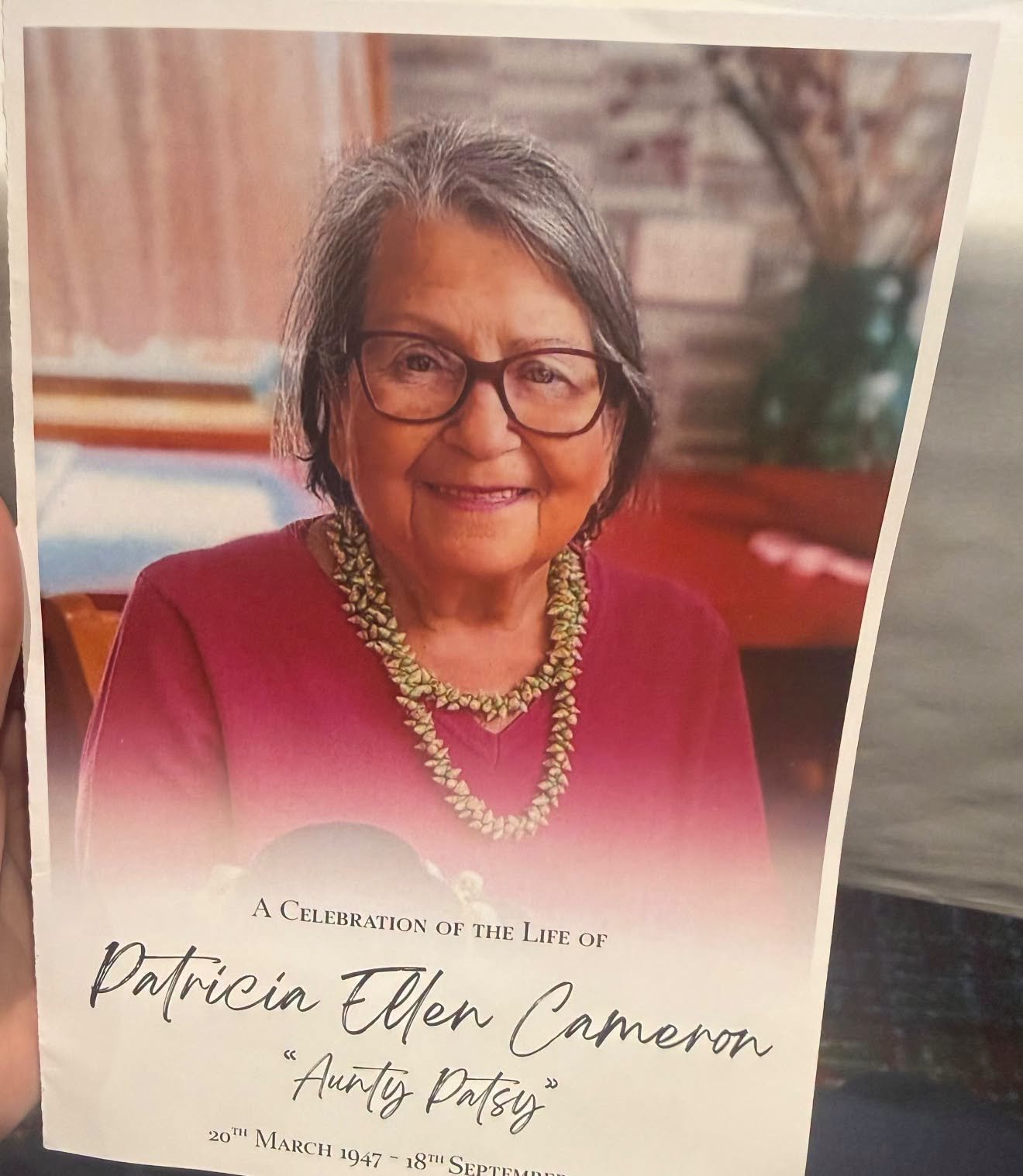
GSRF cofounder and chair, Dr. Scott Bennett reflected on her contribution:
“Aunty Patsy was a trans-disciplinary researcher, educator and thought leader. Through her writing she awoke us to cultural importance of Sea Country for Tasmanian Aboriginal women and the languages used by Tasmanian Aboriginal peoples to describe our local marine life. Her generosity sharing this with the Tasmanian public has been transformational.”
We extend our condolences to Aunty Patsy’s family, friends and community.
Golden kelp returns to Derwent Estuary reefs
Golden kelp is growing on parts of Tasmania’s Derwent Estuary reefs where dense worm mats once covered the rock. Comparing surveys from 2010 and 2024, Institute for Marine and Antarctic Studies (IMAS) researchers found that kelp had spread further upstream and into deeper water.
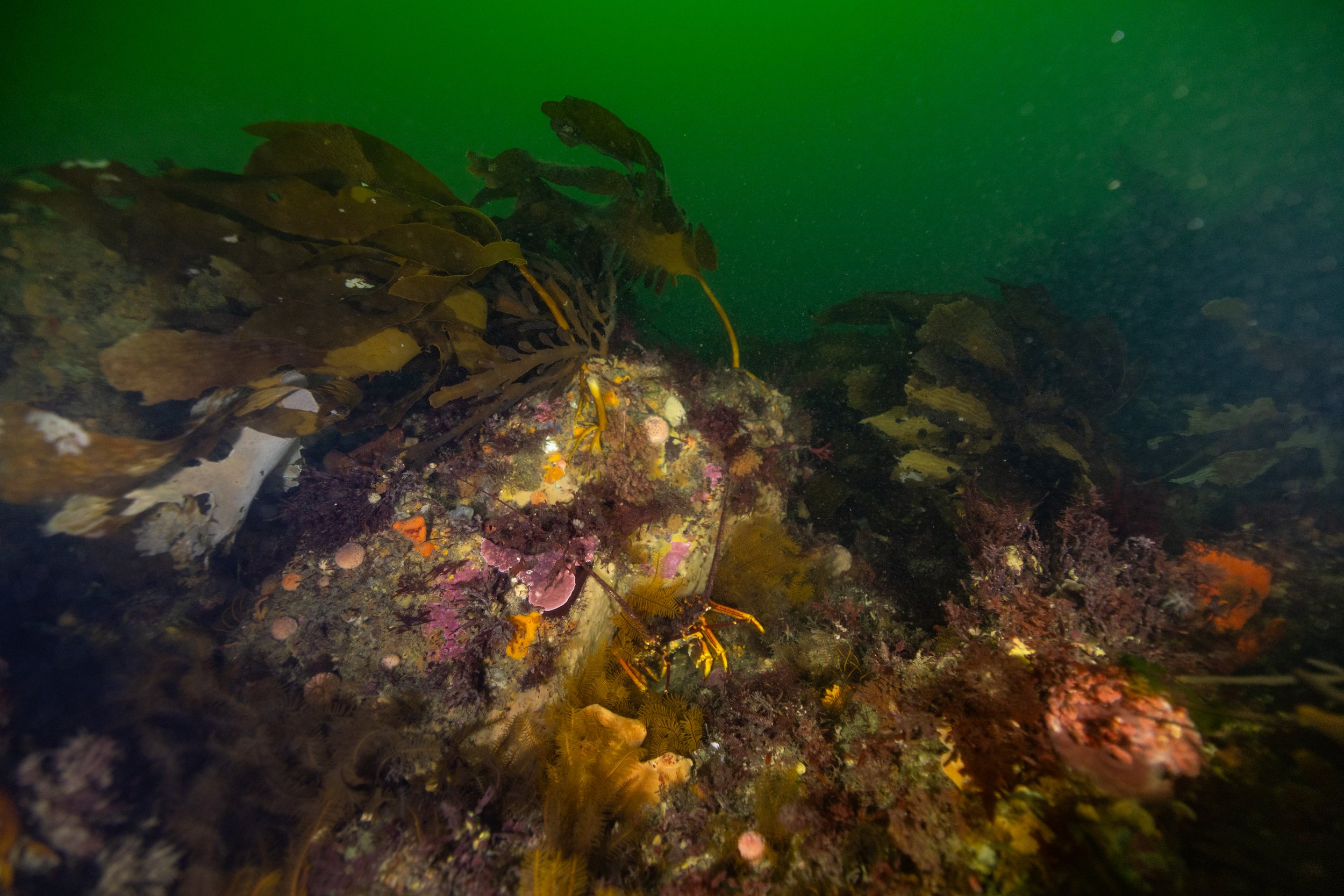
The change surprised Associate Professor Neville Barrett, who had expected the degraded conditions to persist. The surveys also recorded declines in some fish and increases in introduced species, placing kelp’s return within a mixed picture for the estuary.
Dense groups of periwinkles can create bare patches within kelp beds. New research led by Professor Scott Ling at the Institute for Marine and Antarctic Studies (IMAS), shows how this often overlooked snail forms small areas of overgrazed reef, dubbed “peri-barrens”, in eastern Tasmania.
tiny unsung snail creates ‘mini-barrens’
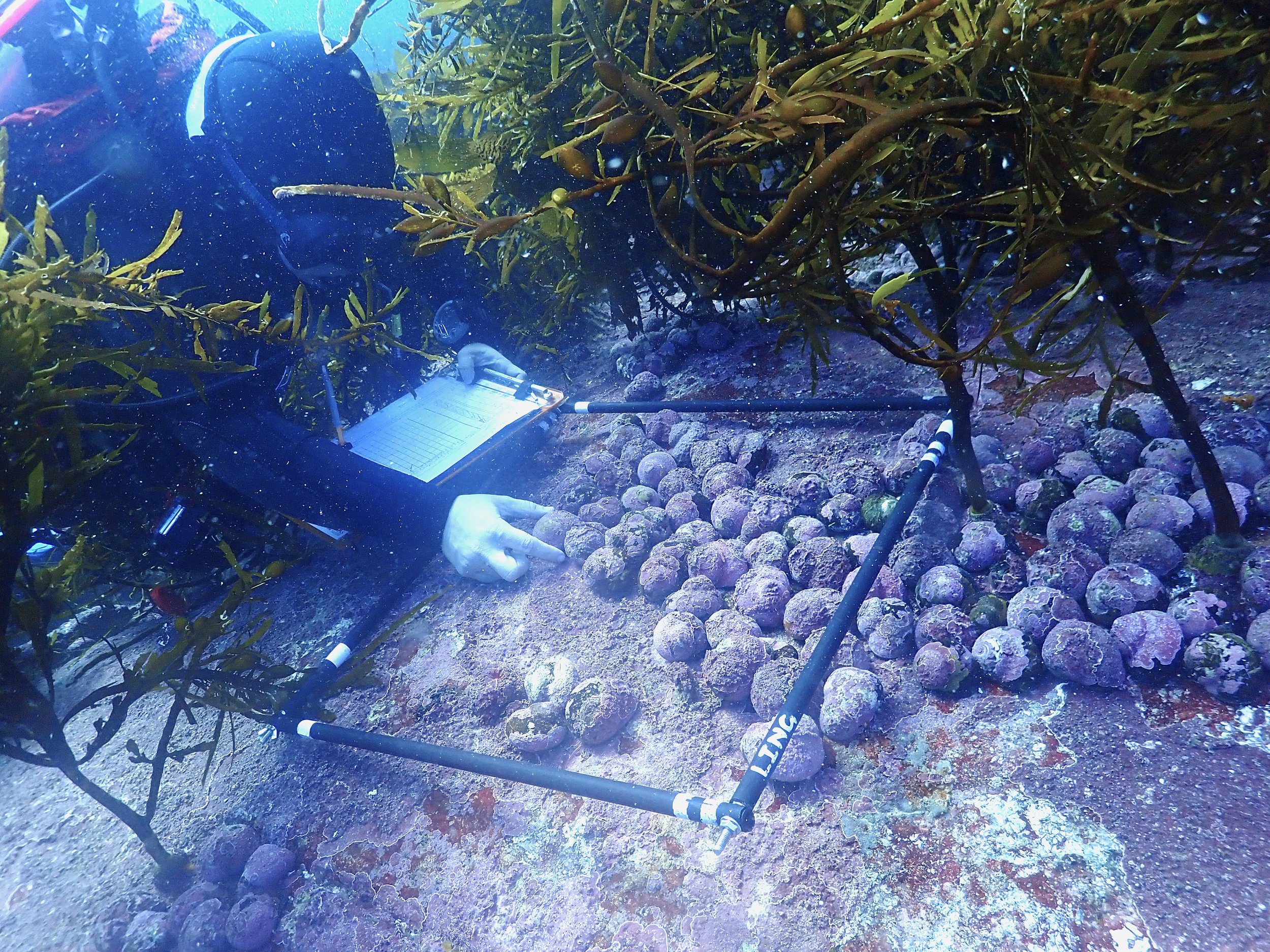
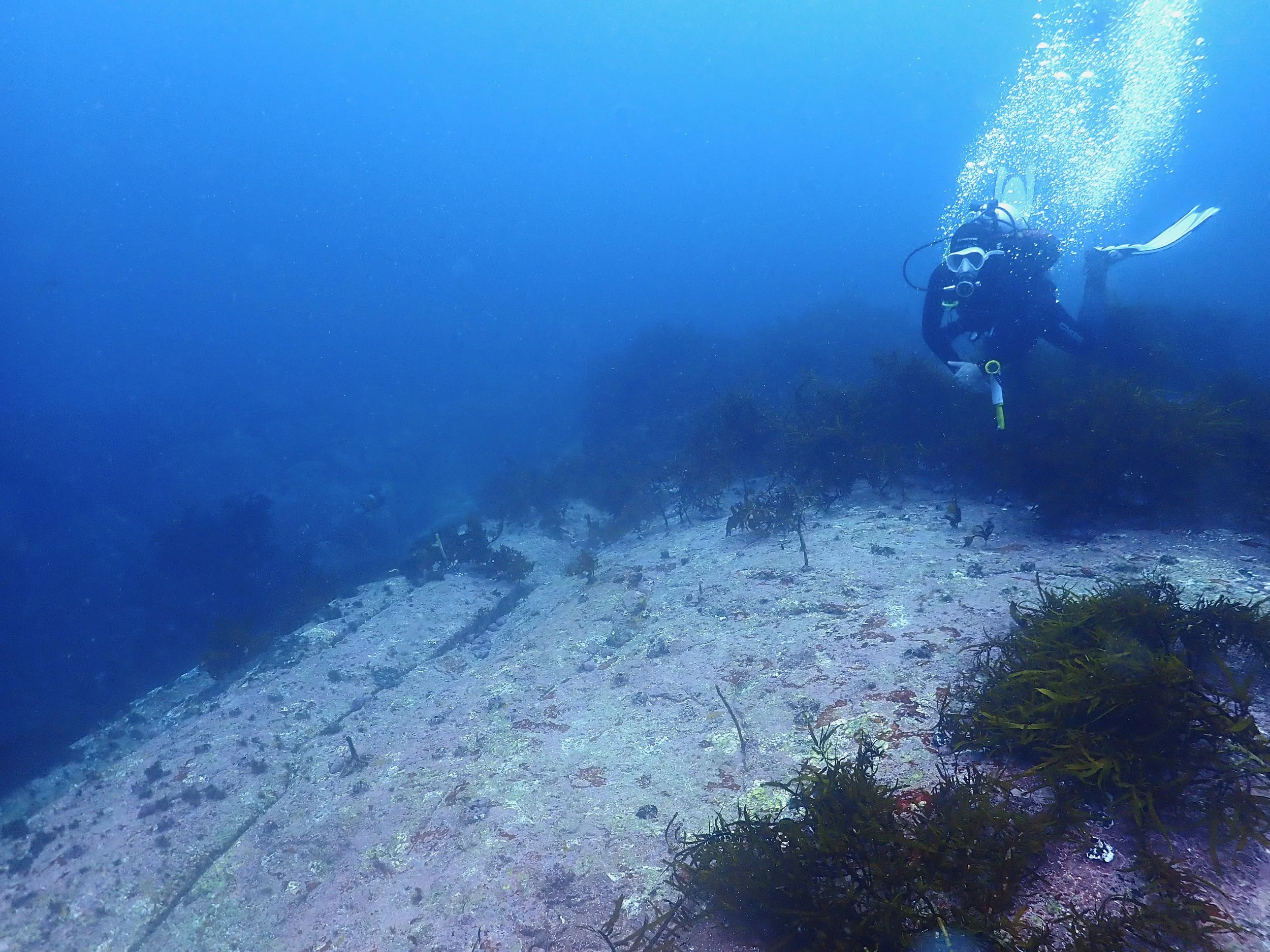
Seaweeds returned where researchers excluded the snails. Commercial fishers also harvested large periwinkles from the study site during the experiment. By the follow-up survey, 16 months after the initial observations, kelp beds had re-established.
Great Southern Reef work recognised in engagement awards
Congratulations to Great Southern Reef Research Partnership members Associate Professor Prue Francis and Professor Adriana Vergés, whose work features among the finalists for the 2026 Engagement Australia Excellence Awards.


Adriana Verges, from UNSW, is a finalist for Outstanding Leadership in Engagement. Her nomination recognises the partnerships she has built with First Nations communities, government, industry and conservation organisations to restore marine ecosystems and support community stewardship.
Prue Francis (left) and Adriana Verges (right) by James Sherwood, Bluebottle Films.jpgDeakin University’s Ocean Literacy program, involving Prue, GSRF ocean literacy specialist Dr Cátia Freitas and their collaborators, is a finalist for Excellence in Community Engagement. It supports primary school teachers with training and curriculum resources that help children connect with their local marine environments.
Congratulations to Prue, Cátia, Adriana and everyone involved. The winners will be announced on 11 November.
5 months in, Reef Pods are thriving.
Five months after deployment, marine life is colonising Project Restore’s Reef Pods in Sydney Harbour.
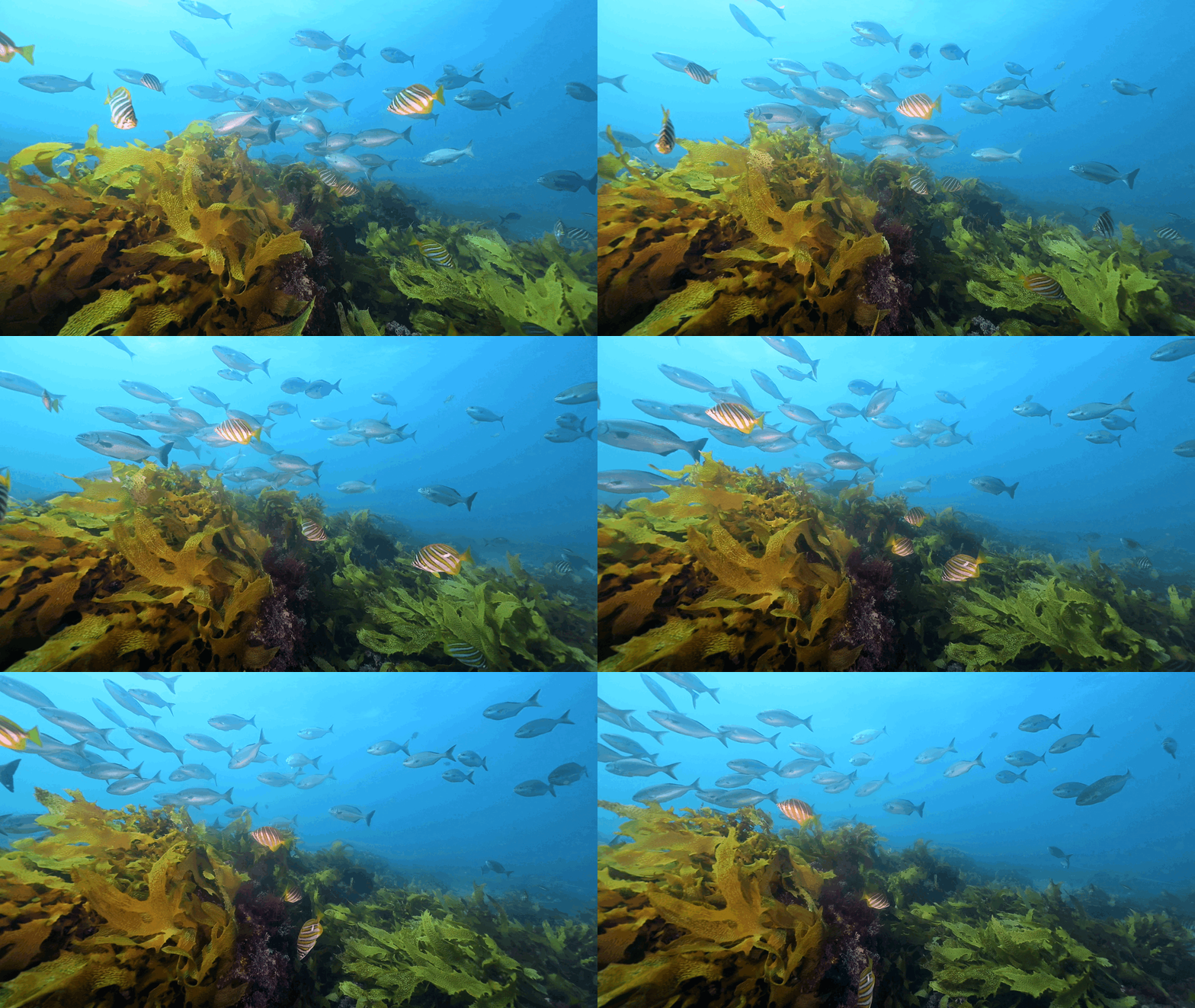
Encrusting algae, seaweeds and barnacles have begun covering the once-bare surfaces. Porcupinefish and red morwong have also been observed using the pods for rest and refuge.
The pods form part of Project Restore, a Sydney Institute of Marine Science initiative working to restore and reconnect habitats across the harbour. The project brings together seagrass restoration, kelp rehabilitation, Living Seawalls and fish habitat structures.
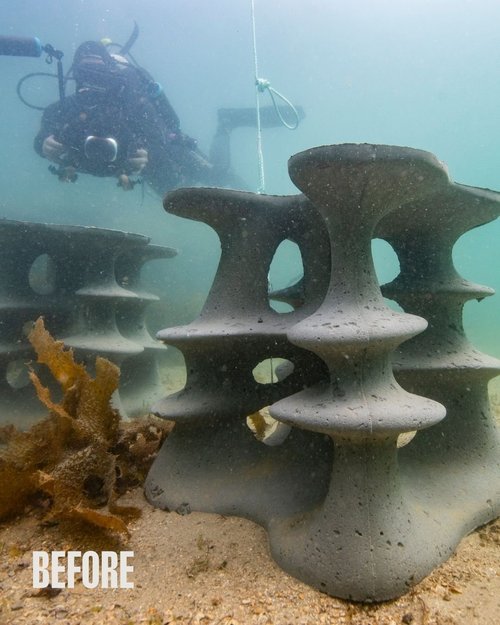
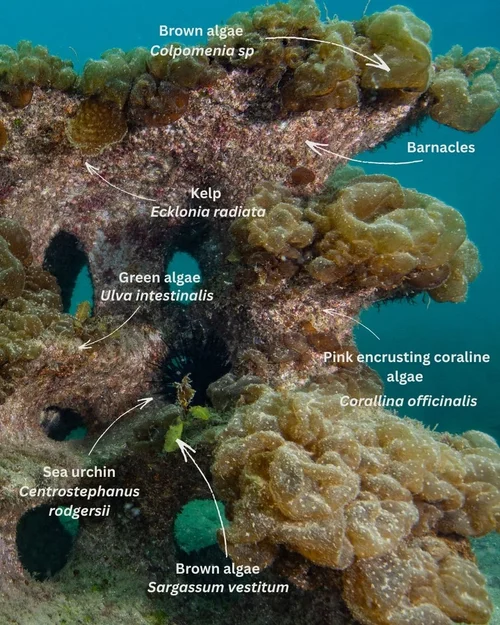
Photographs taken from different viewpoints.
Designed by Reef Design Lab, the pods replicate features of natural rocky reefs, including caves, overhangs and swim-through spaces. These provide shelter and surfaces for organisms to settle on in areas where rocky reef habitat has become degraded.
The team will continue monitoring how algae, invertebrate and fish communities develop on the pods over the coming months, comparing fish communities with nearby control sites to assess their contribution to habitat restoration.
The Long View: studying a connected reef
Understanding the Great Southern Reef, spanning more than 8,000 kilometres, takes research that connects regions, disciplines and decades of evidence.
Support from The Ian Potter Foundation made it possible to establish the Great Southern Reef Research Partnership. It brings together universities, research programmes, management agencies and non-government organisations to study the reef as one connected system. Their work connects data collection and interpretation with management and community stewardship.
The Foundation’s recent Board visit provided an opportunity to share the partnership’s progress. Now you can watch The Long View, our five-minute film exploring the reef’s significance, the pressures reshaping it and what the partnership has achieved so far, alongside the need for integrated, long-term monitoring.
Join Our Community
Sign up to our monthly newsletter to receive the latest updates from around the GSR.
explore further
-
![]()
more ARTICLES
A further look at timely reef topics, stories and insights from science, community voices and coastal experiences.
-
![]()
MARINE LIFE
Meet the species that live across Australia’s Great Southern Reef. Learn how fish, seaweeds, invertebrates, and marine mammals connect to healthy reef systems.
-
![]()
VIDEOS
Check out our short films and clips about temperate reef life, research in action, community work and reef encounters across southern Australia.
-
![]()
FEATURE CREATORS
Each month we feature a creator from across the Great Southern Reef sharing their connection to the coast through photography, art and storytelling.
-
![]()
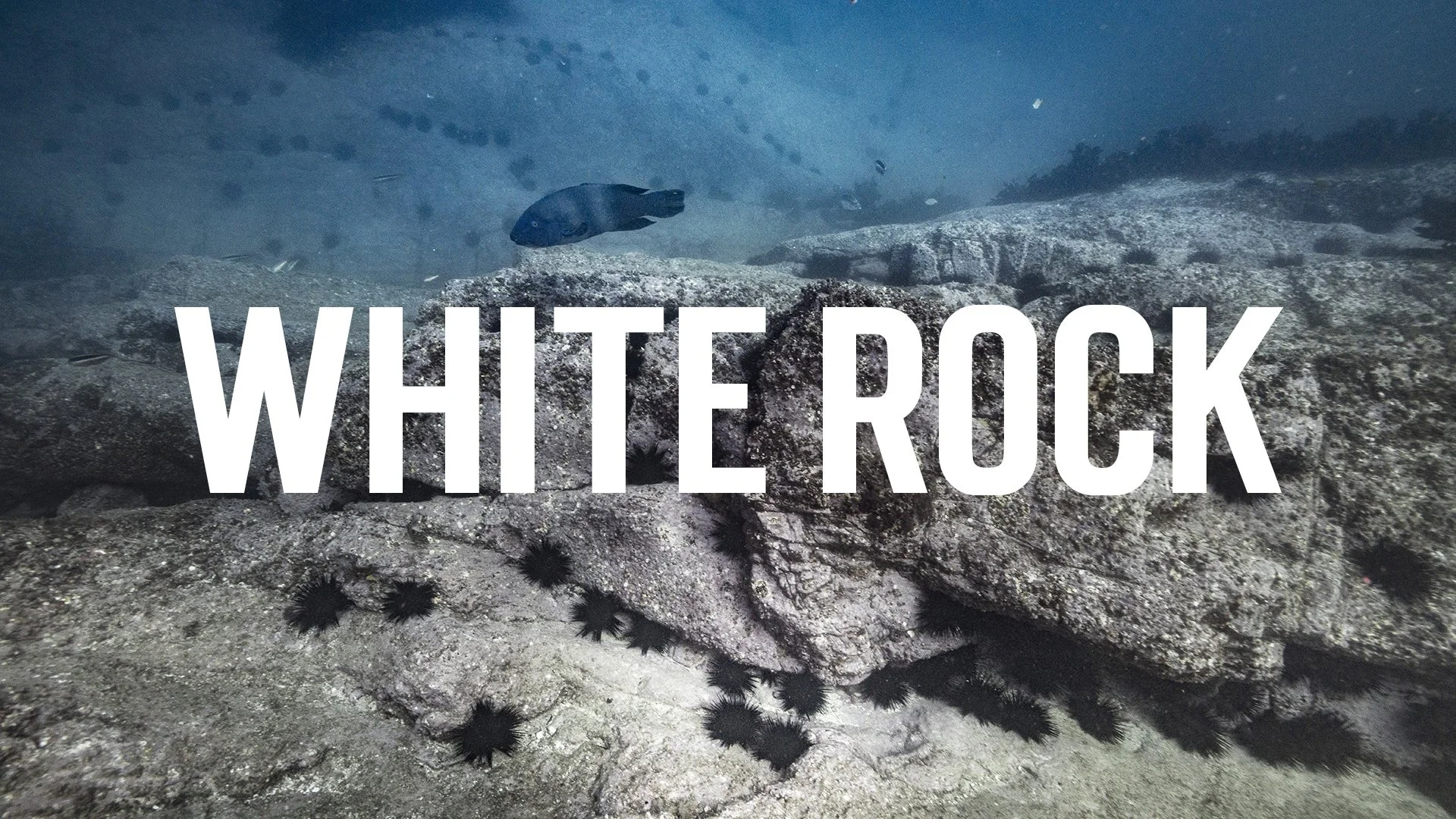
WHITE ROCK
With stunning visuals and impactful storytelling, White Rock captures the urgent threat of longspined urchins to the GSR and presents tangible solutions to save them.
-
![]()
educator hub
Explore free Great Southern Reef teaching resources, classroom activities and curriculum-linked learning materials.