
BACKGROUND

Where did the kelp go?
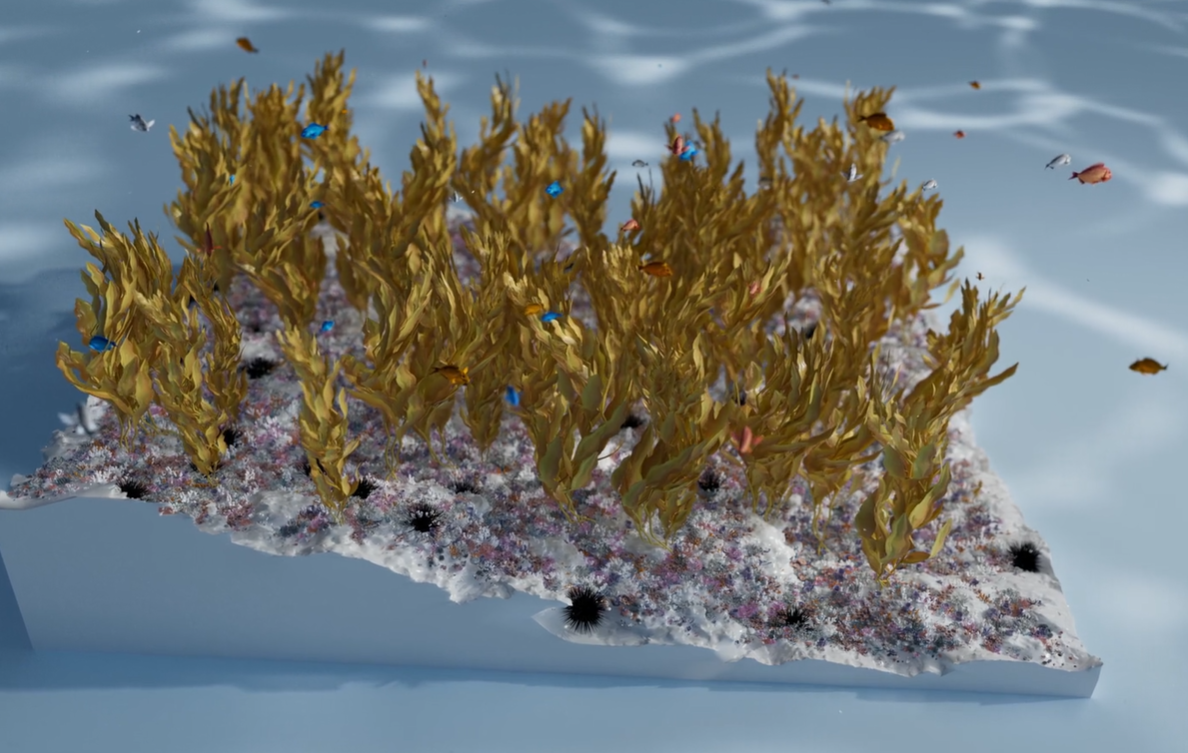
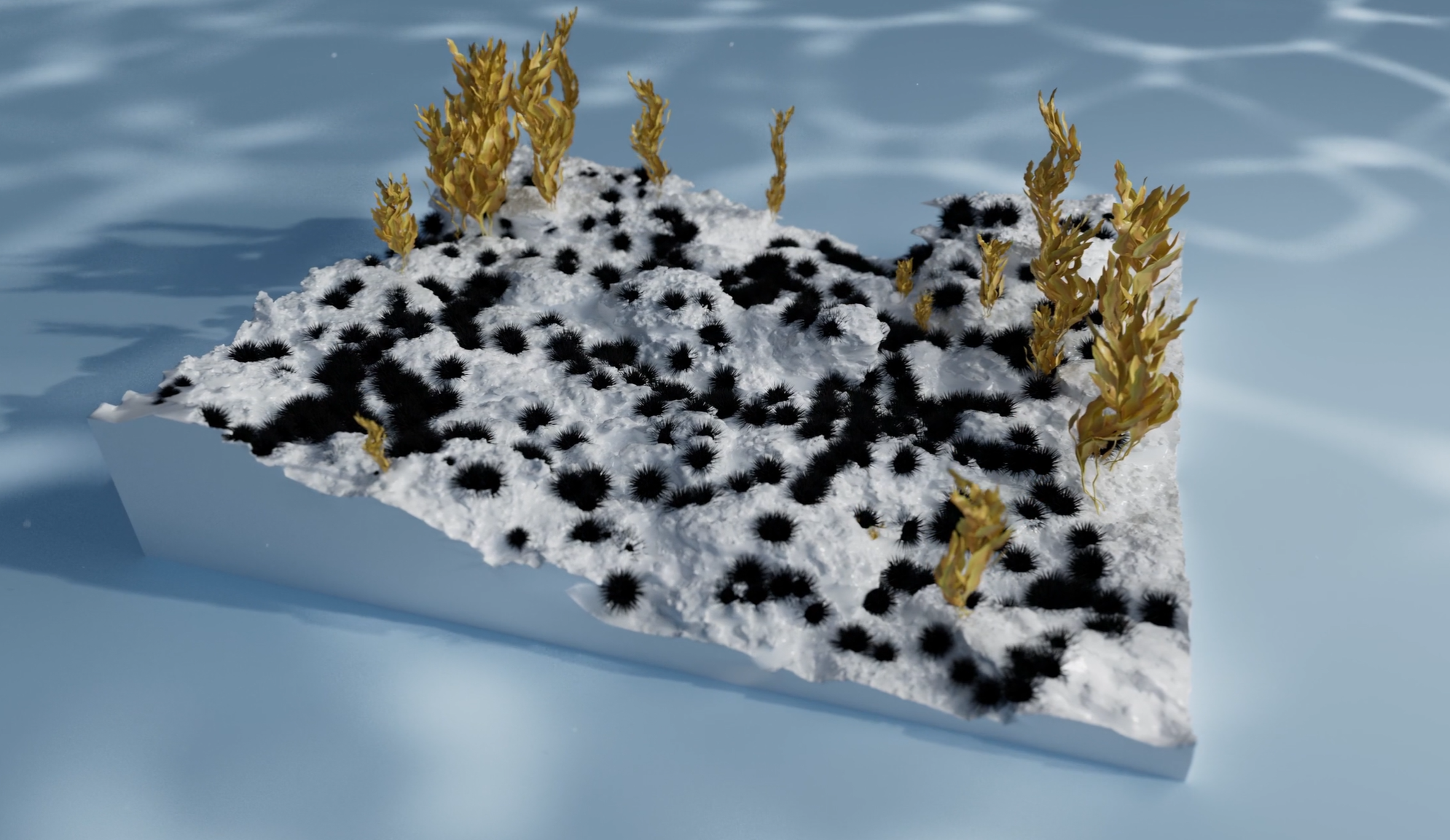
Detective, we’ve just found 2 important images in our archives. We think these images are connected and give us some really strong clues about what’s been happening under the sea.

Write a short paragraph to describe what you think happened to the reef. Start by explaining what you see in each image. Then use the clues you’ve already gathered - especially what you know about Centros to explain why the kelp might have disappeared. This could be a big step in cracking the case!
Urchin Barrens
Here’s an important clue, detective: urchin barrens!
Centros love to eat kelp.
From the video, can you explain what an urchin barren is and what happens to the animals that rely on the kelp forest for food and shelter when it disappears?
A team of scientists has been investigating the reefs on Tasmania’s east coast. They counted the Centros in 2001, then returned in 2017 to see how things had changed.
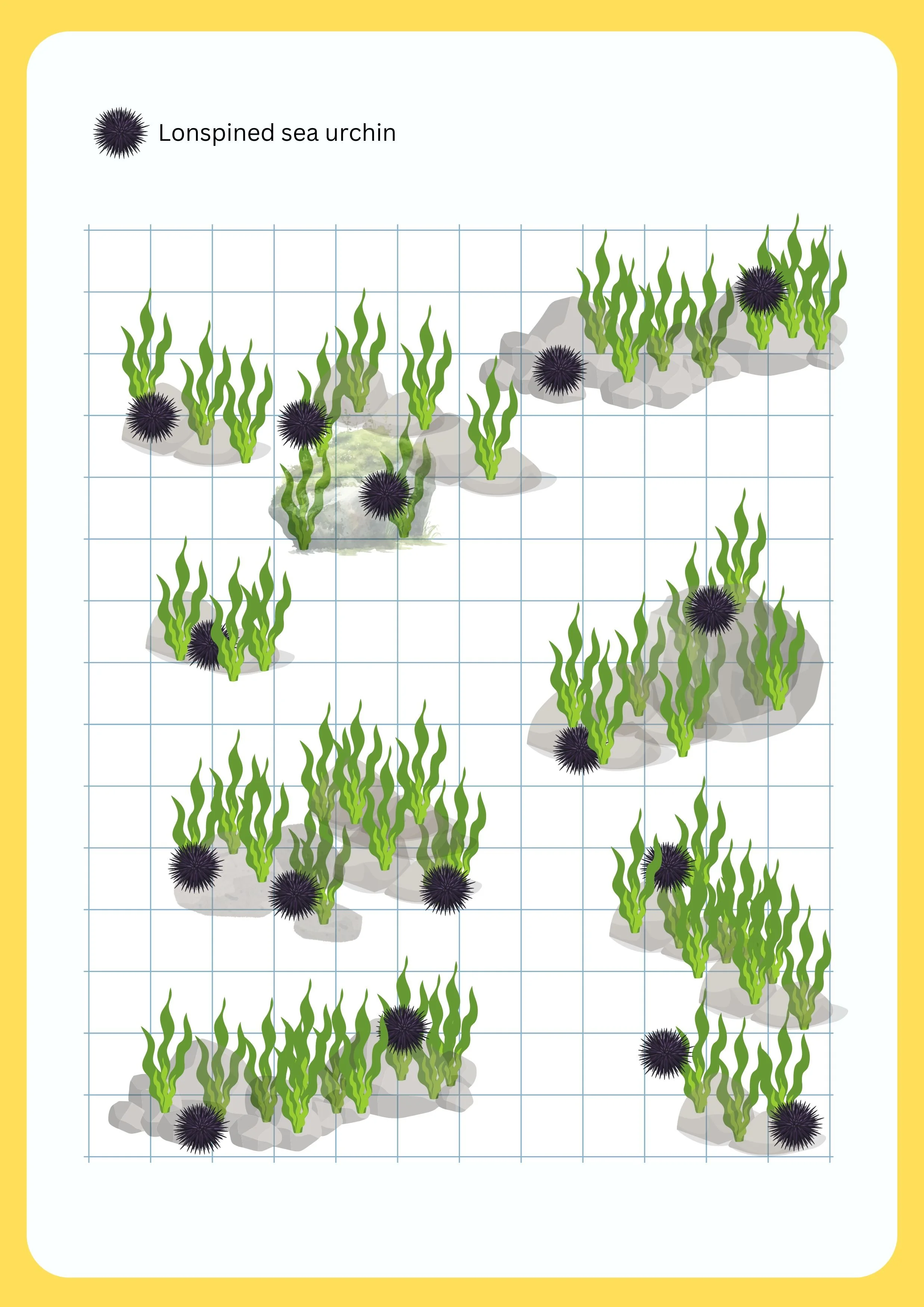
2001

2017
Each grid shows how many sea urchins were found, so you can compare the changes. Your job is to look at the two grids and answer the questions below to understand how the reef has changed.
What are the main differences you can see between the two images?
The reef picture is made of small squares. There are 12 squares across and 15 squares down. How many squares are there altogether?
Each square is 20 cm wide. Use this information to help you measure the reef.
a) How long is the reef from top to bottom?b) How wide is the reef from left to right?
c) What is the total area of the reef?
How many more sea urchins were found in 2017 than in 2001?
How many times bigger is the number of sea urchins in 2017 compared to 2001?
If the number of sea urchins keeps growing, what do you think the reef will look like in the future?
Do some research and find two ways we can help protect the reef from turning into an urchin barren.
Clue File
🔍 What did you discover?
Write down one important thing you learned in this lesson that will help you solve the mystery of why the kelp forest is disappearing