
BACKGROUND
spot the differences in the kelp forest
In this activity, have students closely observe the images below and find the 9 differences between them. Encourage them to pay particular attention to the small marine creatures that live and hide among the kelp fronds, such as fish, crabs and seastars.
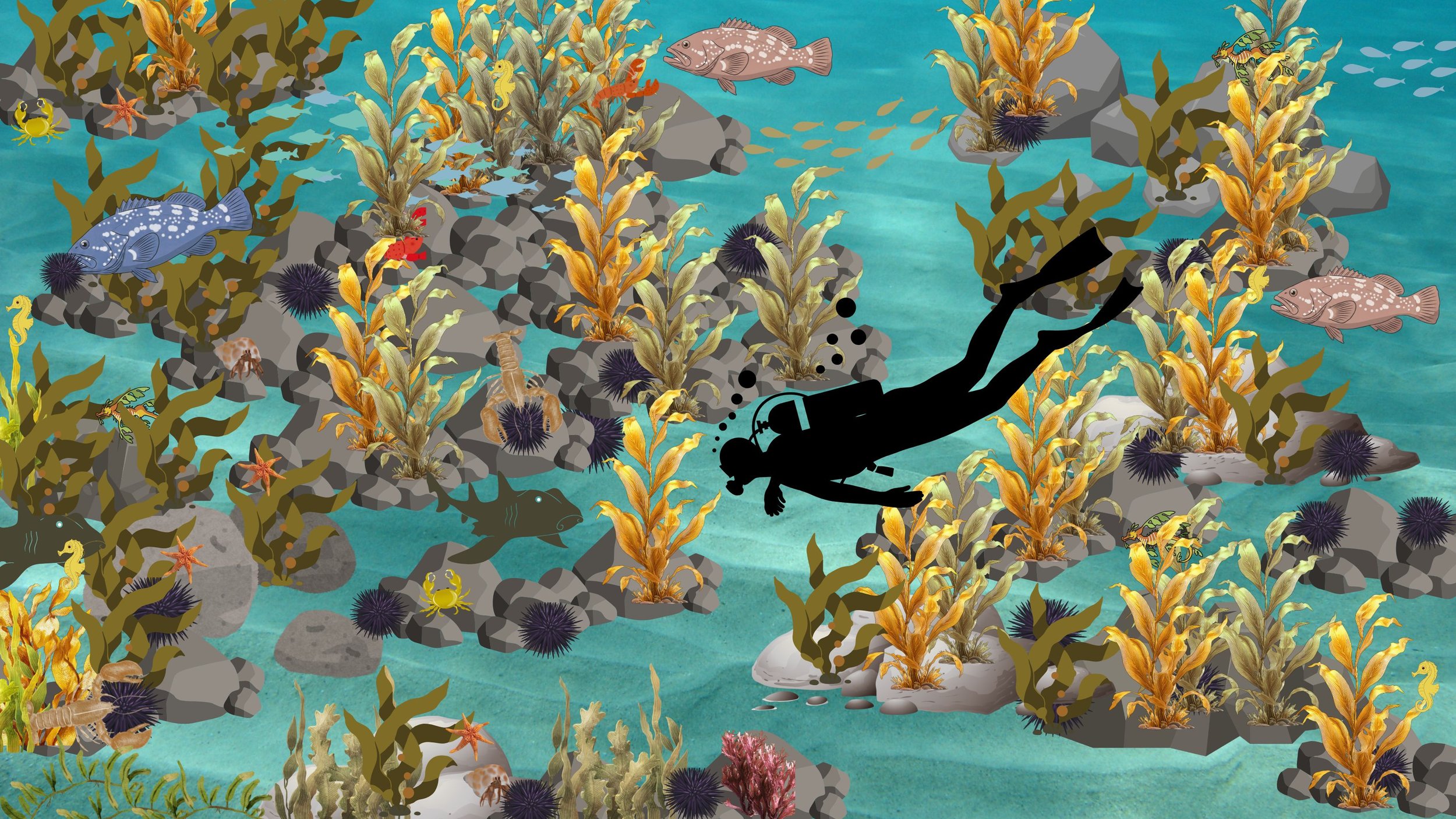
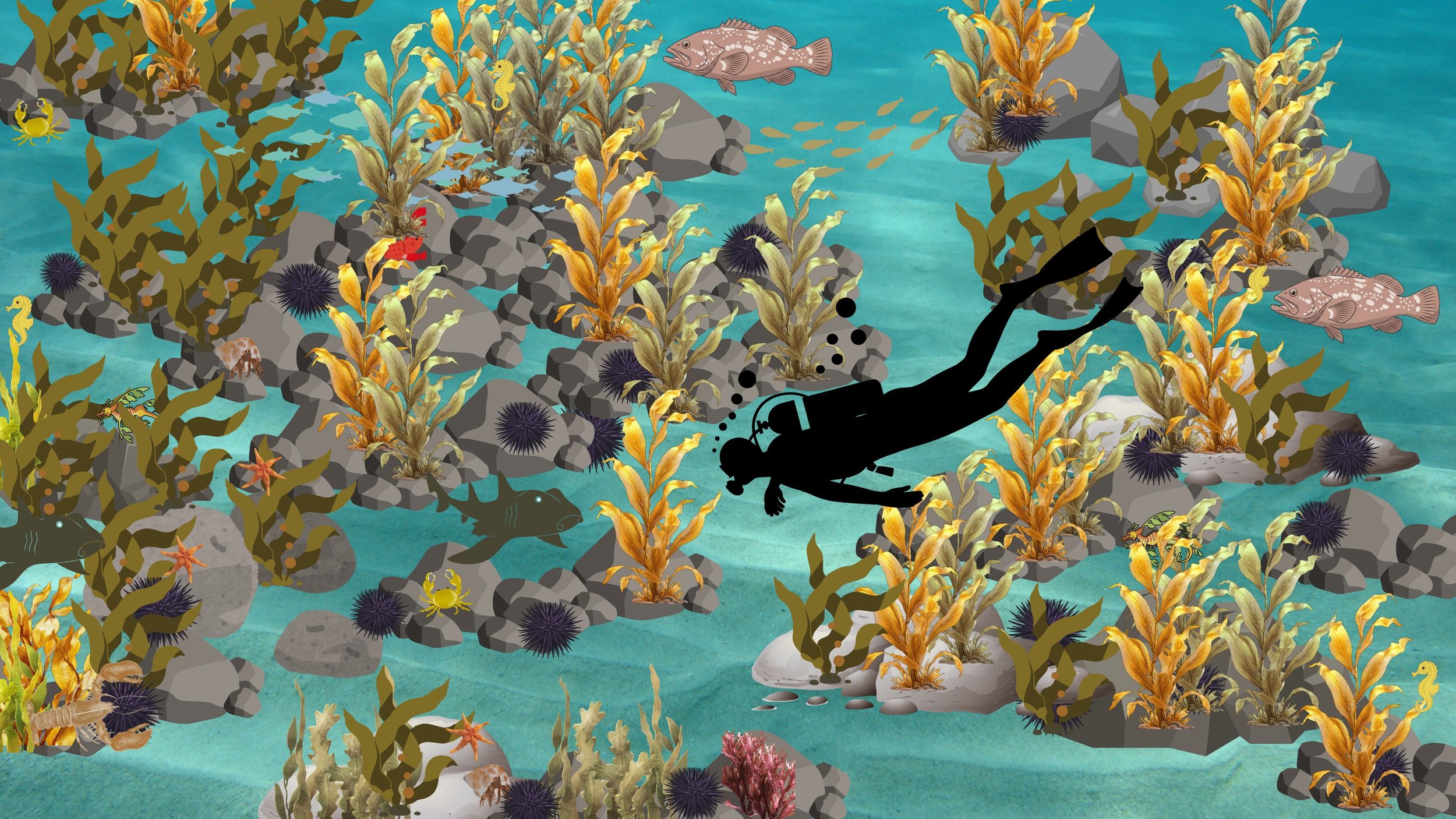
🖨️ A printable version, including the answer key, is available for download here.
When Sea Urchins Take Over
Through this activity, students will learn about one of the challenges facing kelp forests in parts of the Great Southern Reef: the spread of longspined sea urchins. Warmer ocean waters have allowed longspined sea urchins, which are native to New South Wales, to expand into new areas, including Victoria and Tasmania. In these regions, sea urchins can survive and reproduce, feeding heavily on the kelp and leaving behind areas dominated by urchins, often called urchin barrens.

Urchin barrenShow students the image below and ask them to carefully observe it, comparing it to the healthy kelp forest they looked at previously. Encourage students to discuss what has changed in the kelp forest. Prompt them to focus on the loss of kelp and other seaweeds, the reduction in shelter, and the absence of marine animals that relied on the kelp for food or habitat.
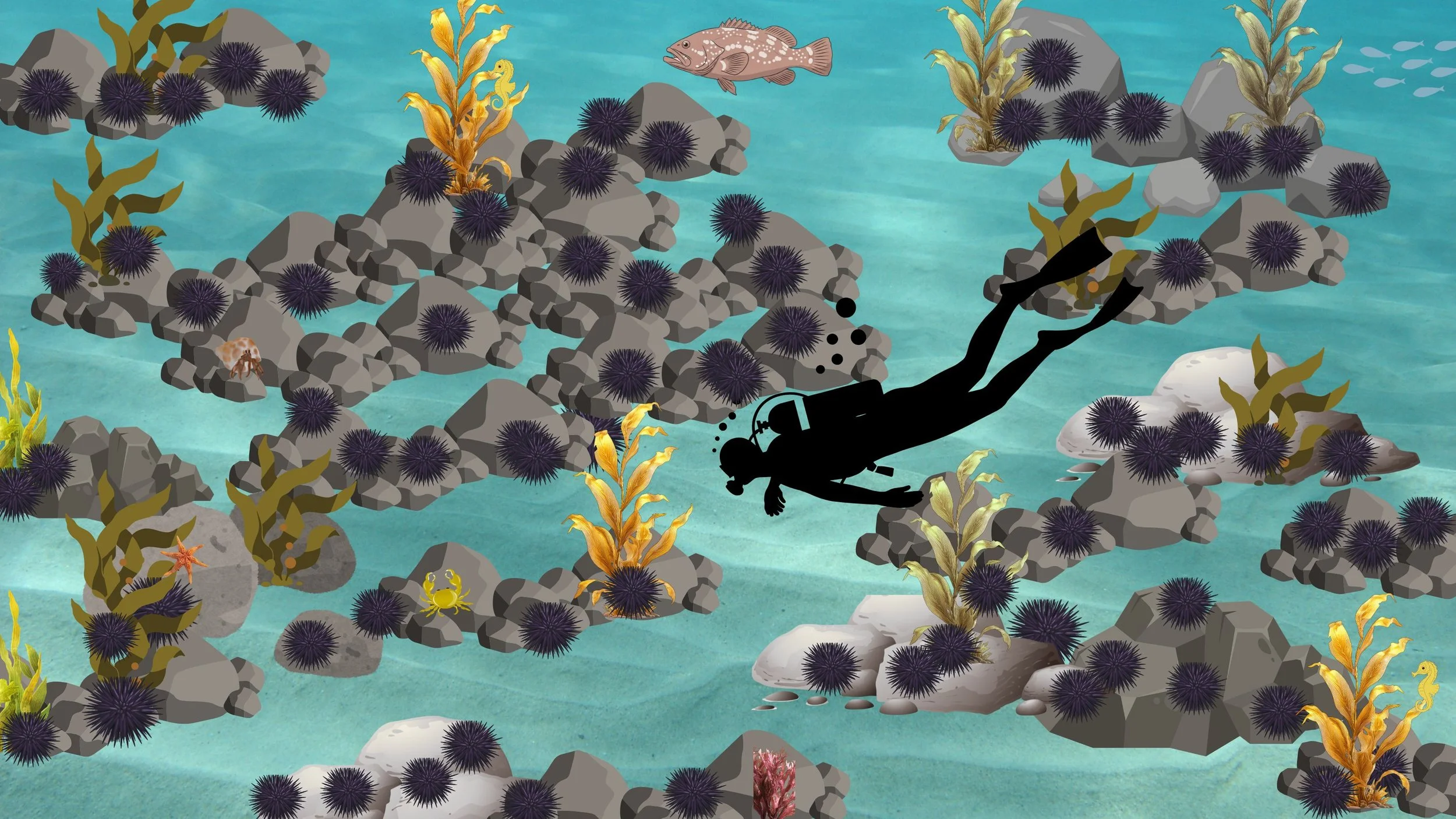
Guide the discussion with the following questions:
What looks different about this kelp forest?
Which animals do you notice are missing?
There are lots of sea urchins and very little kelp. What do you think happened to the forest?
Imagine you are a marine ranger. What is one idea you could try to help the kelp grow again?