
BACKGROUND
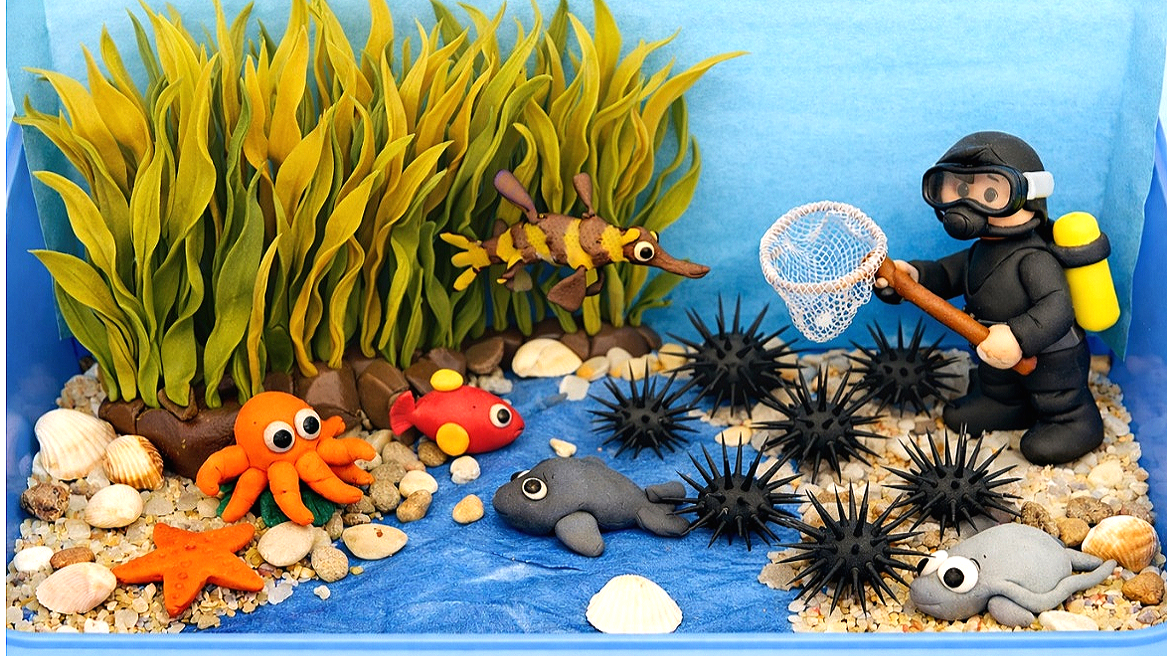
In this hands-on activity, students build their own miniature kelp forest ecosystems using shallow trays, drawers, or shoeboxes. The goal is to explore the underwater forest, its habitat, and the variety of marine life it supports, while encouraging creativity. Students can work individually or in small groups.
Students start by creating the ocean base using blue paper or fabric, then add rocky structures with playdough. They can build kelp fronds using pipe cleaners or rolled playdough, experimenting with different shapes, sizes, and textures to represent the diversity of kelp.
Once the forest structure is complete, students add marine animals such as fish, crabs, lobsters and weedy seadragons, using playdough, paper, or other craft materials, placing them within the kelp to show how the forest provides food and shelter.
Suggested Materials:
Shallow trays, drawers, or shoeboxes
Blue paper or fabric for the water
Playdough or modelling clay (various colours)
Pipe cleaners or rolled playdough for kelp fronds
Small rocks, pebbles, or shells
Paper, playdough, or other craft materials to make marine animals
Extension (optional): Students can add sea urchins to their drawings to show overgrazing and how too many urchins can change a kelp forest. Teachers are encouraged to display students’ work around the classroom or school to share what they have learned about the Great Southern Reef and the impact of sea urchin expansion on these underwater forests.
This image is an AI-generated example for reference.