
FROM CHALLENGE TO RESOURCE
-
o Analyse different sea urchin management strategies, including culling, harvesting, and combined approaches.
o Evaluate the ecological, economic, and social implications of each approach.
o Develop skills in constructing and evaluating evidence-based arguments for different management strategies.
o Apply concepts learnt in the course to real-world marine management scenarios using problem-solving and critical thinking.
o Reflect on personal learning and evolving perspectives, including changes in opinion.
o Enhance collaboration, communication, and decision-making skills through group work.
-
o Explain and evaluate the ecological, economic, and social benefits and limitations of different sea urchin management strategies using evidence.
o Construct clear, logical, and well-supported arguments.
o Respond respectfully to opposing viewpoints with reasoned counterarguments.
o Collaborate effectively within a team.
o Communicate ideas confidently through structured debate, discussion, and other creative activities.
In this activity, you will take part in a classroom debate exploring different ways to manage sea urchin populations in areas where kelp forests have been reduced or lost, leading to urchin barrens.
The debate focuses on two approaches:
Urchin culling
Urchin harvesting for food and commercial use
You will consider the ecological, economic, and social impacts of each strategy, including how effective they are, how sustainable they may be, and what challenges they involve.
Step 1: Sorting the impacts
32.
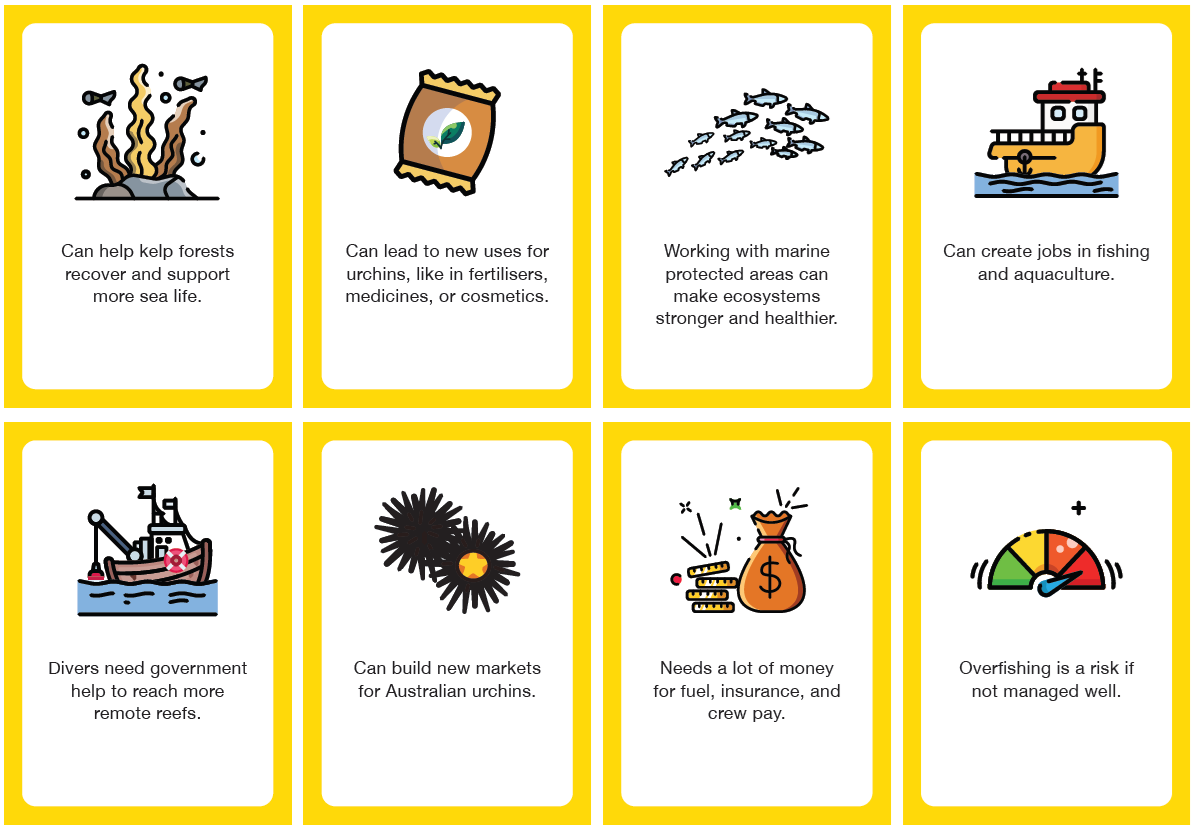
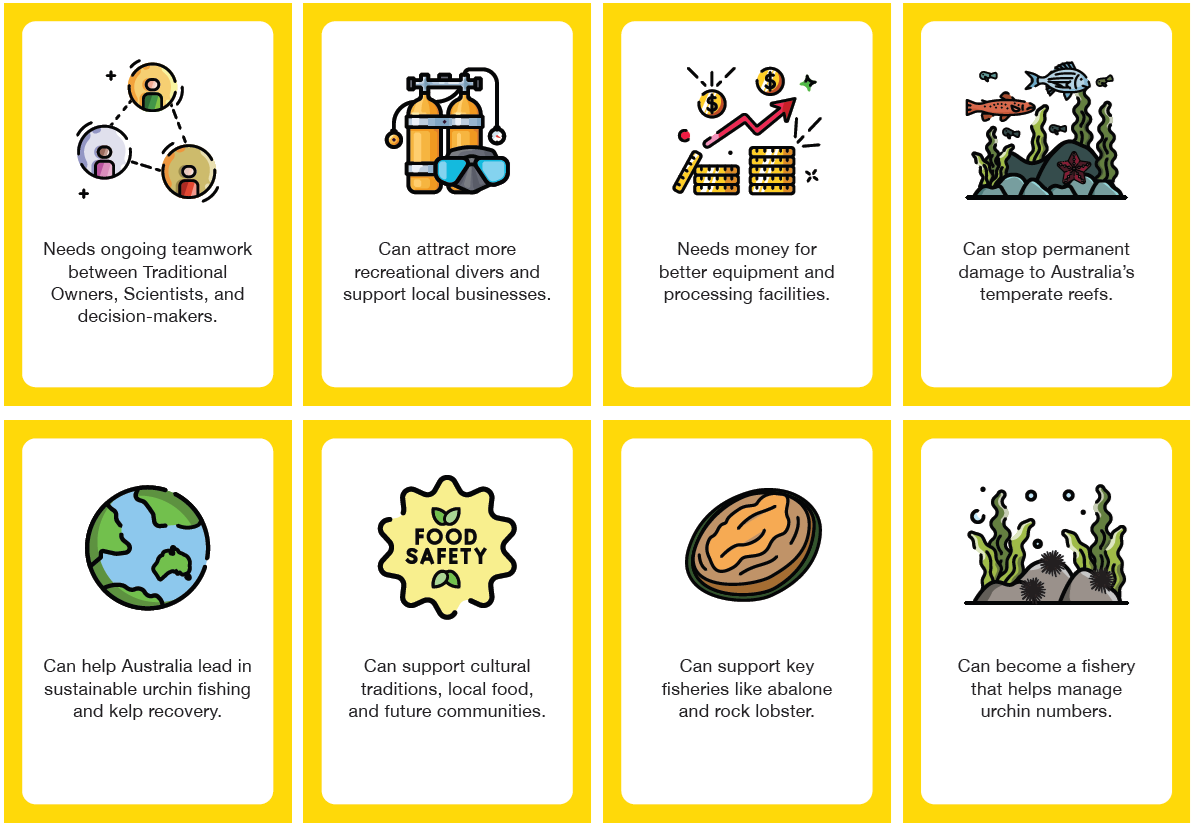
Check out the cards below (click here for the Google Sheet).
Each shows a possible impact, benefit, or challenge linked to managing sea urchin populations.
Work in groups or individually to sort each card into one of three categories:
Culling
Harvesting
Both
For each card:
Decide which strategy it best fits
If there is disagreement, explain your reasoning
Discuss as a group and agree on a final category before moving on
Swipe left for culling · swipe right for harvesting · swipe down for both
On desktop, use the arrow buttons.
CULLING
BOTH
HARVESTING
Class debate: Managing sea urchin populations
Now that you understand the impacts, benefits, and challenges of each strategy, you will present an argument to the class.
Choose one team:
Team A: Urchin culling
Team B: Urchin harvesting and commercial use
Your goal is to argue that your strategy is the most effective way to manage sea urchin populations and support kelp forest recovery. Work together to build a clear, evidence-based case using information from the film White Rock, the card-sorting activity, and class discussions.
Debate format
We will follow this structure:
a) Opening statements
Each team outlines their strategy and main position.
2 minutes per team
b) Main arguments
Team members take turns presenting key arguments supported by evidence.
1 minute per speaker
c) Cross-examination
Teams ask questions or challenge the other side’s claims.
Focus on evidence, feasibility, and long-term outcomes.
d) Closing statements
Each team summarises why their strategy is the strongest option.
1 minute per team
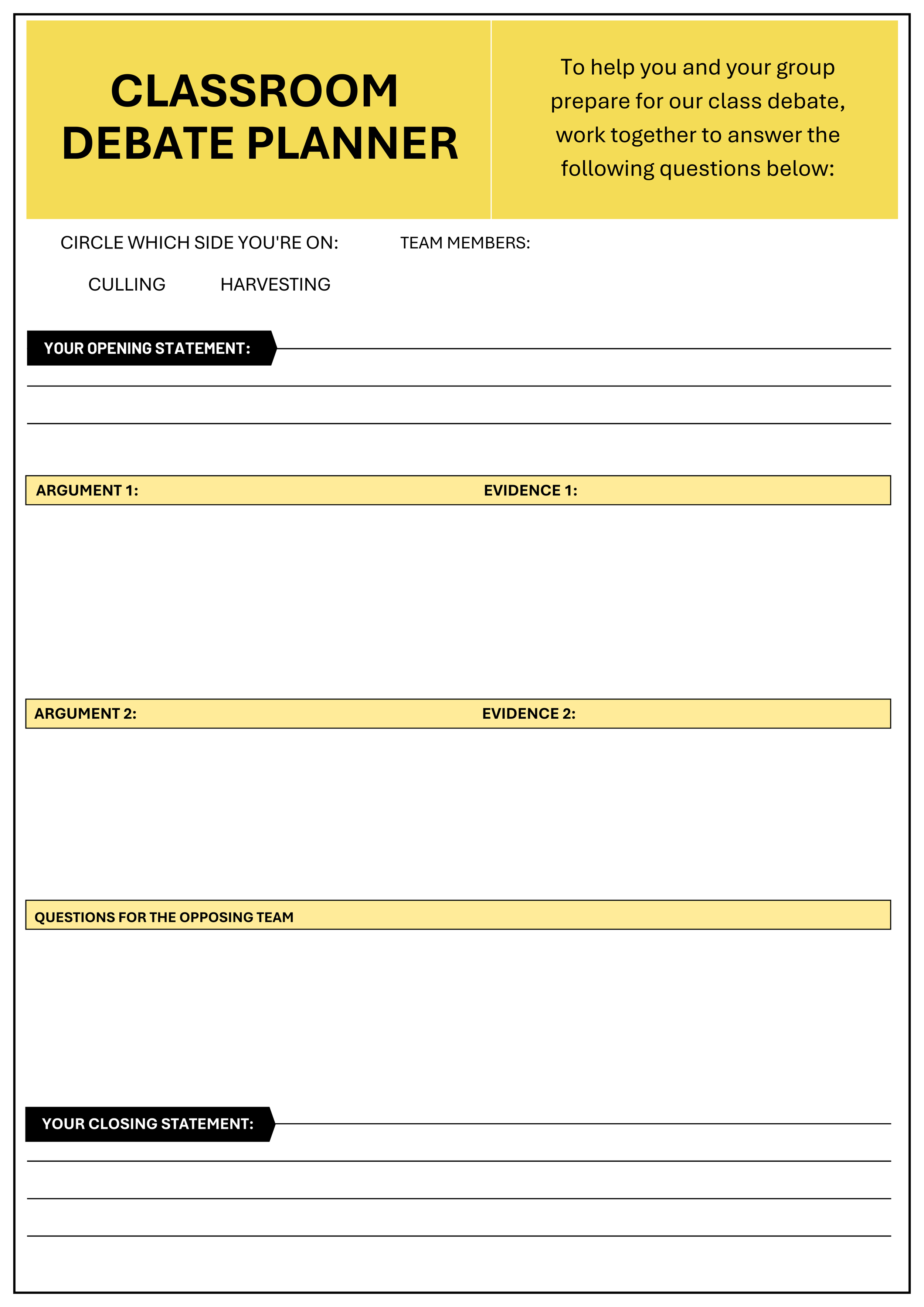
Use the debate planner (Google Sheet) to organise your ideas, evidence, and questions before presenting.
Final class discussion
After the debate, come together as a class to answer:
e) Could combining culling and harvesting lead to a more effective solution for managing sea urchin populations? Why or why not?
Personal Reflection:
Did your opinion change during the activity? Why or why not?
What’s one thing you learned that surprised you?
EXTENSION CARDS
Explore the other cards in the deck to keep learning and having fun. Each card colour represents a different category connected to key marine science concepts from White Rock.
Follow the instructions below to get the most out of the deck:
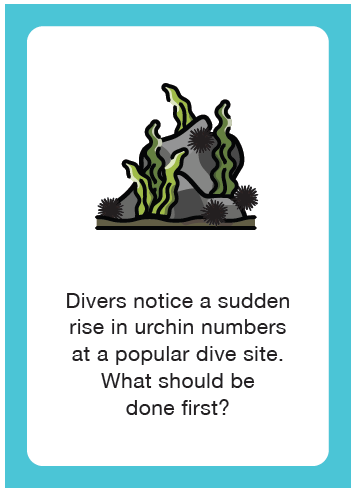
SCENARIO CARDS
Each blue card presents a real-world scenario linked to reef health, sea urchins, or kelp forests.
How to use:
Read the scenario carefully
Discuss the problem and possible solutions with your group
Look at the issue from different perspectives, including ecological, social, and economic
Use what you learned from White Rock and add research if needed
Write or explain your proposed solution, clearly stating your reasoning and any evidence used
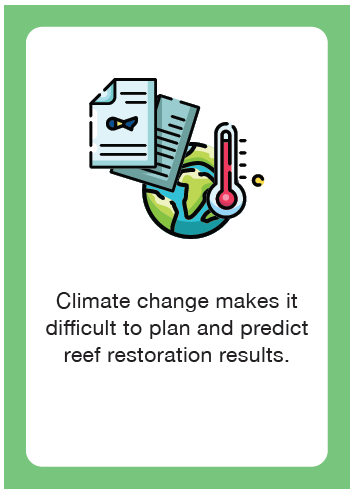
CATEGORY SORTING CARDS
The green cards focus on comparing ideas, impacts, and strategies.
How to use:
Read each card carefully
Sort the cards into the correct category: a) Environmental, b) Economic, c) Social and d) Governance and Risk
Discuss any disagreements and justify your choices
Aim to reach group agreement before moving on
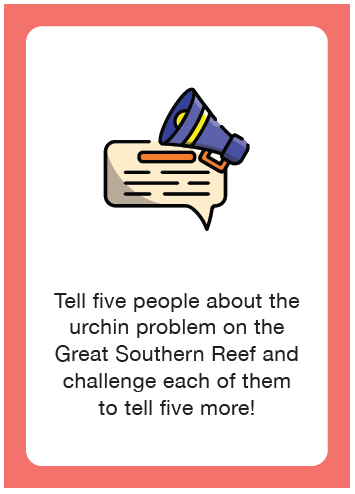
WILD CARDS
Pink wild cards challenge you to apply your learning in creative and practical ways.
How to use:
After watching White Rock, draw one or more wild cards
Complete the task described on each card
Some tasks may be quick, others more detailed
Estimate how long each task will take and plan your steps before starting
Work in groups where possible to share ideas, collaborate, and support each other
Self Reflection: How am I going?
Think about today’s urchin management debate. For each success criteria, choose a traffic light.
🟢 Confident · 🟡 Getting there · 🔴 Still working on it