
ECOSYSTEM (IM)BALANCE
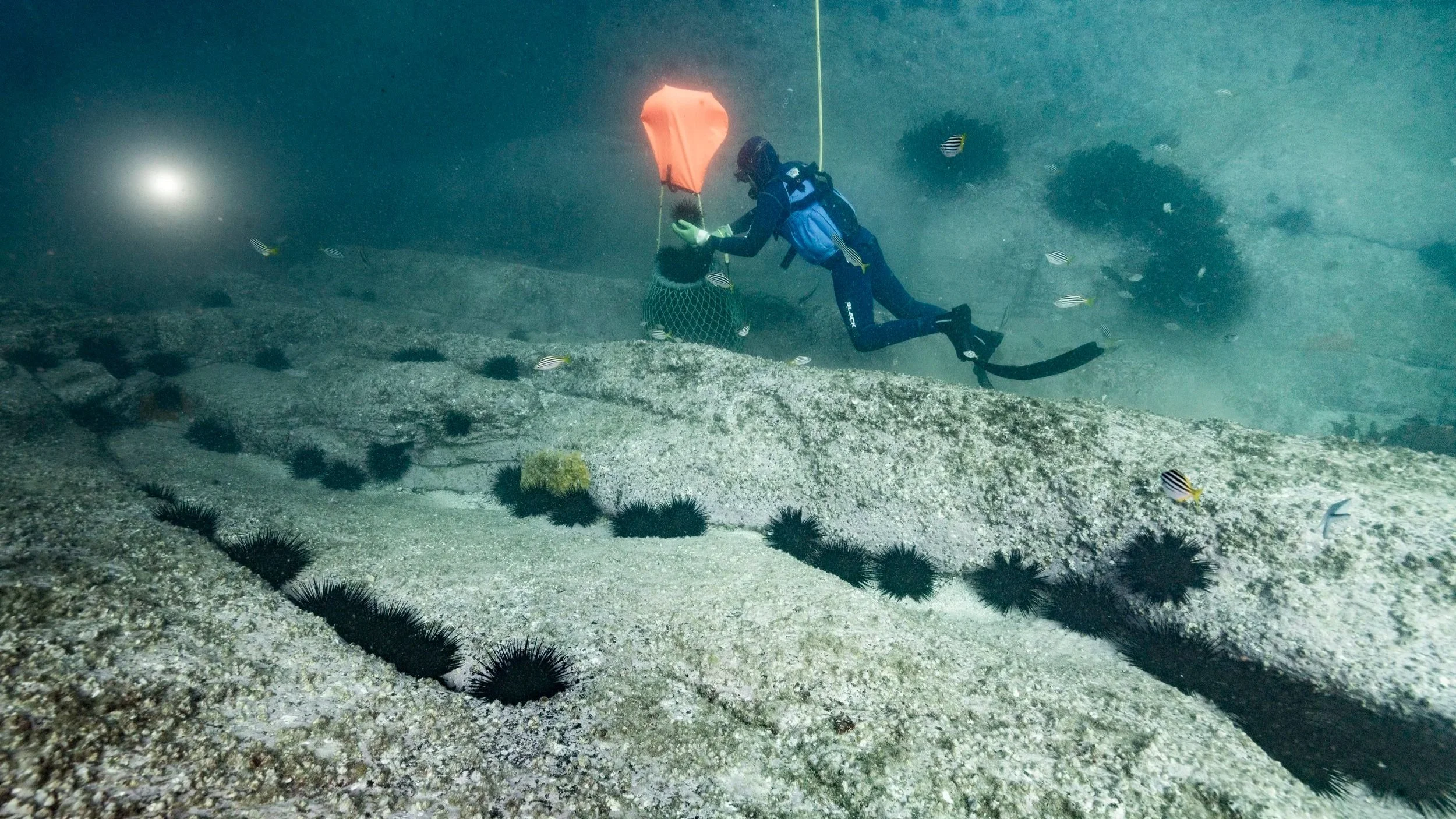
-
o Understand ecosystem dynamics and predator-prey relationships.
o Explore the impacts of human activity (e.g. overfishing) and climate change on marine ecosystems.
o Develop skills in data analysis and interpretation by reading graphs and identifying trends in species abundance over time.
o Develop scientific reasoning skills by analysing evidence from videos, graphs, and reef models.
o Investigate the effectiveness of management strategies to restore ecosystem balance.
o Build collaboration, ommunication, and problem-solving skills through team-based challenges.
-
o Answer questions based on scientific observations from videos and reef examples to demonstrate understanding of ecosystem changes.
o Identify key ecological concepts, such as predator-prey relationships, resilience, and diversity.
o Apply evidence-based reasoning to solve each escape room challenge successfully.
o Demonstrate understanding of management strategies used to control sea urchin populations and restore ecosystem balance.
o Work independently or collaboratively to complete all rooms within the time limit.
This activity is a virtual escape room where you learn by doing. You will step into the role of a marine scientist and work through clues to understand what’s changing on the reef, and why.
Before you start, watch the video below featuring abalone diver Gavin Hayes. His experiences give you key context for the challenges you will investigate.
You will solve puzzles to unlock new information, then use what you’ve learned to tackle the final challenge.
As you move through the escape room:
pay close attention to the evidence
look for patterns and trends in the data
use your science knowledge to explain what the patterns might mean for reef health
If you get stuck:
go back to the data
recheck the instructions and clues
try a different explanation
EXTENSION ACTIVITIES
Kelp Forest Food Web Challenge
Your task is to create an educational resource for Year 5–6 students that explains how a kelp forest food web works. Design a clear food web that shows how energy moves through the ecosystem, from producers to consumers.Follow the steps on this page to complete the activity. Think about clarity, accuracy, and how you would explain these ideas to younger students.
Sea urchin overgrazing around the world
You are part of a global research team investigating sea urchin overgrazing in different parts of the world.
Choose one region and research:
where urchin overgrazing is occurring
how it is affecting local marine ecosystems
what actions, if any, are being used to manage the problem
Use research tools such as online sources, books, videos, or documentaries.
Summarise your findings and present them to your class using a short talk, poster, or digital slide.
Self Reflection: Ecosystem Change and Escape Room Challenges
Think about what you observed, discussed, and solved during the escape room activities.
For each statement, choose a traffic light.
🟢 Confident · 🟡 Getting there · 🔴 Still working on it