
BACKGROUND

-
o Explore the taxonomic classification of the longspined sea urchin and how it fits within the broader sea urchin group.
o Identify and describe key anatomical structures of sea urchins and explain their biological functions.
o Investigate structural, behavioural, and physiological adaptations that enable sea urchins to survive in different marine environments.
o Develop skills in scientific observation, classification, and data organisation through diagrams, tables, and guided research.
o Connect sea urchin anatomy and adaptations to ecological roles and species interactions within reef ecosystems.
-
Organise and accurately describe information about the longspined sea urchin using appropriate scientific terminology.
o Organise and accurately describe information about the longspined sea urchin, including taxonomy, habitat, diet, and adaptations.
o Correctly label and explain anatomical structures on a sea urchin diagram.
o Distinguish between structural, behavioural, and physiological adaptations, providing relevant examples.
o Explain how adaptations support survival and influence ecological interactions.
There are more than 750 species of sea urchins worldwide. They belong to the phylum Echinodermata, along with sea stars, sea cucumbers and brittle stars.
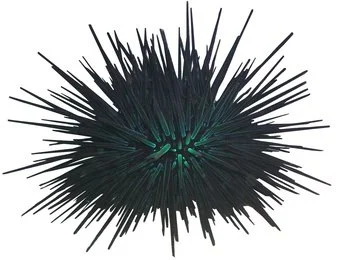
Longspined sea urchin - Centrostephanus rodgersii
(Image credit Dr. Scott Ling)White Rock focuses on the longspined sea urchin. Its scientific name is Centrostaphanus rodgersii, which is why they are sometimes referred to as “Centro”.
This species has very long, sharp spines that help protect it from predators and allow it to wedge into cracks in rocky reefs. Longspined urchins are strong grazers. When their numbers increase, they can remove large areas of kelp, changing the structure of reef ecosystems and the species that live there.

1. Explore this page on the longspined sea urchin to learn more about this fascinating creature. Then, use the table below to organise key information about the longspined sea urchin, including how it is classified, where it lives, how it feeds, and how it is adapted to its environment.
In the video below, Professor Adriana Verges takes a group of enthusiastic snorkellers out to collect sea urchins near Bendalong, NSW. She shows them three of the common urchin species on the NSW coast.
1b. Imagine you are taking some friends out and want to make sure they collect the right species of sea urchin. Use info from the video above and other online resources to write some field collection notes to make sure they can identify Centros and don’t collect the Red Sea Urchin (Heliocidaris tuberculata) or the Shortspined Sea Urchin (Heliocidaris erythrogramma).
sea urchin adaptations
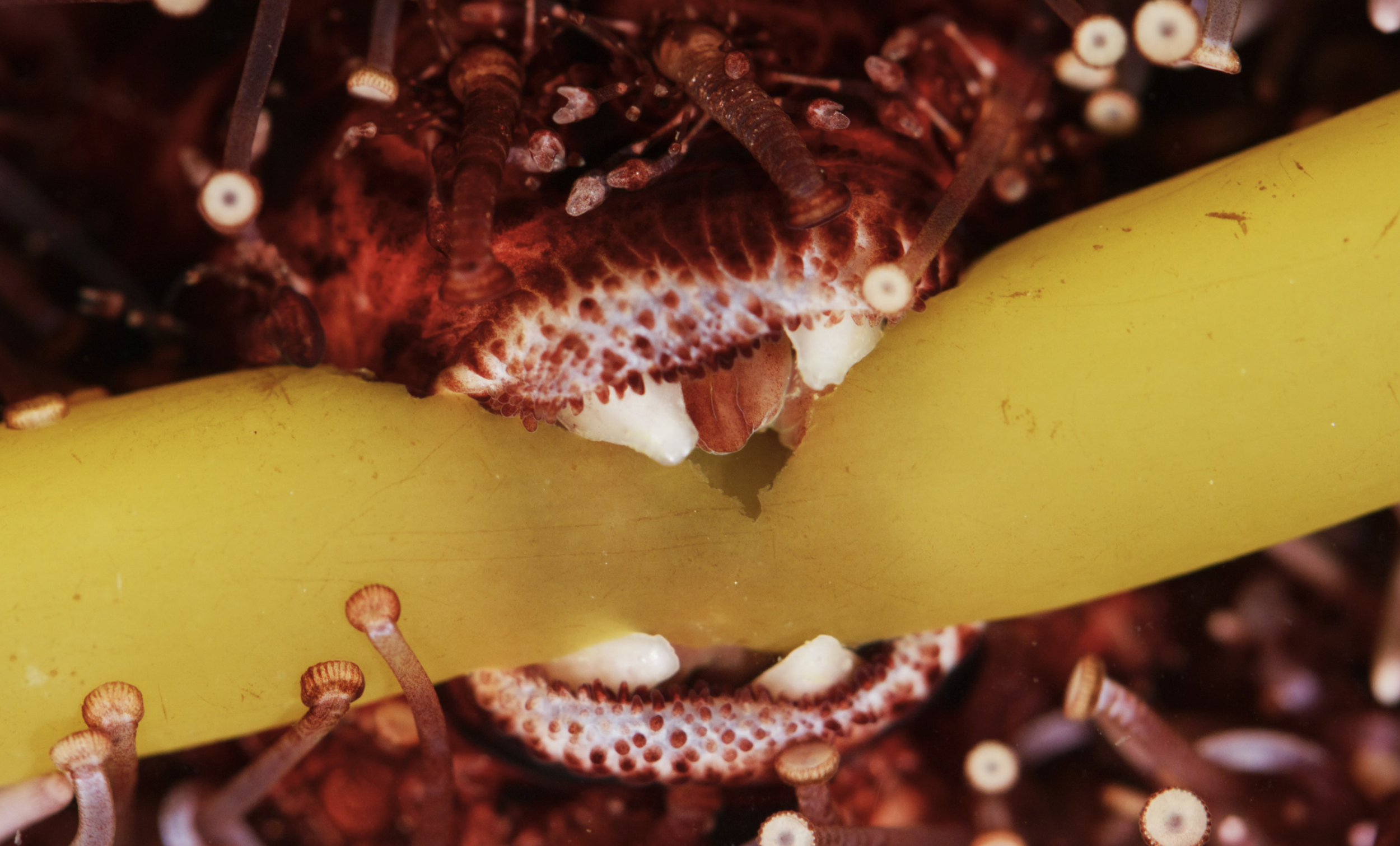
Sea urchins are extremely resilient and have a strong ability to adapt to changing environmental conditions.
When food is scarce, they adjust their body size and invest less energy in reproduction, resulting in smaller roe (gonads) - which lowers their overall energy requirements and allows them to survive for long periods under scarce food conditions.
Sea urchins also have a range of other structural, behavioural, and physiological adaptations that help them survive in different environments.
Match each adaptation type to its definition:
Structural adaptations
Behavioural adaptations
Physiological adaptations
Physical features of sea urchins that increase their chances of survival.
Actions or patterns of behaviour that help sea urchins respond to their environment.
Internal changes that help sea urchins survive when their environment becomes challenging.
sea urchin anatomy
2. Study the sea urchin diagram below. The physical structures are labelled a–i. Use the list of physical structure names and functions to match each one to the correct letter on the diagram.
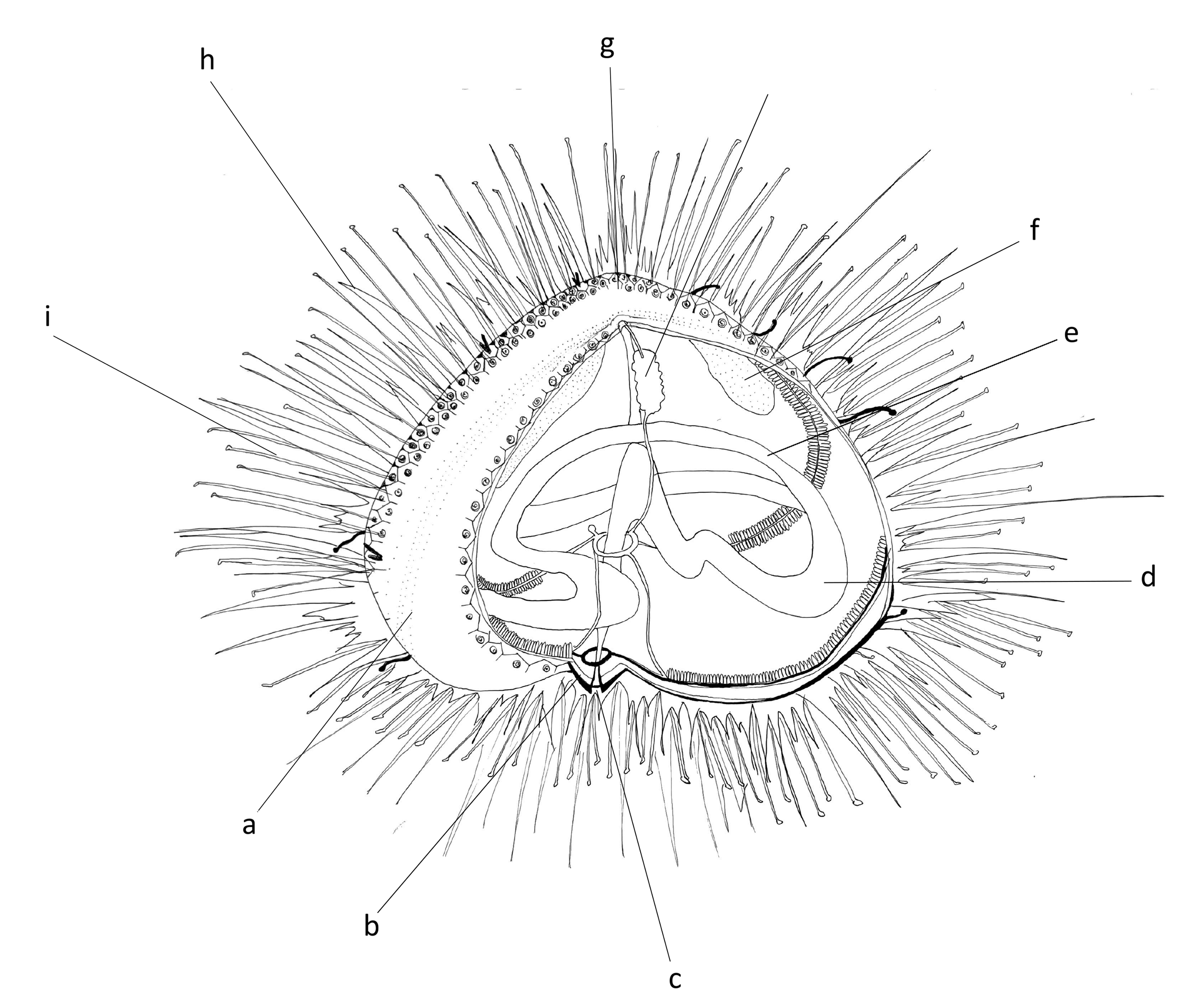
Structures:
test
spine
tube feet
mouth
Aristotle’s lantern
stomach
intestine
anus
gonads
Sea Urchin Structures: Match the Parts
Tap a structure, then tap the matching description. Correct matches stay green.
Teacher view:
Wrong attempts: 0 |
Correct matches: 0/9
Structures
Test
Spines
Tube feet
Mouth
Aristotle’s lantern
Stomach
Intestine
Anus
Gonads
Descriptions
Reproductive organs that also store nutrients.
Soft appendages with suction tips for movement and attachment.
Opening on the upper side where waste exits.
Rigid shell made of calcium carbonate plates.
Produces enzymes to break down food.
Five-toothed jaw used to scrape and chew food.
Opening on the underside where food enters.
Absorbs nutrients from food.
Movable defensive structures that help with movement.
3. Which structural features of sea urchins help them survive in their environment? Explain how each feature helps.
3b. Which behaviours help sea urchins survive in their environment? Explain how these behaviours support survival.
Self Reflection: How am I going?
Think about today’s learning from White Rock. For each success criteria, choose a traffic light.
🟢 Confident · 🟡 Getting there · 🔴 Still working on it