
BACKGROUND
-
o Understand the role of ocean currents in shaping the distribution and connectivity of marine ecosystems along the Great Southern Reef.
o Explore the effects of climate change on ocean currents, species distributions, and ecosystem vulnerability.
o Investigate the southward expansion of longspined sea urchins and the environmental factors that enable their range shift.
o Develop skills in interpreting scientific data and visual information, such as videos and maps.
o Develop spatial reasoning and research skills by analysing species distributions and representing them visually on maps.
o Investigate global examples of marine species shifting their geographic ranges due to environmental changes.
-
o Explain how ocean currents influence the distribution of marine species along Australia’s coastline.
o Describe the relationship between climate change, ocean currents, and the range expansion of longspined sea urchins.
o Answer comprehension questions based on scientific videos with accurate, evidence-based responses.
o Identify the natural and expanded distribution of longspined sea urchins on a map.
o Conduct independent research using credible sources to support spatial analysis.
o Compare global examples of species range shifts and summarise associated ecological impacts.
The East Australian Current (EAC), flows southward from Queensland along Australia's east coast to Tasmania, and the Leeuwin Current, flowing along the west and southern coasts, are critical in maintaining connectivity and shaping the unique marine ecosystems of the Great Southern Reef. These ocean currents transport water, nutrients, and marine organisms along the coastline, supporting key ecological processes and sustaining the health and resilience of interconnected reef systems.
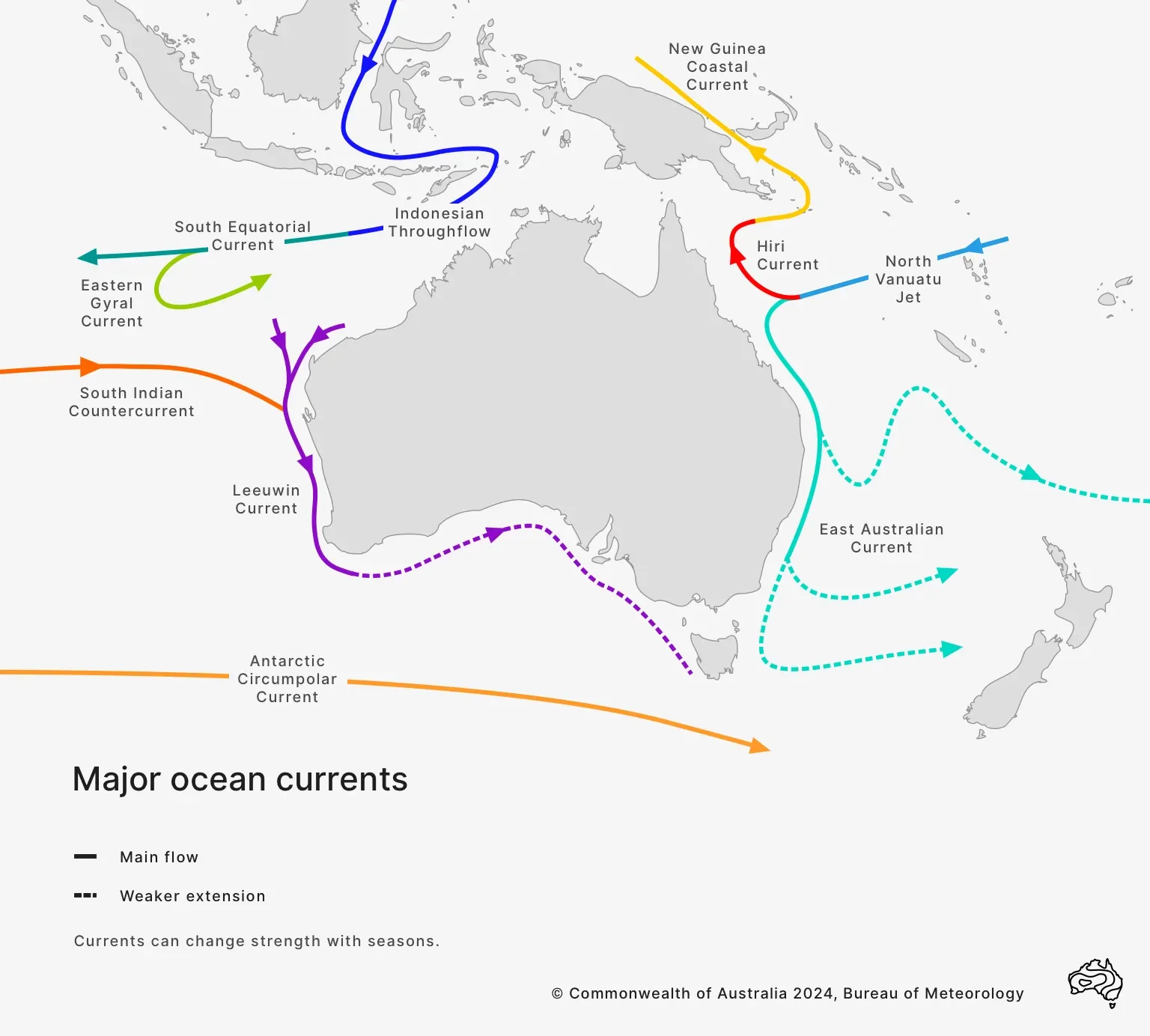
Reproduced by permission of the Bureau of Meteorology, © 2025 Commonwealth of AustraliaRising ocean temperatures, particularly the strengthening of the East Australian Current, have increased thermal stress on kelp while also reducing nutrient availability, making these ecosystems more vulnerable. Warmer waters have also enabled longspined sea urchins to significantly expand their range and abundance by creating favourable conditions for their survival and reproduction.

4. According to Prof. Maria Byrne, an urchin scientist at the University of Sydney, what is the main cause of the rapid increase in sea urchin populations south of New South Wales?
5. How is the East Australian Current (EAC) changing and how are these changes affecting sea urchin populations?
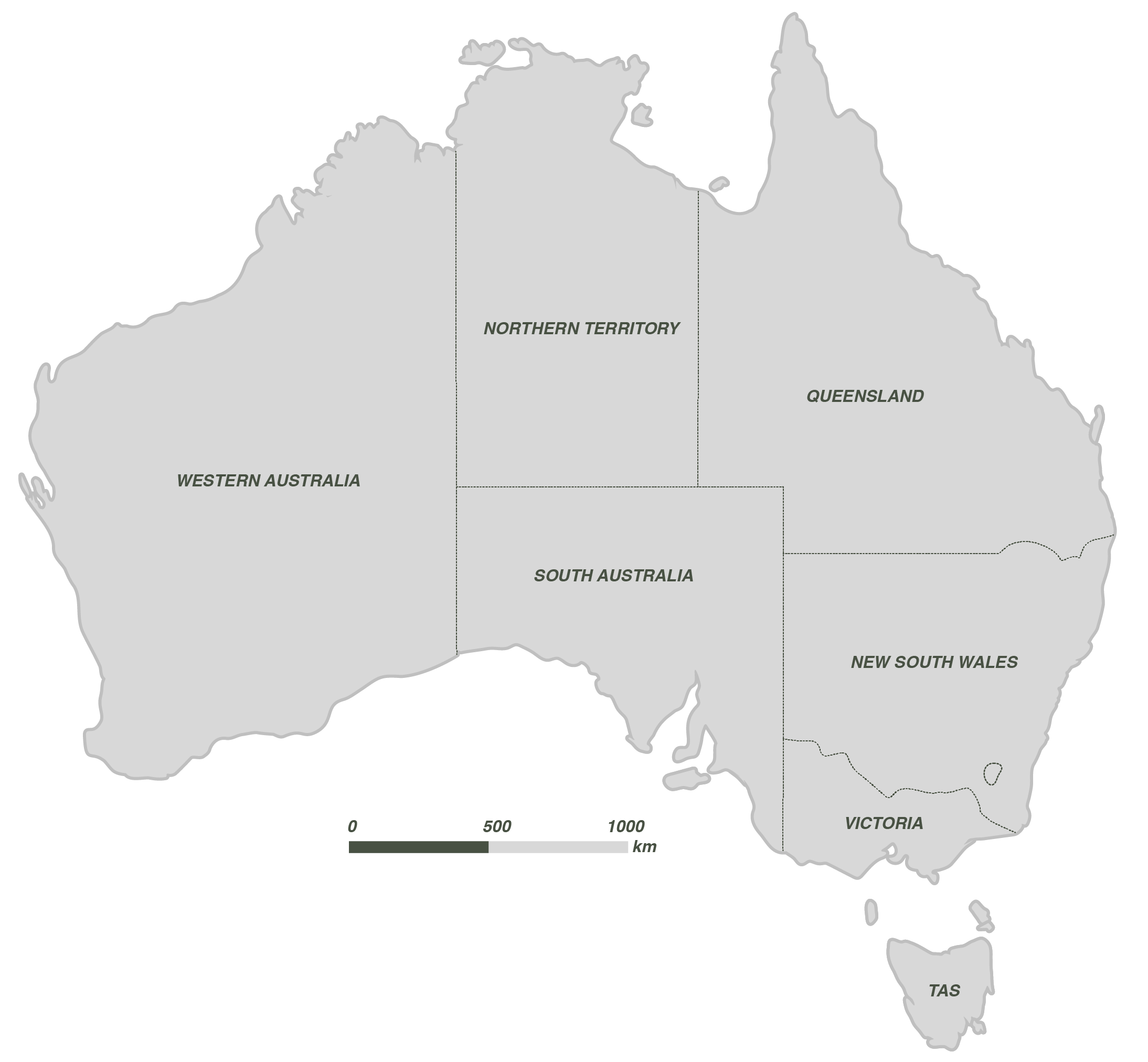
6. Conduct research and, using the map of Australia below (click here for the Google sheet), shade the following areas in two distinct colours:
a) Shade the longspined sea urchin’s natural distribution (where the species is originally found) in one colour.
b) Shade the areas where the species has spread beyond its original range in a second colour.
EXTENSION ACTIVITY
Longspined sea urchins are not the only species expanding their range. Similar environmental changes are driving range shifts in marine species around the world.
Research two other marine organisms whose expanding distributions are causing ecological impacts.
For each example, briefly describe:
the species and where it is spreading
the ecological impacts linked to its range expansion
the management strategies being used to reduce these impacts
any evidence of success or limits of these strategies so far
Use clear, evidence-based sources and keep your responses concise.
Self Reflection: Currents, Climate, and Range Shifts
Think about today’s learning from White Rock and our videos/maps. For each success criteria, choose a traffic light.
🟢 Confident · 🟡 Getting there · 🔴 Still working on it